For many Black patients diagnosed with skin cancer, the reaction is often the same:
Those beliefs are incredibly common. And they are also part of the reason so many Black patients are diagnosed later—when skin cancer is harder to treat, and survival rates are lower. The reality is this: Black people are less likely to develop melanoma than white people, but when melanoma does occur, it is often found at more advanced stages and has worse outcomes.
That gap is not solely due to biology. It is driven by myths, delayed recognition, lack of representation in medical education, and systemic inequities in healthcare. And until those myths are directly challenged, many people will continue to miss the early signs of a disease that is far more treatable when caught early.
RELATED: Skin Cancer Doesn’t Always Look Like a Mole — Especially on Black Skin
One of the biggest misconceptions surrounding skin cancer is the belief that melanin provides complete protection. It is true that darker skin contains more melanin, which helps reduce some of the damage caused by ultraviolet (UV) radiation. But “reduced risk” does not mean “no risk.”
Dermatologists interviewed by UC Davis Health said that many people with darker skin wrongly believe they cannot develop skin cancer at all. That misconception affects behavior in powerful ways. If someone believes they are not at risk:
And that delay can be deadly. Research from the CDC found that although melanoma incidence is lower among non-Hispanic Black populations, survival rates are significantly worse compared to those of white populations. The issue is not just whether melanoma occurs. It is when it is discovered.
Another major reason diagnosis is delayed is because skin cancer does not always appear the way people expect. Most public awareness campaigns focus on:
But in Black patients, melanoma frequently appears in different places and can look very different. According to The Skin Cancer Foundation, melanoma in people with darker skin often develops on:
This form is called acral lentiginous melanoma (ALM), and it is the most common type of melanoma diagnosed in Black patients. That means many patients are not looking in the right places. And many providers may not immediately recognize suspicious lesions in those areas either.
Skin cancer on Black skin may not resemble the textbook examples people are taught to recognize. Instead of a changing mole, it may appear as:
Everyday Health shows that these unusual presentations often contribute to delayed diagnosis because patients—and sometimes providers—do not immediately recognize them as cancer. Some lesions may look harmless at first. Others may be mistaken for:
And because skin cancer is often considered “unlikely” in Black patients, those explanations may not be questioned right away.
RELATED: Black History of Health: Bob Marley
One of the most well-known examples of delayed diagnosis in Black skin cancer patients is Bob Marley. Marley developed a dark lesion under his toenail that was initially believed to be related to a soccer injury. It was later diagnosed as acral lentiginous melanoma. By the time it was fully addressed, the cancer had spread. His story is still discussed today because it reflects many of the same issues Black patients continue facing:
And decades later, those patterns still persist.
Delayed diagnosis is not just about public awareness. It is also about healthcare systems. Research consistently shows disparities in how Black patients experience dermatologic care. AAMC News lets us know that Black melanoma patients are significantly more likely to die within five years of diagnosis, largely because cancers are found at later stages. Several systemic factors contribute to this:
One report noted that only a small percentage of dermatology images in medical education depict dark skin, which can affect recognition and diagnostic confidence. That lack of representation matters. Because if providers are not trained to recognize skin cancer on darker skin, early warning signs can be missed.
Representation in medicine is not just about visibility—it affects outcomes. Many Black patients report difficulty finding images of skin conditions that resemble their own skin tone. That includes skin cancer. According to Healthline, studies have shown that many dermatologists report limited training in diagnosing conditions on Black skin. This creates a cycle:
And because melanoma can progress quickly, delayed recognition can significantly impact survival.
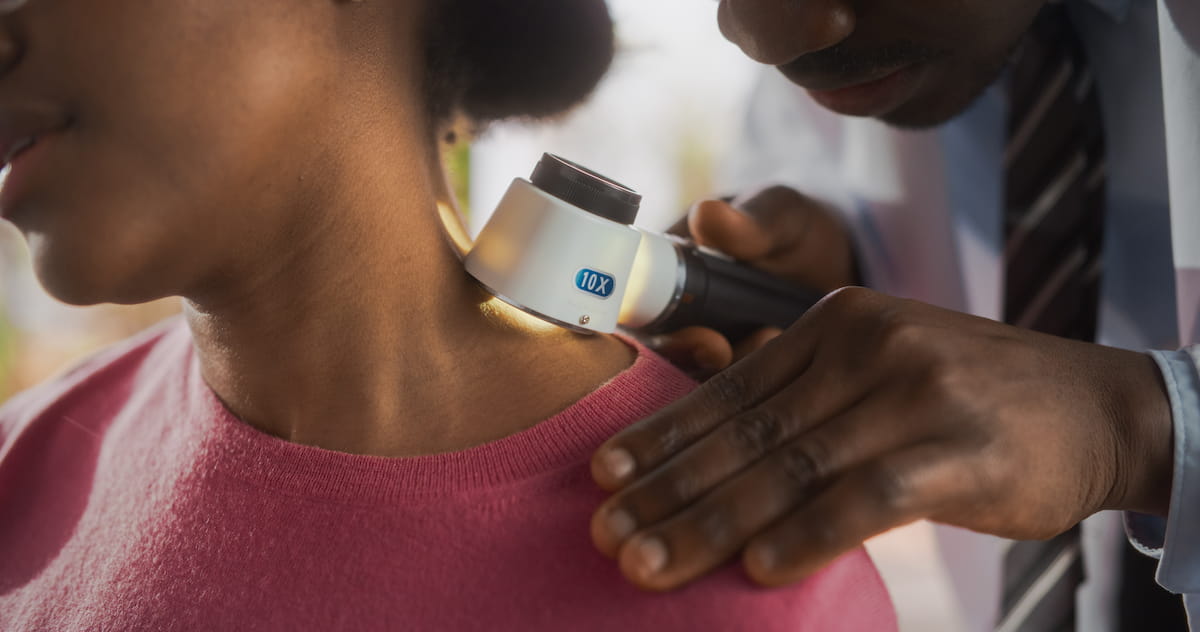
One of the most important tools for early detection is self-awareness. Because skin cancer is more treatable when caught early, regular skin checks matter—even if you believe your risk is low. For Black patients, self-checks should include areas that are commonly overlooked:
The plantar surface of the foot is one of the most common sites of melanoma in people of color. That means checking only sun-exposed areas is not enough.
Skin changes worth evaluating include:
Pay attention to spots that:
And trust changes that feel unusual for your body. Because skin cancer is not always painful early on.
Another harmful myth is that Black people do not need sunscreen. Melanin does offer some UV protection—but not complete protection. Weill Cornell Medicine states that darker skin still experiences sun damage, and UV exposure can still contribute to skin cancers and other skin changes. Sunscreen is not about fear. It is about prevention. And preventive care matters for every skin tone.
You should consider seeing a dermatologist if you notice:
And if possible, seek providers experienced in treating diverse skin tones. That matters too. Because culturally competent care improves recognition, communication, and trust. Black people can and do get skin cancer. But dangerous myths about melanin protection, combined with provider bias and gaps in medical education, often delay diagnosis. And when diagnosis is delayed, outcomes worsen. Skin cancer on Black skin may:
That is why awareness matters so much. Checking your skin is not paranoia. Wearing sunscreen is not unnecessary. Seeing a dermatologist is not overreacting. Early detection saves lives. And breaking these myths could help save more Black lives, too.

By subscribing, you consent to receive emails from BlackDoctor.com. You may unsubscribe at any time. Privacy Policy & Terms of Service.