Play Video
Poetry of Healing: A truth about marriage
What does marriage really require?

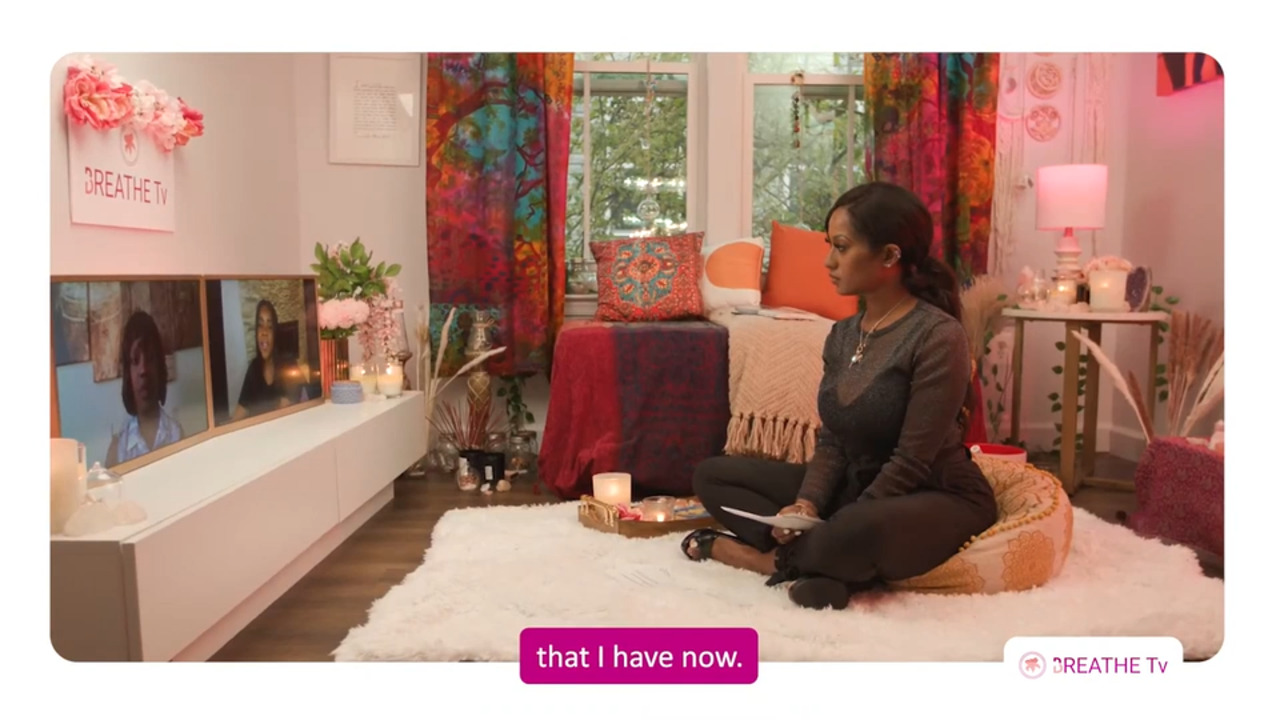
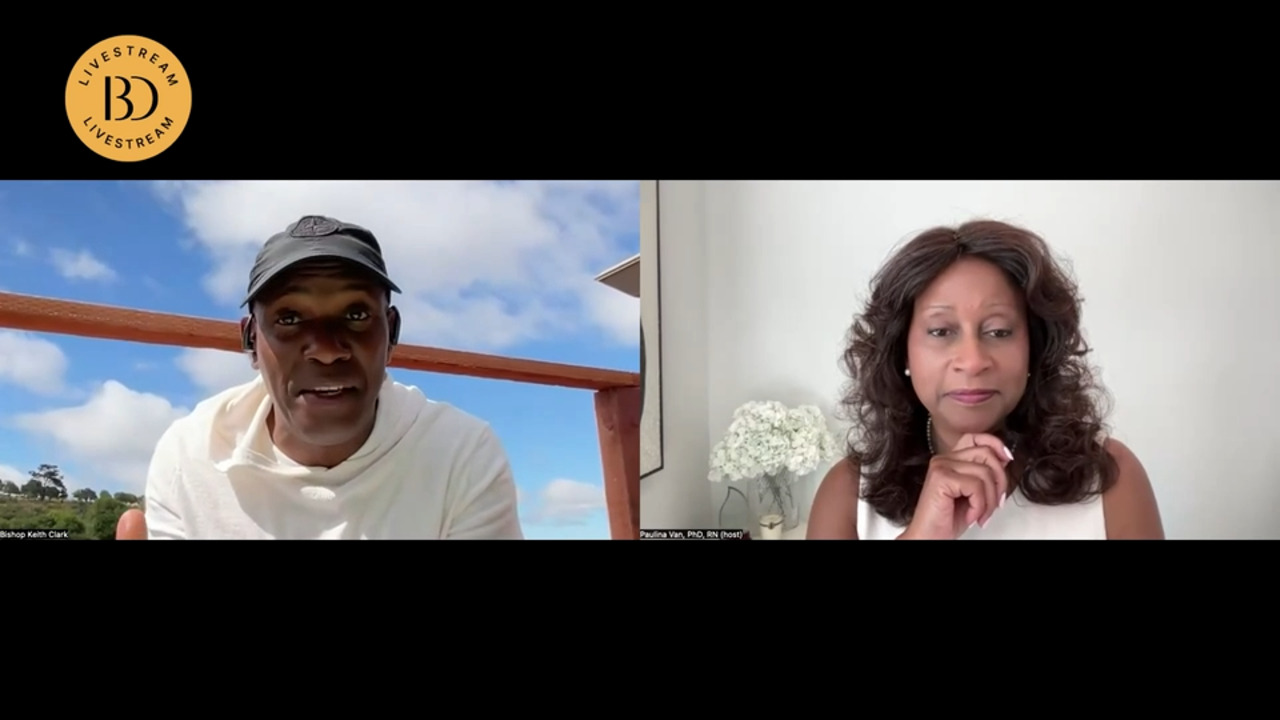
Happy Wednesday, y'all. Soulbration is back. I'm your host, Shamika Rhymes. I have missed you guys so much. Let me know where you're watching from and how you're doing, how you've been doing, how your mom and them are. Catch me up, y'all, in the chat. And remember to share this with your network. If you have any questions during the show, drop it in the chat. And you guys know that Daryl, you're the co-host, so I wanna know what questions you have because I know you have a ton because tonight's guest, all of you have been messaging me about this all week. And so I am super excited about it because we're gonna be talking about why representation matters, especially when you're watching TV, when you're looking at magazines, going to the movies.
I know I went to the movies last night, and it was so nice to see Black people in Italy, and you'll know what movie I'm talking about. But Emmy Award-winning actor Blair Underwood is here tonight. I'm super, super excited. You guys know, he's got a career that spans decades across TV and film, and he now stars as Dr. Ben Grant, which you probably saw that last night on the show Doc. And he's also appearing in The Listeners, where he takes on another powerful role as a doctor. He's also gonna be talking about his new memoir that I believe comes out next week, so we're right on time with this conversation.
And yes, yo- y'all, I want you to put in the chat all the emojis you can think of, an applause emoji, because I'm gonna about bring Blair to the stage, so hold on just one second, y'all.
Let's see. Hi, Blair. Shamika, what's going on with you? Not much. We- you and I go way back to what? A few weeks ago? Two weeks ago. A few weeks ago, that's right. That's right. Listen, I appreciate you. We had a great Well, I had a great conversation. Hope it was good on your side. Yes. But I had a great conversation with you, and then you told me that you do your show on, BlackDoctors. I s- used to be .com, but it's now Yeah .org, right? Well, flip it. It's now .com. Now .com, okay. Flip it. Yeah, yeah, yeah. But, but, but I, I had done something with Black Doctors years ago, and, and of course with this new character coming up and playing a Black doctor and, and having Black doctors in my life, I very much wanted to, have this conversation with you.
So I thank you for making this possible. Yeah, I was so excited when you were like, "Yes, I wanna come on." I was like, "Really?" I I didn't have to, didn't have to beg, promise my firstborn- No or anything like that. No. Let's see. No, no, ne- never that. Listen, I have had so much respect for, you know, professionals who work so hard in what we, what we do, and, and, in that community especially, and a lot of times we don't get the credit in, there's not enough of us. So any time I can have any part in, in, in shout it from the mountaintop. You know, I have great doctors.
My, my ophthalmologist, my eye surgeon is Dr. Richard Casey. My, my, heart doctor, is Dr. Watson, Karen Watson at UCLA. And, you know, I'm just I'm, I'm grateful for them in my life and, and, and proud of them.
Mm-hmm. Yeah. so I Gosh, there's so many things I wanna talk about tonight, so hopefully I can get it all in and- Let's go get to some of these fan questions. I'll take my jacket off then. Okay. Yes, get comfy. It's right back, it's right back feeding the buffalo. We talked about that. Like for real, for real. I did see, I saw the video you did the other day with the, the buffalo out there feeding them. Yeah. And I was like, "Ooh." Say, "Ooh. Ooh." It was, it was touching. It was touching, but I would be terrified. I, I hear you. They, they, they are pretty big. So speaking of these doctor roles, like I mentioned- Yeah y- you've played a doctor quite a few times, and I'm even going back to, see if you remember, City of Angels.
I better remember that. Yeah. That was around what? 2000 or so, something like that. Two Yeah, that's right, 'cause my youngest son, Blake, who's 24, was, got pregnant at that time, so he's 20 It was 25 years ago. That's right. Okay. Well, what keeps pulling you back to these types of characters? Doctors in, in particular? Well- Yeah, doctors in particular you know, I had, I've had the great opportunity to play a lot of, professionals- Mm-hmm and because I'm Black, they're Black professionals. Yes. I have a love for, for the medical shows and the medical profession. and for now, you know, now I just joined Doc, as you know- Mm-hmm and I'll be in the two-hour season finale on Tuesday night, April 14th on Fox, but then it comes on Hulu the next day.
But you know, I was telling my, my wife, Josie, we're up there in, 'cause we shoot in Toronto, Canada, and, you know, it's one thing if you're playing certain kinds of roles, you know, you do your, you learn your lines, you create the character, you find the character, but what's always challenging with, with medical roles is the medical terminology.
Right. You know, the, the big words, if you will. and then you couple that with, you know, like, we had a, two Actually, each ep- each hour had a surgery. Each time, I, I enjoy those the most because I don't do that every day. I don't use these words every day. It's almost like doing Shakespeare. These are not words you use- Yeah all the time. so, so yeah. So I think what draws me to it is just, you know, it's, it's im- impressive. You know? Mm-hmm. In real life, you know, Black doctors, Black lawyers, Black professionals, you know, that is, that is, it's necessary to have a high intellect for that, so it's, it's very impressive.
So to play that, I love portraying us in a light, that is actual and real, but also, what draws me as an actor to those roles are, are roles that are, impressive in life. Mm-hmm. I'm impressed that when watching you that you can pronounce some of these words, 'cause I know sitting here in this chair, I fight with these words on a weekly basis, and the audience knows. I tell you what's, what's amazing I mean, to pronounce them is not, you know, you know, you I know you're playing, 'cause it's not, it's not that hard if you kinda break it down, but what is, what's blows my mind is, you know, to, to know this information off the top of your head.
Right. or at least to know, you know, where you have to go find the information, or at least kinda know, okay, well, that's Latin. If you break it down, that's what it's gonna mean, that part of the body. You know, hemo, okay, that's gonna be blood.
You know, that kind, that kinda thing. But, you know, it's easy to pretendYou know, it's easy to practice it 10 times before they say action, get it right. Mm-hmm. But to really know that information and at a moment's notice- Mm-hmm especially, in a, in an emergent situation, that's, that's incredible to me. Which makes me wonder, 'cause I know after going through my own health things and, and being around others that have been through some health things, do you sometimes feel like, "Okay, as much as I've learned about all this stuff, now I feel like I'm a doctor," even though you're not really, but in your head you're like, y- well, I don't have good sense.
Well, that far, Sheameeka. Didn't laugh far. Nah, no, I know better. At the beginning of the day and at the end of the day, nah brother, you just pretending. Stop it. Stop playing. But yeah, th- some- sometimes you, when you pick those things up, like the, like when you were saying like hemo, you know, it's blood. you know, especially if you're anemic or something and you hear it all the time, and you're going to a hematologist or- Right whatever those things are. It's also interesting, just in our daily lives what we pick up too. Yeah. Yeah. Yeah. That's right. That's right.
So, so that's what draws me to the, to doctor roles. and ironically, you m- you mentioned City of Angels, and you know, it's incredible the people that came through City of Angels. Mm-hmm. Vivica Fox and I launched the show with a whole ensemble of people, like- Viola Davis, Maya Rudolph, Hill Harper.
you know, just ama- and then the people that came through, I think Octavia Spencer was in the pilot, and- Uh-huh Niecy Nash was in the pilot. And you know, it was an amazing thing 'cause we didn't, we didn't, and w- more, we do more now, but the idea of a Black drama was an, an anomaly. Mm-hmm. You didn't see Black drama. We'd do comedies all day long. We can play sports all day long, but the networks would not okay, or green light a Black drama. And the only reason they green lit that at the time was because it was Steven Bochco. Now, Steven Bochco created Hill Street Blues, he created L.A.
Law, he created- Yeah so many things. He was, he was the, he was the 800-pound gorilla in television at that time. Mm-hmm. Because he wanted to do it, they allowed it to happen. But, but it was amazing the careers it la- a whole slew of people, but the, the careers it launched was, was and is incredible. But it hit me the other day, I'm, I'm like a week into shooting this character, and my character's name is Dr. Ben Grant. Yes. I said, wait, I was literally in the shower, I said, "Wait a minute, I think the character I played on City of Angels' name was Ben." I had to look it up.
25 years. I hadn't seen it- Yeah in 25 years. But yeah, so it's ironically that character's name was Ben, and I'm playing Ben again. And one of the things I did on the City of Angels was I had wore a lot of, co- all kinds of just, patterns, different patterns on the surgical caps. Yeah. And I said, you know what?
I don't even know how many people are gonna remember City of Angels, so I think I'd like, if I ask the producers if they were cool with I try, if I tried doing that again. So, when we come back for the third season, I think they'll start airing in September, we're gonna, we're gonna break out all those different multicolored surgical caps. Oh, I love it. 'Cause you know- I love it we gotta bring a little flavor to it too now. Yeah, of course. 'Cause Dr. Ben Grant, that just sounds like he's got flavor, right? Oh, I receive that. Okay. Okay. So speaking of, 'cause I saw all the news articles that came out today about Dr.
Ben Grant, you know, made his appearance last night on Doc. So what can we, what can you tell us about Dr. Ben Grant? Well, I can tell you when it comes to, Actually, actually my first episode will be out on the 14th, April 14th, next Tuesday. Oh, okay. Okay. Yeah. Yeah. But, but there has been some, some articles, thank you, uh- Yes talking about it coming up next week. you know, I, I enter the hospital because my, my sister is a patient in the hospital. It is the two-hour season finale, so you know there's gonna be a big cliffhanger. There's, a large event that happens in the hospital that is, of, of high intensity.
That's what I can say. Okay. And I just happen to be there as, a surgeon, a thoracic surgeon. Mm-hmm. A heart surgeon. And, you know, I fill in, you know, all hands on deck. I fill in where I can fill in. So that's, that's the most I can tell you at this point.
Okay. Okay. Yeah. 'Cause I've seen the whole, you know, that you're supposed to be someone's love interest on the show, but- Oh you know. Oh. So people will have to go read the articles for that. Looking under the rocks and everything, and all the details. There, there, there may be some of that coming along next season. Yeah. So I did see a trailer, I think it came out last week, for The Listeners. Can you talk a little bit about that? 'Cause you're playing a doctor on there as well. Right. Right. That is a, that is a short film. Mm-hmm. That is, we just shot, jeez, about two months ago.
And, it's in conjunction with the Academy of Motion Pictures Arts and Sciences. And that, we haven't even talked about this, Sheameeka, but that is really It's called The Listeners and it's about fi- you said something in your, your opening about that, but it's about finding the voice within yourself. Mm-hmm. Finding the stability within our own minds. It's dealing with mental illness. Mm-hmm. basically, and, and, and what do you listen to? Who do you listen to? How do you listen to self? Yeah. You know? So that's really what that's about. So I mean, that, that may be out in June sometime, but it's a, it's a short film, so it has a different kind of- Mm-hmm existence and, and lifespan.
So, but, we'll, we'll screen it for the Academy. We're gonna have a, a panel discussion about mental illness and the work they've done. of course, you know, Rob Reiner and his wife were, were- Mm-hmm were sadly, unfortunately murdered by their son.
so the Hollywood community and, and the Academy itself, has been very focused on mental illness and have been, this is like their 10-year anniversary of this particular organization that's been working- Wow to speak about mental illness. Mm-hmm. And, so they'll air The Listeners, screen The Listeners, and we'll have a panel discussion, after that. Okay. Well, I wanna I'll circle back to the mental health aspect in a, in a few minutes, 'cause I do wanna touch on that t- a little bit separately. Mm-hmm. but I wanted to kinda touch on when you're stepping into these roles as doctors, do you feel like a responsibility, as a, you know, Black doctor on, on film or on TV, especially how they're portrayed- Mm-hmm do you feel like you have a responsibility to make sure it's, like, accurate and-Well represented and all the things Absolutely.
You know, every Yes. Yes. In particular- Yeah and specifically with doctors, but in every role I play- Yeah I, I take it very seriously if you're playing a profession, especially if you're playing a specific person, a real life person. Mm-hmm. but, yet and still, it's, it's important to me that we be as accurate as possible. You know, when we were doing the, one of the surgical scenes last week- you know, sometimes if the cameras doesn't see your hands, it's only on your faces, you don't really have to know exactly what you're doing, but- Right I always wanna know some- sometimes they'll say just make it like you're tossing salad.
You know- you twerk, so your shoulders, your shoulders are moving.
but I wanna know what we're doing. You know? Yeah. It gives the director an option to put the camera on, on your hands and see what you're doing, and also i- it's the specificity of everything. Mm-hmm. Specificity, specificity is always the difference between good and great. Mm-hmm. You know? So if you understand exactly what you're doing, regardless of how much it plays in the scene, I, I try to really encompass that as much as I, as much as I can. Was there a particular, I know, without giving away spoilers, but was there a particular surgery that maybe you were like, "Oh, I hope this is in the script," and maybe it wasn't in the script, that you were hoping to, act out?
No, I c- I can't say that. I mean, the surgeries- Okay we did were in the script, so you know- Okay once it's kind of placed- Yeah in the script, we kind of took it from there and just figured out what's, what's the best way to do it, what's my role in here, and- Gotcha and what am I doing, and what does this word mean, and why am I saying this word at this time- Yeah and how does that relate to what I'm, what my hands are doing- Mm-hmm or what I'm even referring to, you know? It's very- Okay it's very specific. And, and, and yes, and I'm glad you asked that question because I think it's very important to give respect to the profession and, and know that what you do, you represent, you represent other people.
I've, I've understood that my whole career. This show Doc is, it's, airs on Fox. Yes. Not Fox News, but on Fox.
And, it airs around the world. It's in 200 countries right now. It's the number one show in a lot of different countries. So you know, I, I learned a long time ago that what I, what I and we as actors do in front of the camera, it's not just what we're doing on this little set at this time. These images are portrayed across the globe, and those images that are portrayed across the globe last forever. So it's important, that you, you give the gravity and the weight to it that it deserves, and to the people and the individuals who are doing this for real. I did wanna make note, because I was, I was like, how do I go back and watch the first season of Doc so I can catch up, so I'll be ready for your appearance.
Yeah. And so I did watch that on, I think it was Hulu. So for those that are- Yeah. Well, the first season- Watching- is on Netflix And Netflix the second season is on Hulu. That's right. Yes. And I think, you know, they're doing 22 episodes. I think only 18 are on there now, maybe 19 today, it's Tuesday, so I think Is it Tuesday? What is today? Tuesday. Wednesday. Yeah. We- it's Wednesday. So yeah, so last night it'll be 19. Yeah. But then, the last two episodes will be there, as I said, after the 14th. It'll be on Hulu the next day on, on the 15th. Perfect. Let's see if I can see any questions.
For some reason, I can't see them, so I hope you guys are asking some good questions, 'cause I can't see them, so I'm just gonna ask what I wanna know. All right. You can't see. I, and I can see it, chat.
Somebody, Trey McGriff said, "Good day, good people. I remember City of Angels. Great show." I'm glad you remember. Oh, we- Yeah we can Where can you see it? I'm like, hold on, let My player producing better than me right now. Yeah, look at my screen. I see it. You see that? No, let me see here. Where is that? ah, okay. They're in the Okay, I see it. Trey, shout out to Trey. Trey does an amazing, um- film festival in Charlotte, Cine Odyssey. Oh, for real? Shout out to Trey. Shout out. Yeah. Yes. let's see. So we don't always see just doctors in general on, on some shows as, you know, confident, complex, and f- fully human.
You know, sometimes- we see, and I don't wanna just throw other shows' names out there, but sometimes it's almost robotic, a little bit. Um- Why do you think it's more, the representation that we need to see is that doctors are human too? You know, it's funny. I'm 61 now, and you know, the older I get, you know, our bodies evolve and change. And I have never, until I really got to Utah, and, and my, my wife Josie has really been amazing at just, encouraging me to be an advocate for myself, you know? I think when I first, you know, first started going to, I mean, just thinking about going to a doctor as a young adult, you know, okay, you got- went to the doctor, you went to the dentist, they did this, okay, you're good.
And a lot of people don't ask a lot of questions. But I've learned to advocate for myself. And, and part of it is really understanding and realizing that, that doctors, to your point, are human beings.
And, and every human being is different. Everybody's education is different. Everybody's life experience is different and unique. you know? Yeah. So, so that comes into, that really comes into play in, in who I really trust with my medical records, my, my medical history. Mm-hmm. I want the best of the best, but sometimes it's very specific as a Black man, you know, my, my medical, journey may be very specific. You know, during we A lot of us learned that during the pandemic, you know? Yeah. you know, America gets a cold, the Black community gets pneumonia. You know, why, why is that?
So you know, all that comes down to the individuality and I think the humanity, of doctors. They're not robots. They're not robots. They're not robotic. Mm-hmm. You know? Each one is unique and different. My, my, dermatologist is, is a Black female. Mm-hmm. You know? And I sought that out because I wanted someone who really understood- Yeah from a very personal level, as she says, highly melanated skin. Right. You know? Black skin, you know what I'm saying? Yeah. So, but I, but I wanted to not, not have to have somebody do research on it, and, and could do probably a good job, but I wanted somebody who really understood it, from a very, on a firsthand level.You know what?
Same. 'Cause there's not a lot here in Charlotte, Black dermatologists. There may be two or three, and so their appointment times, you know, you gotta If you don't make that appointment months in advance. so yeah, I Same thing. I wanted someone that wasn't just gonna shove a cream at me to, you know, and say, "Th- this'll fix whatever." You know, I wanted- Right someone that could relate and, and, you know, really sit there and talk to me about what's happening with my skin as I'm getting older.
Mm-hmm. That's right. So yeah. That's right. Yeah. Well, w- you mentioned you're 61, and I don't believe it, but you look amazing. So of course, I know people are gonna wanna know what is your fitness routine like? What do you eat? What do you Like, what do you do? I know you're out there with those buffalo , so I'm sure that's a lot of exercise. There's no meat for you, that's true. True. oh, man. Well, listen. I just try to be aware of what I eat. I don't eat as, as, as good as I should. I know that for a fact. My wife is always on me about that. Mm-hmm. but I do try to, try to eat much better.
M- and I can tell I'm much better than I was 10 years ago, even five years ago. Mm-hmm. definitely more aware of what I put in my body, but also, you know, we've both been doing intermittent fasting for the last five, four years, you know? Uh-huh. So, we only eat one meal a day, so you know- Wow sometimes I go crazy on that one meal. Most times I don't, but you know, you gotta splurge every now and again. Mm-hmm. But just the fact that it is one meal a day, that's, that's two meal That's breakfast and lunch that, you know, I'm not putting those, that amount of toxins in, that amount of chemicals in, that amount of food coloring in- Mm-hmm which I wanna learn more about too, just the whole food coloring.
And I'd love if any doctors listening to kinda weigh in on that. A very dear- Yeah friend of mine, j- young, young man just found out he has, bla- cancer. I think it's bladder canc- liver cancer.
Mm-hmm. and it's become a really a pandemic, especially around Black men, that we really should talk more about. And, a family member who happens to be a doctor- Mm-hmm you know, said, "You know, listen, food coloring is a big part of that," you know? And I- I- Wow I need to do more research on that, but that's something, if that is the case- Mm-hmm we need to talk about that more and, get that message out just about that this is, this may be a pandemic, you know, cancer amongst young Black men. Yeah. liver and, and, and bladder cancer and others. You're giving me a show idea.
Listen- That sounds like a, an, a excellent idea to talk to someone about that. It's necessary. Yeah. Yeah. Yeah. Well, we gotta talk about your new memoir. It comes out April 14th as well, A Soldier's Wife. Which April 14th, it is my mom's memoir actually. It's her life story. Yeah. You know, she passed away in 2020 from multiple sclerosis, and she, as, for as long as I can remember, wanted to write this book. The book is called A Soldier's Wife- Mm-hmm and that's based on, a play I did called A Soldier's Play. But more importantly, my father's a 28-year army, re- retired as a full bird Army colonel.
Mm-hmm. but, you know, that's, that's just a, a, a barometer and a, a, a point of reference to who she was, but that was only part of her life. Mm-hmm. You know, she's a fashion designer. She came out of Buffalo, New York, and she was just, she was a boss back in the '40s and '50s, and, and way ahead of her time, and she was an amazing woman, so she always wanted to write a book.
So I'm just honored that I, I have the opportunity- Mm-hmm to, take her, her vision and her book across the finish line. But it's called A Soldier's Wife, and the subtitle is The Marvelous Mrs. Marilyn A. Underwood. I can't wait to read it. You and I spoke about it a few weeks ago. Mm-hmm. But, it, she just seems like she was an amazing person, just the, the little bit that you told me about her. and, and you shared, you know, just now, and I've seen in other, interviews where you talked about her, her MS and depression. Mm-hmm. When you think back on seeing her go through those things, is there anything that you took from that, that you apply to your life now, like her strength or anything like that?
There's so much I took from that. I, I, I took her, her tenacity. Mm-hmm. You know, she had MS, multiple sclerosis, for at least 20, maybe 25 years. She was in a wheelchair the last 20 years of her life. Mm-hmm. She never once complained. and honestly, that was part of the problem, I think was- Mm-hmm or one of the issues, that she internalized everything. She internalized all of her stress. Mm-hmm. And because of that, she had a nervous breakdown, at least two or three nervous breakdowns. Mm-hmm. She tried to commit suicide three times. so from that, you know, what I took away from that, her, her, her willingness to fight- Mm-hmm and be bold in the face of, medical diagnosis that, that weren't rosy.
but also I learned from her how important it is to, to talk- Mm-hmm to be open. When she went through her depression, she went through a number of waves of, of deep, dark depression.
There was a, a seven-month run where she didn't even talk to anybody. Wow. Didn't wa- didn't wanna talk, didn't have anything to say, she told us when she came out of it. Mm-hmm. and just, you know, we, we learned so much as a family because anybody who's dealt with depression or knows anybody who's really dealt with depression knows that the individual doesn't just go through it themselves. The family goes through it. Mm-hmm. And the one thing that I learned more than anything is that the, the, the most encouraging news was that it can be helped when you go through depression.
Mm-hmm. That you can come out on the other side. I remember reading an article saying that it usually takes one or all of three things. It takes a community, talking to someone. It usually takes psychoanalysis. It usually takes a professional to talk to. Mm-hmm. and it takes, and oftentimes, medication- Mm-hmm to not be afraid of the right medication. That's why you need the right doctor to prescribe the right medication. But between doctor, community, and medication, you can come out of it. And we watched, we watched my mom come out of it at least two or three times, then she'd sink back and, you know- Mm-hmm you know, but she'd, she'd fight.
She'd fight. Um-So that was, I think, my first inclination of the importance of advocating for yourself. Mm-hmm. Watching her and how we advocated for her. I didn't really learn to advocate for myself until until recently, actually- Yeah I put that into practice. Yeah.
And I, I read an article I, I feel like I'm, like, stalking you at this point because I'm always like, "I read an article," or something. Hey, you did your homework. I appreciate that. Not everybody does their homework. This was from 2013, so where you were talking about, taking care of people in their twilight years. you know, and it can be very challenging, especially if there are medical things going on. what is your advice for those that may be dealing with that now? I know, I know we joke on social media of like and actually, my, my Shipt shopper, when she dropped my stuff off earlier, she was joking about raising an 85-year-old.
And we, you know how we joke about, "Oh, we're raising parents now." Yeah. So why is it You know, what advice would you give to those watching that are kind of maybe overwhelmed with taking care of their loved ones as they're getting older? Well, I tell you, I have three siblings: Frank, Marlowe, and Melissa. Mm-hmm. Frank and Marlowe are in the house with my dad, who just turned 94 last week- Mm-hmm on April 1st. they were in the house when, and took care of my mom near the end when she passed in 2020 at 84 years old. Mm-hmm. it's, it's interesting 'cause my dad told me as a young man raising my kids when they were born, when they were young, you know, he said, "It's important that you, you raise them and respect them and engage with them at an age appropriate level.
You know- Mm-hmm you're not gonna talk to a two-year-old the way you talk to your 14-year-old." Right.
You know? And now the tables have turned. Mm-hmm. And now at 94, I talk to him very differently than I did at 80 or 70. Yeah. Mm-hmm. Or, you know, when he was 50 and I was in my teens. You know, he's, he's a different man than he was, of course. Right. I think the best advice I could give, and I, I, I mention my siblings first because they're on the front lines. Mm-hmm. I'm, I'm out here in Utah, and they're not I'm not in the house raising or with my parents as a caretaker. But, but they are, and I see it through them, and I try, you know- Mm-hmm I tap in as often as I can.
but it really is important to respect them- Yeah whatever age they're at. And, and remember to respect them, 'cause it's, it's not easy, you know? Mm-hmm. My dad has, he's lost his short-term memory. Physically, he was a, he was a warrior, literally. He was a soldier and an athlete. He, I think he still to this day, he went to Winnersville High School in Winnersville, Ohio, I think he still has the most varsity letters. He played every sport. Yeah. his body at 94, I hope I'm, you know, moving like he is at 94 years old. Mm-hmm. But his mind, because of the dementia, has betrayed him.
Mm-hmm. My mom was just the opposite. Her mind was sharp till the very end, but her body- Mm-hmm betrayed her. but because my dad is not the man he was 30 years ago, sometimes it can be frustrating when he repeats himself and asks questions. That's real. I'm being very honest with you right now. Yeah. But it's incumbent upon us to keep your patience and, and just remember he, he doesn't remember what he just asked you 30 seconds ago.
He doesn't remember that he asked you 15 times in the last five minutes. Right. To respect him- Mm-hmm 'cause inside him is still that soldier and that man who was my, who is, who is my hero. My, my mom and my dad, my parents are my heroes to this day. Mm-hmm. so I think the best advice I can give to those if, if they're interested is, is, is love them and respect them for where they are and who they are. I think that's great advice 'cause And, and patience. I think that's a huge one- That's a huge one there 'cause I, I know I can get irritated real quick. Oh, of course.
But reminding myself- And human patience and respect. Yeah. That's right. Yeah. So, I wanted to circle back to talking about mental health 'cause I feel like a lot of times And, and we talked about this on Soulbration, last year, just with different, different things. That sometimes Black families don't want to talk to each other about what's going on- Mm-hmm or the history of things that have been going on. for example, there was a, a young lady, she had multiple strokes but didn't find out till she went through all that, that somebody else in the family had been through that.
Wow. And so it was a genetic, issue that was going on but because nobody talked about it. So, a- and mental health, talking about that seems to be a big stigma as well in Black families 'cause it's like, "Oh, no, we don't talk about mental health." Like, you know, you just, you take that to Jesus, and that's it. Mm-hmm. So what are your thoughts on, on that and why it's important to actually have these conversations?
Well, you know, more often than not, it literally is a matter of life and death. Mm-hmm. You know, you, you hold these secrets dear to you and close to you, for whatever reasons we do. And a lot of it is b- I, I think because of, of pride. You know, we don't wanna seem as though whatever illness may, we may have is a sign of weakness- Right or a demerit on our lineage, on my f- parents or my grandparents, you know. but I think it's important to ta- to talk about. And, I'm hoping we're getting, we're, we're moving the, the needle forward as a community. I'm not, I'm not really sure.
I don't know. I haven't done the research. Yeah. But I'm hoping we are. But I can tell anecdotally, I think, in my, my circle of friends w- us having this conversation, the fact that we're talking about it- Mm-hmm now. you know, my circle of friends, again, at my stage of life, a lot of you know, all of us, our, our parents are, are, are struggling with age or most have passed away by now. Mm-hmm. so that's real, you know? So then, and then we, you know, my circle of friends are dealing with, you know, "What medication are you taking? What, what are you dealing with?" um- Mm-hmm but I will say, you know, yet and still, it's sometimes like pulling teeth.
Yeah. You know? And what I've found is that once one person speaks up, then more people feel permission to speak up. Mm-hmm. For instance, I did a, I did a show called In Treatment on HBO. It was about- I remember that one yeah. It was about people who are in therapy, in treatment.
And just the fact that-I didn't think much about it. I mean, I, I'd shot the entire season and really didn't think much about it. I guess I don't think much about that stuff. Like, I didn't think about that character- you know, until a week into it. But I just, I didn't think much about I was just playing a role and playing a character. Mm-hmm. Shamika, I can't tell you how many brothers came up to me- Wow and said, "Yo, that's my life." I, I, I won't, I won't say his name, but he's a very high profile, actor and comedian. Mm-hmm. And he said, "Man," and he's, he's very open about it, but that's not my story to tell.
But he said, he said to me, he said, "Listen, man." he told me about his own stories, how he would hide in his closet. He came from a very abusive home and whatnot. He said, "I watch In Treatment." He said, "When was the f- last time you saw a Black man on TV in therapy?" Like I say, I had already filmed. I hadn't even thought about the significance of that- Yeah or how rare that is that we don't see that. Mm-hmm. He said, "Man, that's, that's my life." At least, at least, and I'm not over-exaggerating, at least 10 different brothers had said that to me along the way. Wow.
So I think because I happened to play that character- Mm-hmm and they saw him in that context, it gave them permission to talk about it, say, "Yo, I'm, I'm going through that," you know? Uh- Mm-hmm and then, and not even the specific journey that the character went through, but just the fact that he was a brother going to see a therapist.
Mm-hmm. Go see a psychologist, a psychiatrist, and to, to, to be able to be open to talk about that. So- Mm-hmm I, I think the more we give each other permission- Yeah to talk about it, 'cause we're all struggling. Mm-hmm. Everybody's struggling in different ways. And, and- So many ways there is, I'd love to, you know, talk to some psychiatrist or psychologist, and deeper about this, but, you know, there's, there's generational trauma. Oh, yeah. You know, I'm talking about 400 years ago. I'm talking about from this back of slavery- Right as, as Black folks. You know, it's in the DNA.
You know, how does that affect us to this day? Mm-hmm. so those are all things that, that, that are, that are necessary to talk about, and again, within the family unit especially, 'cause it can affect you. That's why I say it's a mat- it can be a matter of life and death. Mm-hmm. It can affect you directly and specifically. Right. And I think it also goes back to what you were just, what we were just talking about earlier, representation does matter, right? Mm-hmm. So like you were saying, those men came up to you and said that. It's because you were representing on, on-screen.
Um- Right is there I'm just curious, is there a role or a professional that you would like to play that you haven't played that you feel like doesn't get a lot of representation? Oh, man. I don't know. well, listen, I mean, the fact that Listen, I told you, you know, I live in, my wife and I live in the state of Utah, way up in the mountains.
I told you we're raising buffalo. Bison. Somebody tried to- Uh-huh correct me on social media. Well, they're really bison. I know they're bison. They're North American bison. I like to call them buffalo. We don't say bison New York. We say buffalo New York. We don't say, you know? You know. A whole lot of things we don't You know, I, the word buffalo just rolls trippingly off the tongue better than bison- Right to me. But, nah, but I think, you know, that, that's a whole, that's a whole, I wanna say subculture of sorts. Mm-hmm. Just, you know, Black Western, characters and Black West, the w- the world of the Black West.
Yeah. contemporarily and in, in the past. Period pieces. So that, that's one thing, and I think one role I'd love to play one day before I age out is, Marvin Gaye. That's, that's, that's the role I'd like to play more than anything. The Marvin- Yes Marvin Gaye story. I can see that. I can see that. Who do we need- Oh, I- Who do we need to send the petition to? A, you know, M- Motown. The biggest issue with telling that story and bringing it to the screen is, is the musical rights, and I know Dr. Dre actually has a lot of those rights, so we're, uh- Uh-huh you know, I'm reaching out to him, as we speak.
Mm-hmm. You know another, one that I would love to see is the Jackie Wilson story. That's crazy you said that. Somebody said that to me just the other day. J- just, just last week somebody said the same thing about the Jackie Wilson story, and we start I looked him up, and I didn't realize that he had Do you know that, that he, he actually had a heart attack on stage- Mm-hmm singing Lonely Teardrops?
Yeah. and then was in a coma for eight years after that. Mm-hmm. Yeah. but yet and still, I, I, I don't know a lot about his life. I don't know as a lot about his story. What, what is it about Jackie Wilson that, that you'd like to see? so I read a book about him, and, like, the entire story of You know, he was a boxer at first. Mm-hmm. and he really couldn't dance. He Those moves, if you go back and watch, I, which I tend to do on YouTube, 'cause I'm still so fascinated, a lot of those moves he was doing were boxing moves. Crazy. He was not, he could not really dance is what- I'ma check that out.
Yeah, so he was doing, like, the, the jump rope. He does that move where you're like, "Oh, he's skipping rope," or- Oh, that's Yeah yeah. So a lot of it- Yeah is how he would move around the ring. And those splits. And the splits, yeah. Yeah. That's wild. Yeah, I'ma go back and check that out now that you mention it. Yeah. I'll have to send you the, the name of the book, but it's very, very interesting, and I think it also kind of, the, just the mental health aspect of it all, and the things that he probably dealt with growing up. yeah. I, I can't say much more than that on here.
Yeah. All right. Yeah, yeah. Okay. All right. Yeah. I'll check it out. Yeah. so we gotta talk about the AHF Blair Underwood Health Care Center in DC- Mm-hmm since it carries your name. What made that work so personal for you that you had to be a part of that? You know, I was approached about doing a campaign with the AHF, which is the AIDS Healthcare Foundation.
This was maybe, I don't know, 20 years ago now. Mm-hmm. 15, 20 years ago now. yeah. 'Cause the clinic, the Blair Underwood AHF Clinic is, has been in DC I think 17, 18 years. We opened it back then. but I was approached about it, and I, I, I was a little reluctant at first 'cause I didn't know, you know, why. Mm-hmm. And, and at the time, you know, I was raising a daughter and two sons, but the, the simple statistic that it was AHF, AIDS, AHF, was the number two, I think, leading cause of death for Black women, I thought about my daughter. And I said, "If I can be a, a voice to encourage people, straight, gay, whatever, who, whatever your sexual preference is," because at that time, you know, it started off as just being a, a gay disease.
People would look at it, the perception was it was just a gay disease. Right. And then it was just, what, white, white male gay disease. Mm-hmm. And then it became just a gay disease, and this was a time when, you know, I said, "If I can, if I can-Be a voice to say that everybody- Mm-hmm needs to be tested, then I'll, I'll lend my, my voice and name to that. So that's, that's why, that's why I did it and, and you know, I met s- I met somebody, he said he was walking down the street and he saw it, and then because we had a whole number of billboard campaigns all across Los Angeles at the time.
And, and and he happened to be straight too, and he looked up at the billboard and he said, "Maybe I should go get checked," and he went to get checked and, and turned out he had, he had, um- Wow AIDS as well.
He was, he had contracted it. he said, "Man, just seeing that saved my life." That conversation alone made it worth it to me. Yeah. Yeah. Wow. And, and, and listen, and I, I s- I just heard this recently. It's still a big issue with, Black women. Again, I'm sure the people on this line who can speak to it much better than I can in terms of s- of the statistics in 2026. Mm-hmm. But th- listen, that even then, part- part of the issue was folks weren't talking. Again, not communicating. Right. Yeah. You know, who are your, who are your partners? You know, what is, what is, what's your sexual preference?
And- Mm-hmm who have you been sleeping Who have you slept with? Are, are you endangering me? You know- Right these are things that we have to more as a community be willing to discuss and bring up and be direct about. Mm-hmm. I agree. Absolutely. Blair, you know I could talk to you all day. Yeah. Got a lot to say. I, I really Like, you're gonna have to come back, but I do wanna make sure we tell people, where to get A Soldier's Wife. Mm-hmm. And, again, where to see you on Doc. Yeah. I know third season's coming up in the fall, but where to see you for this season. So, so a few things.
So, Doc comes out, it's a two-hour season finale on Ap- Tuesday, next Tuesday, April 14th. Okay. my mom's memoir, A Soldier's Wife, subtitle The Marvelous Mrs. Marilyn Underwood, comes out in stores April 14th. I'll be on The View, I know the next day, the 5th, and I think doing Sherri Shepherd also on the, on the 5th.
not the 5th, the 15th. but also you can pre-order my mom's book now, so please go to Amazon, pre-order it right now, be ahead of the game. You know what's going on. and, and also May 1st I have a movie coming out that RZA from the Wu-Tang Clan wrote and directed. It's called One Spoon of Chocolate. It is executive produced by, Quentin Tarantino. That'll be in theaters on May 1st, so, so there's a lot, a lot of, lot of good stuff going on. Yeah. It sounds like it. And before I forget, be- 'cause I will get tackled through the screen, Carla Thompson says, "Thank you so much for that picture." Carla Thompson, I hope I, I hope, I hope you're not throwing darts at it.
Somehow I don't think so. No, I'm glad we were able to do that for you, and thank you for, supporting a brother all these years. Yeah. Yeah, like I said, this goes back to Krush Groove. That's what she always says. Ooh. That's going all the way back, 1985. Yeah. Did Krush Groove. Yeah. Yeah. Well, before we close, because I ask every guest this and I haven't, you know, I haven't asked this in months, and I'm so excited to see what your answer is to this question. What feeds your soul? Oh. My wife and family and faith. Mm-hmm. That's a, that's a good- That feeds my soul.
That's my soul. Mm-hmm. My wife is my soulmate, and our life's work are our children. You know, we have a big blended family. I call us, we're like the Black Brady Bunch. She's got six, I have three, and 18 grandchildren. So we just had, the 18th was born, 18 bonus grandchildren.
The 18th was born two weeks ago. So, you know, that is, that's our life's work. That's also our legacy that we leave. What I do as an actor, I, I absolutely love. I, I'm passionate about it, but it's what I do, it's not who I am. Mm-hmm. It's my living, it's not my life. So my life, that's my soulmate, it's my children. yeah. That's, that's And, and faith in God. That's- I love that that's whole. I love that answer. That feeds my soul. Yeah. I love that. And- Carla said I'm here. Yeah. Carla Thompson said I'm here. She probably, you probably need to pick her up off the floor.
Are you okay, Carla? That's a great question, though. What, what makes you ask that particular question? I think that's a great question. because this is Soulbration, and this show is supposed to also- Ah, Soulbration get you to think about what feeds your soul. And it's funny, I was at yoga Monday night, and my yoga instructor said, "Take something that feeds your soul." And I thought, "Is this a sign?" Because I use that, I say that all the time, but it just made me think, like, well, what And what feeds my soul changes, but, like, this show feeds my soul. You know, let me, I'm thinking about that too, 'cause when I say, like, my wife Josie is my soulmate- Yeah we are mate, it's a connection.
Mm-hmm. But, you know, we have to be 100% full ourselves before we can connect. Yeah. And a big part of what feeds my soul is giving to others, of being of service- Mm-hmm. Yeah and giving to others. Mm-hmm. And that feeds my soul, and then that way I can be 100% present for my soulmate and give- Ooh to our children and grandchildren.
I like that. I should've been asking, we should do a relationship show. No, I- Get some advice. And, and, you know, and I, we can also, since we mentioned our last conversation, just kind of hint to people that there is a article coming out in a USA Today magazine in June, so you guys can I will mention it again once we get, once it's on Newsstand so you guys can check that out, 'cause Blair and I had a wonderful conversation about Utah- Mm-hmm, mm-hmm in that. oh, Carla has one question. Okay, Carla, you can type it in. I won't end until you type in that question. She has a question about your book.
All right. But yeah, that was a fun, fun interview. When does that come out? Okay, are you allowed to say? I just know it's in June. I think it's probably- June like, early June. It might be end of May, early June, somewhere around in there. Okay. Yeah. Yeah. I had fun collecting all the pictures for it, 'cause I had to go to each thing you mentioned and ask for pictures. Oh, yeah. Ask- Like, I have some cool pictures of some bison, buffalo, or whatever we're calling it. Oh, man. Man.Let's see All right, Carla, what you got? I know, yeah. Okay. She says, "I have a friend that just lost his mom.
Any advice you can share with her on how to be there for him?" Friend that just lost his mom. Listen, what helped you in your healing? What helped me, two things. First of all, a faith in a, in a higher power. Mm-hmm. But understanding that, I mean, truly, genuinely understanding and believing that that person is in a better place.
My mom, s- in particular, my mom struggled physically. Like I said, she was in a wheelchair and bedridden, for the most part. Although she, she'd get in a wheelchair and roll. But, it was tough the last 20, especially the last five years. So I knew she was in a better place, number one. And what also helped me, too, was, you know, the, the day after she passed away, one of my boys said to me, 'cause he had lost his mother and four of his brothers, so he'd been through death a lot and healing and grief, and he said something I know, I think Joe Biden has said this and he's made it more famous, but it was very simple at the time and it struck me.
He said, "Now is not the time, but there will come a time when the mention of her name and the thought of her will bring a smile to your face before it brings a tear to your eye." And many of you may have heard that before, but in that moment when I needed to hear it, it, it resonated within my, it reverberated in my spirit and soul- in such a way that it helped me frame my grief. It helped me kinda wrap my head around it. To know that the now is not the time. Mm-hmm. And, and that it is important to mourn, so that you can move and transition to that place where now the thought of her makes me smile.
Mm-hmm. Now the thought of her makes me laugh. so, so I'm grateful for that. And one of the things somebody said to me that really helped me a lot was that the fact that your mother gave you birth, literally breathed life into you. Oh. So quite literally every time you breathe- Mm-hmm you're closer to her.
As you breathe, you're breathing part of her- Mm-hmm 'cause she created you, with God, and Father. Mm-hmm. You know, so that, that helped me a lot. Just e- even the phys- the physicality of it, the tangible aspect that with every breath she's alive- Mm-hmm in that. With every memory she's alive in that. Wow. And then those memories become joyful memories eventually, but not immediately, but it'll come. Mm-hmm. And just the fact, and to be reminded that it'll come, helped me get through it. Yeah. Blair, you're gonna make me cry. That, that she also s- well, you did answer her question about what helped with your healing.
and she says, "Thank you for being a beautiful Black man and representing our community in a positive light." Oh, I appreciate that. I appreciate that. It's an honor to me. Yeah. This has been great, Blair. Like, you're gonna have to come back. I'm, I'm inviting you back for whenever you're ready. Well, all right. Well, all right. I appreciate it. I'm just taking for granted you want to come back. Yeah, no. Listen, I'd love to. No, thank you. this has been wonderful. you guys heard where to watch Doc. You heard where to get the book, pre-order on Amazon. and you, it'll be in, like, all bookstores, like Barnes & Noble, the big- Where, where, where books are sold, and I say Amazon now, but listen, if you still have a bookstore in your neighborhood- Yeah a mom and pop store especially, please, please represent them and please, show them some love and s- and some respect.
Not everybody has that anymore, so I- I mention Amazon 'cause that's at your fingertips. But, um- Yeah those, those stores, the mom and pops especially, those brick and mortars need, need some love and, need some attention, too. Will you be doing book signings? I forgot to ask that. I am. I'm doing a book tour starting next week, in New York and Atlanta. I don't have all the specifics in front of me right now. Okay. But Atlanta, New York, then Atlanta, then Los Angeles. Okay. Skipping North Carolina, I see. I got Listen, if I could, I would. Oh, Carla, you're being dramatic now.
She said the paramedics are on the way. I'm about to faint. Well, she's on the right website. Right, exactly. Thank you so much, Blair, for, for coming on- Absolutely and, and chatting with me tonight on Celebration and, and allowing us to kinda dig deep. And, and I'm, I wanna thank you for representing Black doctors on television and all the professionals that you represent. are you ever gonna play, like, a journalist news anchor? Or have you done that yet? I have done that, actually. You have? Okay. A show called The Lucky Wave with James Earl Jones and Cicely Tyson many, many moons ago.
But, but thank you for that. Yeah. And, it's, listen, it's an honor for me to represent those who do it and do it well. Yeah. Yeah. Well, I wanna thank you all for tuning in. Next week on Celebration, join me right here Wednesday at, I'm not sure if I'm gonna push it back to 7:30, but 7:00-ish, something like that. But we'll be shining a light on Black maternal health, 'cause next week is Black Maternal Health Week.
So we're gonna talk about why it matters and the conversations that we need to be having. So I hope everyone has a soul-filled rest of the week. And you too, Blair. Thank you again. Shameka, I know it's gonna cut off when you say goodbye, so I appreciate you again and thanks for having me. And you keep on doing your thing. I will. And I'll send you the name of the book. All right. Great. The Jackie Wilson book. Great. I'll send it to your, your rep. Please do. I'll look for it. Okay. Thank you. All right. Thank you. Have a good night, everybody.
By subscribing, you consent to receive emails from BlackDoctor.com. You may unsubscribe at any time. Privacy Policy & Terms of Service.