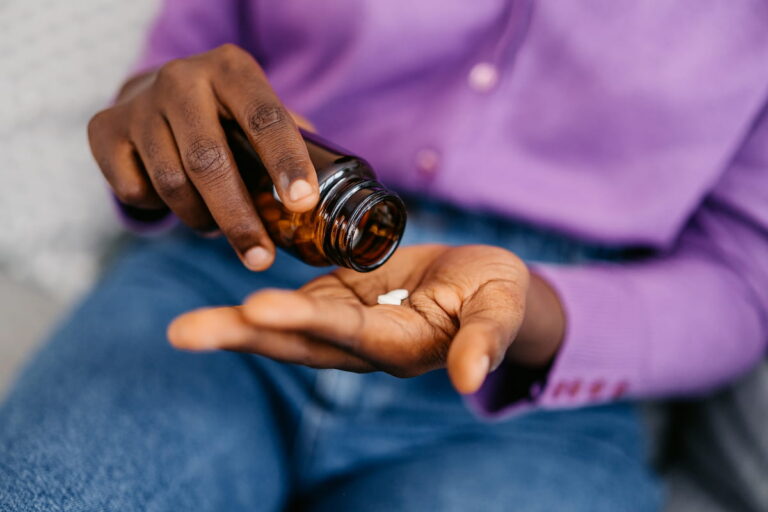
Between magnesium, collagen, probiotics, menopause gummies, and hormone-support powders, many of us Black women are wondering what actually helps, and what might just be marketing.
If you’ve spent any time on TikTok, Instagram, or even wandering through the wellness aisle at your favorite big-box store lately, you’ve probably been told you need a supplement.
Maybe it’s magnesium for sleep.
Collagen for your joints.
Probiotics for your gut.
A menopause gummy for hot flashes.
A hormone-support powder for energy.
Suddenly, it feels like turning 40 comes with a very confusing shopping list.
For many Black women navigating perimenopause and menopause, the question isn’t whether symptoms are real. It’s whether all the products being marketed to us as solutions are actually necessary.
Because when you’re waking up at 3 a.m., forgetting why you walked into a room, or feeling exhausted despite doing all the “right” things, it’s easy to start adding supplements to your cart in search of relief.
The good news? Experts say some supplements can play a helpful role during midlife.
The bad news? More isn’t always better.
There is a reason supplements seem to appear everywhere once women enter their 40s and 50s.
As women move through perimenopause and menopause, hormonal changes can affect sleep, metabolism, muscle maintenance, bone health, cardiovascular health, energy levels, and mood.
“As women move through perimenopause and menopause, their bodies recalibrate, and their nutritional needs recalibrate with it,” says Dr. Bryanne N.Standifer-Barrett, a women’s health physician and medical advisor for Black Girl Vitamins.
“Falling estrogen means women often need fewer calories overall but more of certain nutrients. For instance, more protein to protect muscle, more calcium and vitamin D for bones, and more fiber and healthy fats to support heart, brain, and blood sugar health.”
That doesn’t mean every woman needs a cabinet full of supplements.
But it does mean that nutrition often deserves more attention during this stage of life.
Dr. Standifer-Barrett says Black women are particularly likely to experience issues such as low vitamin D levels, anemia, and increased cardiometabolic risk, making it important to understand what your body actually needs rather than following trends.
RELATED: Weight Loss Supplements: The Good & The Bad
One of the biggest misconceptions about supplements is that they function like instant fixes. They don’t.
“In midlife, just like at every stage, supplements should play a supportive role, not be the whole plan,” Dr. Standifer-Barrett says. “We want to start with the basics—food, movement, and sleep—and then use supplements to fill in gaps based on lab work and symptoms.”
In other words, supplements work best when they’re addressing a specific need.
If you’re low in vitamin D, iron, B12, magnesium, or other key nutrients, targeted supplementation may help support overall wellness. But experts say supplements should complement healthy habits, not replace them.
That’s especially important during midlife, when many women are dealing with several overlapping concerns at once, including poor sleep, increased stress, weight changes, and shifting hormone levels.
RELATED: From Symptoms To Solutions: What To Expect During Your First Year Of Menopause

Walk through almost any drugstore or scroll through wellness content online, and you’ll see the same categories pop up repeatedly.
Magnesium has become one of the most talked-about supplements for women in midlife.
According to Dr. Standifer-Barrett, there’s solid evidence that magnesium may support sleep quality, muscle relaxation, and healthy blood pressure levels when intake is low.
“For midlife women who are wide awake at 3 a.m. or carrying a lot of tension, a well-formulated magnesium supplement can be a real help alongside good sleep hygiene,” she says.
Probiotics have become popular for digestive health, but the conversation doesn’t stop there.
Research suggests certain probiotic strains may also support immune, vaginal, and urinary health. These areas can become more important as hormone levels change.
The keyword, experts say, is “certain.”
Not all probiotics do the same thing, and choosing one should be based on your specific needs rather than broad marketing claims.
Collagen supplements are often promoted for healthier skin, stronger nails, thicker hair, and joint support.
While they aren’t miracle products, some research suggests collagen peptides may support skin hydration, elasticity, joint comfort, and certain markers of bone health.
As estrogen declines, many women become more focused on preserving bone and joint health, which helps explain collagen’s popularity during midlife.
Multivitamins may not be glamorous, but they remain one of the most practical tools for filling common nutritional gaps.
Dr. Standifer-Barrett describes them as nutritional insurance for women whose diets may not consistently provide everything they need.
That can be especially useful for busy women juggling work, caregiving responsibilities, travel, and everyday life.
RELATED: The Best Multivitamin for Women: What to Know Before You Buy Anything
The supplement industry is big business. And while many products can be helpful, experts, including Dr. Standifer-Barrett, say it’s easy to end up taking more than necessary.
One common problem is supplement stacking—taking multiple products that contain many of the same ingredients.
For example, a woman might be taking a multivitamin, an energy supplement, a menopause supplement, and a sleep supplement without realizing they all contain overlapping nutrients.
“Supplements are most useful when they are aligned with what the body needs, not just what is popular,” Dr. Standifer-Barrett says.
She encourages women to work with their healthcare providers to understand their symptoms, review lab work, and identify genuine deficiencies before building a supplement routine.
“A smart stack is targeted, informed by data, and fits inside an overall care plan rather than trying to replace it,” she says.
Experts also caution against assuming that “natural” automatically means safe or that supplements can’t interact with medications.
That’s one reason it’s important to discuss any new supplement with your healthcare provider, especially if you’re managing other health conditions.
RELATED: Multivitamins: Good For You Or Not? Experts Weigh In

For many Black women, midlife can feel like a season of constant recommendations.
Take this. Try that. Buy this powder. Add that gummy.
But experts say the better approach is often the less exciting one: Start with your symptoms. Get your labs checked. Pay attention to your sleep, nutrition, movement, and stress levels, then make decisions based on what your body is actually telling you.
“One major misconception is that supplements should work like a quick fix,” says Anna Palomino, a formulation expert with Black Girl Vitamins. “They work best over time, taken consistently as part of a daily routine.”
Palomino says supplements should be viewed as one piece of a broader wellness strategy—not a replacement for healthy habits or medical care.
For women interested in additional support, products such as Black Girl Vitamins’ Meno-Chill, Her Balance Probiotics, Collagen Powder, and Once a Day multivitamin are designed to address concerns commonly discussed at different life stages. But experts emphasize that no supplement works the same for everyone.
The goal isn’t to buy every product that shows up in your feed. The goal is to understand what support you actually need.
And sometimes, that’s the most powerful wellness decision you can make.


By subscribing, you consent to receive emails from BlackDoctor.com. You may unsubscribe at any time. Privacy Policy & Terms of Service.