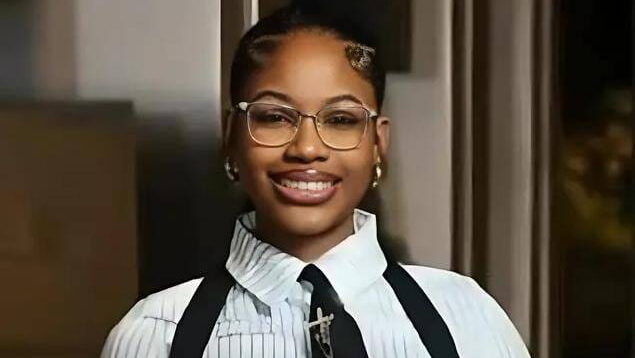
On May 1, 2026, at 2 p.m., Demetria Coley walked across a stage in Tallahassee and became the youngest graduate in the history of Florida State University’s College of Nursing. She was 18 years old — one of 215 nursing students earning a degree from FSU that spring, and already no stranger to firsts. Three years earlier, she’d become the youngest graduate in the history of Tallahassee Community College (now Tallahassee State College), a record her own older sister had held the year before.
For many young Black women, seeing someone who looks like them achieve something extraordinary can change what feels possible in their own minds. Studies on what researchers call the “role-model effect” have found that Black students with early exposure to same-race professionals — teachers, in the research base that exists so far — report higher long-term aspirations for themselves.
Separately, research from Harvard Health Publishing shows a link between a strong sense of purpose and better stress coping and greater resilience.
These threads together are exactly what make Demetria’s story worth sitting with well beyond one graduation.
Demetria’s path to this moment started early. She was homeschooled from birth through middle school by her father, Demetrius Coley, a science department chair at a Tallahassee middle school, who structured her education to keep her ahead of grade level. By 15, she’d graduated from high school and earned her associate degree simultaneously. From there, she completed two semesters of prerequisites at Florida A&M University before transferring into FSU’s nursing program in spring 2025 — and by 18, she had her BSN.
The night before commencement, Coley took part in her white coat and pinning ceremony at FSU’s Ruby Diamond Concert Hall. The next day, she crossed the stage for real. “I’m just glad that I’m able to walk across the stage,” she told FSU News. That’s a very modest line from a young woman who’s now made history twice.
Her clinical training took her from the emergency department at Tallahassee Memorial HealthCare, where she volunteered, to a preceptorship at Orlando Health Winnie Palmer Hospital for Women and Babies, where she focused on neonatal care.
She’s now headed toward a NICU, a decision rooted in her own history. Her mother, Elicia Coley, was a NICU nurse who died of ovarian cancer in November 2020, when Demetria was 13. Her father has said he’s moved by how deliberately Demetria is dedicating this degree to her mother’s memory. “I am very proud of her and her accomplishments,” he told the Tallahassee Democrat.
Coley had initially considered medical school. But her clinical rotations pulled her toward nursing instead, where she found more direct, hands-on contact with patients than she saw surgeons get.
Demetria’s story also comes at a time when the nursing workforce still doesn’t fully reflect the communities it serves. Black nurses make up 8.6 percent of registered nurses in the U.S., according to the American Association of Colleges of Nursing’s latest workforce data. While the profession has become more diverse in recent years, Black nurses remain underrepresented relative to the broader U.S. population. That’s one reason stories like Coley’s carry weight beyond the headline—they can inspire the next generation to see themselves in healthcare.
RELATED: I Was Told I’d Never Be Great – Now I’m Making History in Nursing
Every groundbreaking achievement widens the path for someone else.

This is where Demetria’s story becomes bigger than one graduation.
Patients often do better when their care team understands their background, culture, and lived experience — a concept healthcare researchers call culturally competent care. A more diverse nursing workforce can also build more trust between patients and the healthcare system, particularly in communities that have historically had reason to be wary of it. Yes, that’s us.
The American Association of Colleges of Nursing (AACN) has made increasing diversity in the nursing workforce a priority, recognizing that patients benefit from a healthcare workforce that better reflects the communities it serves. While progress has been made, increasing the number of Black nursing graduates remains an important goal—making visible success stories like Demetria’s especially meaningful.
“Health equity means that everyone should have a fair opportunity to obtain their full health potential,” said Dr. Lisa A. Cooper during a speech she gave at a Johns Hopkins/NYAS health equity event.
Cooper is director of the Johns Hopkins Center for Health Equity and a physician-researcher who has spent decades studying how race and representation shape the patient-provider relationship, adding that no one should be held back from that potential by circumstances outside their control.
It’s a principle that starts, in part, with who patients see wearing the white coat.
Representation doesn’t just shape how patients experience care; it shapes who decides to pursue these careers in the first place. Young people are more likely to choose a path when they’ve seen someone who looks like them succeed in it. Demetria, at 18, is now someone for a whole generation of girls to watch.
RELATED: Making a Difference Every Day: Exploring the Diverse and Dynamic World of Nursing
Now bring in the research.
A sense of purpose doesn’t erase stress or hardship. But research from Harvard Health Publishing has found that people with a strong sense of purpose tend to perceive stress as more manageable and cope with it more effectively than people without one. Purpose has also been linked to sharper memory and thinking skills, better mood regulation, and a reduced risk of chronic disease — and a 2025 study following more than 13,000 adults found that a strong sense of purpose was associated with a meaningfully lower likelihood of cognitive decline later in life.
Separate research on psychological well-being backs this up: people who describe their lives as meaningful — who feel they’re working toward something — tend to report higher resilience and better ability to weather difficulty than people who don’t.
None of this means purpose is a cure-all. But for a young person navigating a major life transition — moving from childhood into a demanding career, in Demetria’s case, years ahead of schedule — having a clear sense of why can be protective in ways that go beyond the resume line.
RELATED: Charting Your Course: Steps to a Rewarding Career in Nursing
Demetria’s story happened because the adults around her gave her early exposure and structure. Here’s how other parents, teachers, and mentors can do the same:
A great example is the National Institute of Nursing Research (NINR), which has made workforce development and health equity central to its own mission. They fund research and training aimed at building a nursing workforce equipped to serve diverse communities. That kind of institutional investment matters. So does what happens at the kitchen table.
Demetria Coley’s story isn’t only about becoming one of the youngest nursing graduates in Florida State’s history.
It’s about showing other young Black women that extraordinary goals don’t have to wait until “someday.”
Sometimes all it takes is seeing someone else go first.
By subscribing, you consent to receive emails from BlackDoctor.com. You may unsubscribe at any time. Privacy Policy & Terms of Service.