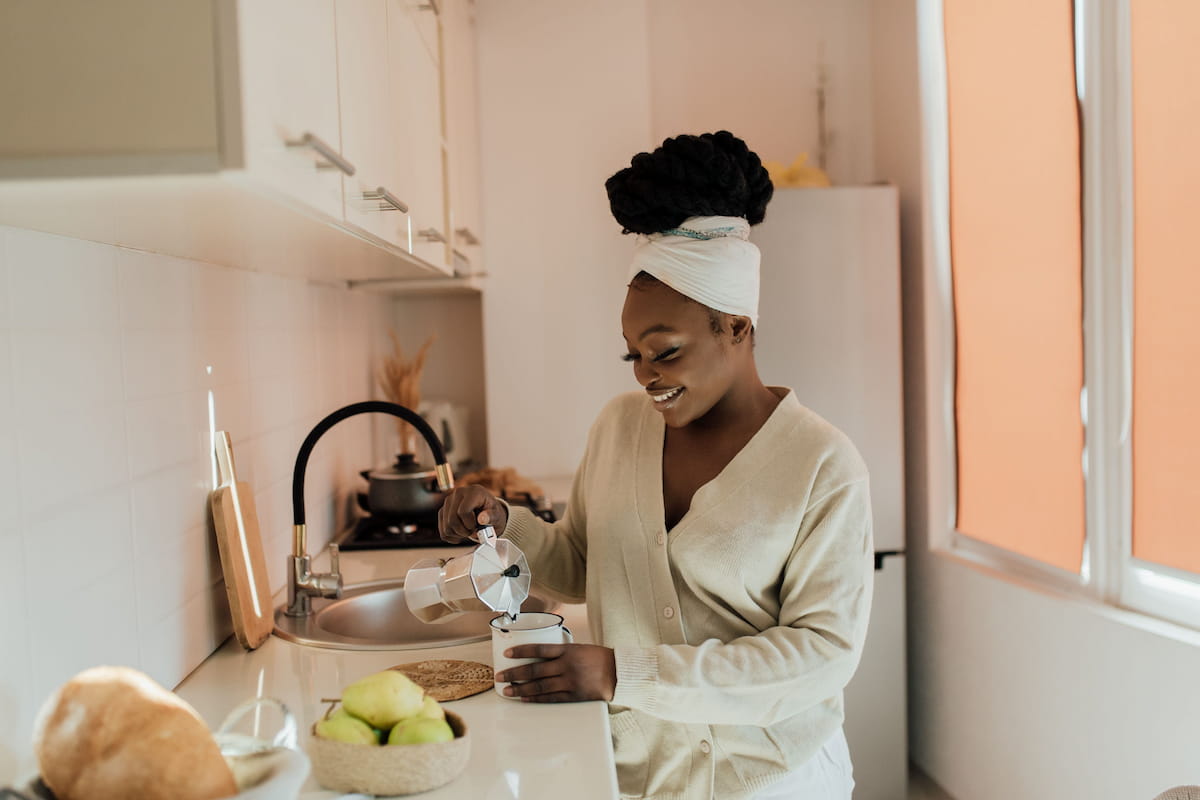
For many of us, the morning ritual of brewing a fresh pot of coffee is less a choice and more a necessity, serving as the catalyst to kick-start our brains and jump-start our productivity. However, new research suggests that this beloved daily habit offers far more than just a boost of alertness. It turns out that the best thing about your morning coffee may not be the immediate caffeine kick at all, but rather the long-term, profound impact it could be having on your internal health—specifically your liver.
A study just published in the journal Clinical Gastroenterology and Hepatology suggests as little as one to two cups a day may lower your risk of serious liver disease.
The study included more than 355,000 healthy adults who filled out dietary questionnaires and were followed for about 13 years.
Featured on BlackDoctor
The results: People who drank the most coffee — five or more cups a day — had a 32 percent lower risk of cirrhosis, a 47 percent lower risk of liver cancer and a 42 percent lower risk of dying from liver disease.
MRI scans showed coffee drinkers also had less liver fat, inflammation and scarring, while blood tests pointed to healthier liver function.
But researchers stressed that these findings are not a recommendation to drink five or more cups of coffee a day.
They said benefits actually began with just one to two cups a day and appeared strongest at three to four cups daily.
“Our findings support moderate coffee consumption for people who already enjoy and tolerate it well,” said senior author Dr. Ju Dong Yang, medical director of the Liver Cancer Program at Cedars-Sinai in Los Angeles.
Both regular and decaf were linked to healthier liver outcomes, suggesting something besides caffeine may be at work.
While more research is needed, the authors said coffee consumption may complement healthy habits like exercising, maintaining a healthy weight and limiting alcohol.
“The next step in our research is to identify the specific compounds in coffee that are responsible for these liver-protective associations,” said study author Dr. Shelly Lu, director of the Karsh Division of Gastroenterology and Hepatology at Cedars-Sinai. “Our findings point to biological pathways involving inflammation and scarring and highlight molecular targets that future research can explore to better understand how coffee may influence liver health and who stands to benefit the most.”
Maintain a healthy liver by maintaining a healthy weight.If you’re obese or even somewhat overweight, you’re in danger of having a steatotic (previously called fatty) liver disease that can lead to metabolic dysfunction-associated steatotic liver disease (MASLD)*, one of the fastest growing forms of liver disease. Weight loss can play an important part in helping to reduce liver fat.
Eat a balanced diet to support a healthy liver. Avoid high calorie-meals, saturated fat, refined carbohydrates (such as white bread, white rice and regular pasta) and sugars. Don’t eat raw or undercooked shellfish. For a well-adjusted diet, eat fiber, which you can obtain from fresh fruits, vegetables, whole grain breads, rice and cereals. Also eat meat (but limit the amount of red meat), dairy(low-fat milk and small amounts of cheese) andfats (the “good” fats that are monounsaturated and polyunsaturated such as vegetable oils, nuts, seeds, and fish). Hydration is essential, so drink a lot of water.
Exercise regularly to promote a healthy liver. When you exercise consistently, it helps to burn triglycerides for fuel and can also reduce liver fat.
Avoid toxins. Toxins can injure liver cells. Limit direct contact with toxins from cleaning and aerosol products, insecticides, chemicals, and additives. When you do use aerosols, make sure the room is ventilated, and wear a mask. Don’t smoke.
Use alcohol responsibly to maintain a healthy liver. Alcoholic beverages can create many health problems. They can damage or destroy liver cells and scar your liver. Talk to your doctor about what amount of alcohol is right for you. You may be advised to drink alcohol only in moderation or to quit completely.
Avoid the use of illicit drugs. In 2012, nearly 24 million Americans aged 12 or older were current illicit drug users, meaning they had used an illicit drug during the month prior to the survey interview. This estimate represents 9.2 percent of the population aged 12 or older. Illicit drugs include marijuana/hashish, cocaine (including crack), heroin, hallucinogens, inhalants, or prescription-type psychotherapeutics (pain relievers, tranquilizers, stimulants, and sedatives) used non-medically.
Avoid contaminated needles. Of course, dirty needles aren’t only associated with intravenous drug use. You ought to follow up with a medical practitioner and seek testing following any type of skin penetration involving sharp instruments or needles. Unsafe injection practices, though rare, may occur in a hospital setting, and would need immediate follow-up. Also, use only clean needles for tattoos and body piercings.
Get medical care if you’re exposed to blood. If for any reason you come into contact with someone else’s blood, immediately follow up with your doctor. If you’re very concerned, go to your nearest hospital’s emergency room.
Don’t share personal hygiene items. For example, razors, toothbrushes and nail clippers can carry microscopic levels of blood or other body fluids that may be contaminated.
Practice safe sex. Unprotected sex or sex with multiple partners increases your risk of hepatitis B and hepatitis C.
Wash your hands. Use soap and warm water immediately after using the bathroom, when you have changed a diaper, and before preparing or eating food.
Follow directions on all medications. When medicines are taken incorrectly by taking too much, the wrong type or by mixing medicines, your liver can be harmed. Never mix alcohol with other drugs and medications even if they’re not taken at the same time. Tell your doctor about any over-the-counter medicines, supplements, and natural or herbal remedies that you use.
Get vaccinated. There are vaccines for hepatitis A and hepatitis B. Unfortunately, there’s no vaccine against the hepatitis C virus.
BlackDoctor is the world’s largest and most comprehensive online health resource specifically for the Black community. BlackDoctor understands that the uniqueness of Black culture - our heritage and our traditions - plays a role in our health. BlackDoctor gives you access to innovative new approaches to the health information you need in everyday language so you can break through the disparities, gain control and live your life to its fullest.
✦ AI Search Disclaimer This AI-powered search tool helps you find relevant health articles from the BlackDoctor.org archive. Please keep the following in mind:
✦ For Informational Purposes Only The information provided through this AI search is for general educational and informational purposes only. It is not intended as a substitute for professional medical advice, diagnosis, or treatment.
✦ Always Consult a Healthcare Provider Never disregard professional medical advice or delay seeking it because of something you have read through this search tool. If you have a medical emergency, call your doctor or 911 immediately.
✦ AI Limitations This search tool uses artificial intelligence to help match your queries with articles in our archive. While we strive for accuracy, AI-generated results may occasionally be incomplete, outdated, or not fully relevant to your specific situation.
✦ No Doctor-Patient Relationship Using this search tool does not create a doctor-patient relationship between you and BlackDoctor.org or any healthcare provider.
Explore over 35,000 articles and videos across black health, wellness, lifestyle and culture