
Sponsored by Merck
Clinical trials are research studies designed to learn more about how our bodies respond to investigational medicines. Any medicine, vaccine, medical device, or procedure that is approved for public use has first been studied in a clinical trial. It is important to include participants from diverse backgrounds so that the data we receive from the clinical trial reflects the population we hope to serve. However, misunderstandings about clinical trials still prevent many people from taking steps to learn about and participate in clinical research.
In this article, we discuss common myths surrounding clinical trials and explore the impact of increased participation within underserved communities.
In many communities of color, there is distrust for the medical community and clinical research because people’s race and socioeconomic status have been used against them.
However, it is important to note that clinical trials follow strict ethical guidelines and regulatory standards to protect participants’ rights and safety. Before enrolling in a trial, participants receive detailed information about the study’s purpose, procedures, potential risks, and benefits, and have the opportunity to ask questions. This process, known as informed consent, allows patients to make voluntary and well-informed decisions about participation. Patients who enroll in clinical trials may leave at any time for any reason.
Joining a trial doesn’t necessarily depend on whether you’ve explored other treatment options. Clinical trials aim to gather medical information by including participants at different stages of their illness. These participants may have diverse treatment backgrounds, including those who are newly diagnosed, have not responded to standard treatments, or are exploring alternative options. Some clinical trials study an investigational medicine in combination with or in addition to a patient’s current treatment.
Before enrolling in a clinical trial, participants receive detailed information about potential costs. Clinical trial sponsors and health insurance cover some of the costs associated with study-related procedures, treatments, and medical care. However, participants may be asked to pay for treatments and procedures not covered by insurance or sponsors. Some trials may reimburse participants’ study-related expenses.
Increasing diverse representation in clinical trials is necessary, and your participation could help address healthcare disparities. Historically, clinical trial participants have often been white males, but the inclusion of diverse populations in clinical trials is important to understanding diseases and conditions, preventive factors, and treatment effectiveness across populations.¹
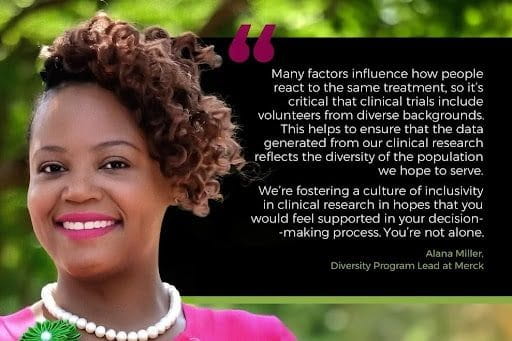
Ask your doctor if you may be eligible for a clinical trial. For more information, visit https://www.merckclinicaltrials.com/diversity-inclusion/.
+++


By subscribing, you consent to receive emails from BlackDoctor.com. You may unsubscribe at any time. Privacy Policy & Terms of Service.