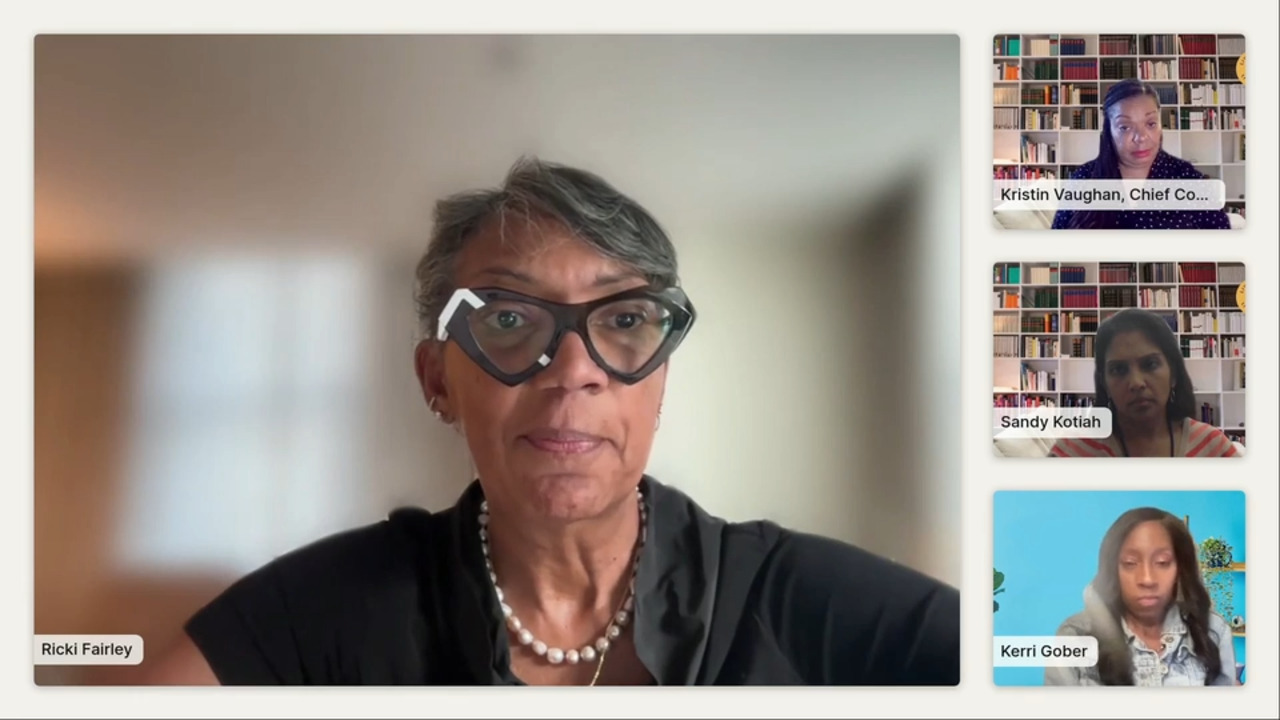
All right. Hello, Black Doctor community. What's up, everybody? Hey, my name is Derek Lane, and I'm the chief marketing officer here at Black Doctor. Today, today is a special day. We are proud to partner with Nephrologists for Equitable Kidney Care to bring this virtual conversation about improving kidney care across our communities, so particularly for those who have been historically underserved. So if you have kidney disease, if you know somebody that has kidney disease, kidney issues, wanting to know more about the kidney, today is for you, and we're learning about the importance of phosphorus management as well.
So Black Doctor community, we want to hear from you, so share your stories in the comments. Let us know if you or someone you love, a family member, is dealing with anything, with kidney or surrounding kidney. Any questions you have for kidney, we'd love to hear from you. Also, let us know where you're from, where you're, checking in from, the, the south, the, the north, the, the East Coast, where it's gonna be cold this weekend. Let us know. We'd love to hear from you. Now today, we are privileged to host a panel that brings together community, expertise, patient perspective, and clinical knowledge.
So we've got a power-packed panel, including Dawn Edwards, who is a chronic kidney disease warrior and, hemo-hemodialysis patient, who will share her incredible story. We've got also Dr. Janice Desir, a community nephrologist who serves as co-chair of NEK, N-E-K-C. We also have the incredible Dr.
Laura Williams, who is the chief patient officer and interim chief medical officer at Ardelyx. And now, that's a company focused on discovery and developing and commercializing medicines that matter, including advancing phosphorus management solutions for kidney patients. So like I said in the beginning, if you know someone or if you're dealing with anything, talking about kidney, this is for you. So to start things off, Dawn, can you please share your story? And then we wanna kick it to Dr. Desir right after that to follow up with our community to understand why phosphorus management matters so much in their day-to-day quality of life.
So Dawn, can you share your incredible story with us? Sure. Thank you so much, Derek, and thank you all for, inviting me to participate in this most important conversation. I'm Dawn Edwards, and I'm from Jamaica, Queens, New York, and I have been a kidney patient advocate for over 30 years. I have been, particularly, dealing with end-stage renal disease since the 1990s, 1992 to be exact. so I've been in the, in the, in the game for a long time. Nice. And one of the things that's so important to me is sharing my experience with those who may not know the answers. They may be facing the same thing as myself, but I'm not really aware of the avenues to take to be successful, to be healthy, and to get the kind of care that you want.
So, my most recent story that is, pertinent to today's topic is about phosphorus lo- lowering therapies, particularly, to those who are on dialysis already, phosphate binders.
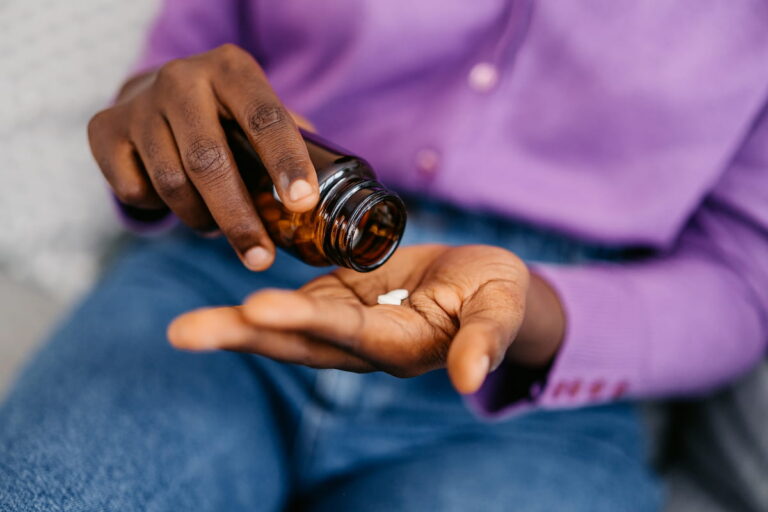
it, it's a huge pill burden. to those who don't know, we take these drugs, it's a huge pill, and we take three to five of them every time we eat. several ti- you know, several times a day. Even if you have a snack, you're really supposed to be taking, these drugs with you. y- you have to carry 'em in your bag. You put 'em in, put 'em around your neck because lowering phosphorus is an important part of maintaining wellness while you're on dialysis. phosphorus is a dangerous mineral that our body doesn't process because, when you have kidney failure, you no longer urinate, so the phosphorus stays inside the body, and it And I'll let Dr.
Laura and Dr. Desir tell you all of the intricacies of that. But, for our patients that have itching problems, who have bone problems, maybe even, vascular problems and heart trouble, this medication is really, really, serious for us to take for us to maintain the health of these vital parts of our bodies. so I've been taking these phosphorus lowering therapies for about 25 years. Wow. I started out on in-center hemodialysis back in the '90s. after three years, that wasn't really, a desirable treatment option for me. It was, really interfering in my lifestyle, and, I had a child at home to raise.
So I, was introduced to home therapies by a physician and, I, I started doing home therapies, which was just a, a complete apples and oranges, to the in-center environment, and I felt so much better. well, fast-forward to just this past April. on April the 9th, I was called for my second kidney transplant, and I was so excited.
I ran to the hospital, got on the table, we're ready to go into surgery, and, I woke up and I was not transplanted. So the, the reason being is that when they went to put the new kidney in, my vessels that you hook o- hook onto the new kidney had calcified. And to, to my fellow patients, that means when they went to sew the kidney onto my bladder, my vessels crumbled up like chalk. And we'll leave that for Dr. Laura and Dr. Dasir as well to, to explain a little bit as to why something like that would happen. So the really important thing that I wanna say before, before we pass it on to Dr.
Dasir is most people who are on dialysis, who have kidney disease, want a transplant. And- Yes seldom do we know what it is that we need to do, what is our responsibility as the patient to help us to get there. We're already marginalized i- in the transplant space, where few of us get those transplants that we really want, and a lot of that is mainly our responsibility to take care of ourselves so that we can be ready when we're called. And that, by that, I mean we need to be eating right. We need to be taking care of ourselves, taking our drugs, showing up for our dialysis treatments.
that's our responsibility, and if we fail to do those things, it makes our wait longer and longer, and it does damage to the inside of our bodies. and so when we get ready for the transplant, anything can happen. So I just want people to really understand. I know that food is love. Our diet is so limited, and there's things culturally that we love to eat- Mm-hmm that are not helping us.
So we should be working with our care team, working with our, our doctors, taking our medications. We have to own some of this responsibility as well, and our medication is part of our responsibility. so I don't know, Dr. Dasir, if you wanna jump in and, you know, explain some of this. We'd love to hear from you. Y- you know, before we do that, real quick- Sure I, I meant to, you know, just wanted to take a quick step back and just say- Sure you know, Dawn, thank you for being here, and just ask you, how are you feeling today? Well- What's today looking like for you? What's, you know, how are you feeling?
I'm so glad you asked that question, Derek, because, you know, I'm still recovering from April. once that transplant didn't work- Mm-hmm I had a barrage of other health issues that, other things that went wrong in addition to that. I, I, I'm still, recovering from a lot of those things. and, you know, when you get a transplant, that's another treatment option. It's not a cure for kidney disease. so anything can happen. Mm-hmm. So you gotta always be thinking. you may want a transplant, but you have to own, your share of the responsibilities before you get one. And you need a lot of support for afterwards.
That's, that's good to know. Doc- Dr. Dasir, chime in here just about, you know, your thoughts and, you know, phos- PLTs as they're called. Could you share a little bit? No, absolutely. Well, thank you to you, Derek, for the invitation and blackdoctor.org, and I think that Do- tion of the struggle and challenges of a kidney patient.
I think what I wanna do is maybe add a little context, because chronic kidney disease is a spectrum. We have stages, and what Dawn has shared in her story is the symptoms that she had as an advanced CKD patient, or chronic kidney disease patient, and then renal disease, which are those who are on dialysis. And what I think she highlights very well in just talking about her tw- 25-year journey as a k- a kidney patient is all the different chall--disease, the issue is that your filter, your kidney, is not optimally clearing the toxins that we build up. When we go to the bathroom, we're eliminating those toxins, and as you get more advanced disease, you may physically be feeling like you're doing- strength, and the- well is diminishing.
And so when you get to a certain- Oh, looks like we might have lost, Dr. Desir. I'm so glad we've got Dr. Williams, of course. Yeah. Dr. Williams, can you, pick up- Yeah where Dr. Desir wa- was, was talking through? I think she's, I think she's back. Um- Okay. Oh, there she- But I- let me know if, I've, if you need me to jump in. she's back. All right. I think we've got you back, Dr. Desir. I think we've got you back. Hello? Yes. Yeah. I don't know if I'm back or not. I know I was Okay. Sorry about the connectivity issue. Is, I think ultimately that the, you know, in talking about those who have kidney failure, and partic- particularly what Dawn was sharing in terms of her, her issues with the- Oh, looks like we, we, we keep- Yeah there's some connectivity issues, so- I'll just jump in.
I, I, I- Yeah I get a sense of, of, of obviously what, what Dr. Desir w- w- wanted to share. And a- again, I too wanna thank, BlackDoctor.com, Derek. and Dawn, it's always a pleasure seeing you, and, you know, just, just following your story and, and, you know, just how you handle it with so much grace. Um- Thanks, Laura Yeah. I, I, I think, you know, one of the things that we, Dr. Desir was trying to share, again, is that there are stages of chronic kidney disease, you know, early stage, where, again, the goal is to try to prevent progression, and then- Mm-hmm late stage, which is what we call end-stage kidney disease or kidney failure.
And once you get to that kidney failure stage, the only treatments is what we call renal replacement therapy. Okay. And what does that mean? That means either dialysis or a transplant. Transplant provides a much higher, survival rate. The five-year survival rate for transplant is greater than 80%, whereas the five-year survival rate for maintenance dialysis is less than 50%. And initially, the goal had always been that dialysis was just a short bridge- to transplants. But that obviously hasn't borne out. There's not enough kidneys. There- Right are other, you know, sort of issues from a socioeconomic standpoint, from, you know, social determinants of health, all of those things.
But, at the end of the day, to Dawn's point, transplant is w- sort of where you wanna go. And so when we think about end-stage kidney disease, I think the other piece that Dr.
Desir wanted to share was just the stark, you know, sort of disparities, among those who actually get chronic kidney disease. It's a real issue for our communities, for minoritized communities. w- there's, you know, a fourfold higher rate of kidney failure in Blacks- than, than whites, and there's a twofold higher rate of kidney failure in Hispanics, versus, whites. And so when you look at that disproportionality and then you couple on top of it, you know, sort of the transplant rates, even though there's a much higher rate of kidney failure among Blacks, you are two times less likely to get a transplant if you are Black.
And so, as Dawn said, yes, there are a lot of things that we have to do, as patients to make sure that we are ready, if that opportunity, you know, permits itself. but there is also no denying that there are social determinants of health that impact these numbers, and so I think we have to look at, at both of those. And so when you talk about phosphorus, again, in terms of why it's so important- f- it's a, it's a major mineral in our body. It, it, it partly, takes care of the energy source in all of our cells, and so it's really important. But the problem is it is ubiquitous, and so when our kidneys fail, we can no longer get rid of it, as Dr.
Desir said, through our urine, and so it builds up, and what does that h- what happens when it builds up? Well, that's when you get all of the complications that Dawn was talking about. You can get itching. You get- increased morbidity, mortality.
What does that mean? That means, you know, the phosphorus binds with the calcium that's in your blood vessels, and it forms these calcifications, as she said, these plaques. And so your vessels are no longer, you know- Pliable pliable and pliable. They, they just start to, you know, they start to be brittle, right? Mm-hmm. And so that's what Dawn was describing when she was, you know, getting ready for her second transplant, and they wanted to attach the kidney to the blood vessel source. It was already damaged from all of that calcification, and so that's a huge issue.
So cardiovascular disease is one of the most common reasons that, you know, patients who have kidney failure actually, you know, die. And so it's a huge issue, and phosphorus plays an important, important role. And so at the end of the day-You know, when we talk about phosphorus management it is exactly what Dawn said. It's diet, it's dialysis, and then it's medications. Mm-hmm. The problem is phosphorus is ubiquitous. It's in all of the foods- Everything that we have. Everything that the It's in good things and bad things. It's in, it's higher in processed foods, but we, it's also n- in nuts, and fish, and- all things that we think are good.
And so- Mm-hmm diet alone usually doesn't take care of it. Dialysis three times a week, if you're in center, can actually help, but it doesn't alleviate the issue as well. And so then there are the medications, and that's what we call the phosphate-lowering therapies. And that's important.
That's a critical part of, you know, sort of the treatment. It is because of the high mortality, the high morbidity, that it is extremely important to control phosphorus. And, you know, one of the other things, and again, this is what Dawn talked about, is that it also, when you have a higher serum phosphorus level or blood phosphorus level, it limits your ability to be transplant ready. That's right. so, you know, what we know based on the data is that the higher your serum phosphorus level is, at the time of transplant, that is associated with whether or not your transplant is successful, if it, if it fails or if it continues to work for you.
So with higher levels, that is a problem. And there are a number of transplant centers that actually won't even do the transplant if your phosphorus levels are really high. And so that is why it is important not only to manage phosphorus levels, but these PLTs, we have to make sure that patients actually have access to them. I mean, phosphorus is complex. Phosphorus management itself is complex, and it's critical, for dialysis patients. But a- and, and diet and dialysis alone usually doesn't do it. And so access to these phosphate-lowering therapies is absolutely critical.
And when we talk about phosphate-lowering therapies, what are we talking about? There are two categories. One is called phosphate binders, which Dawn touched on, and it's just like the name implies, right? It binds the phosphorus that you take when you eat, right? And that's why you have to take them with every meal.
The other group is called phosphate blockers or phosphate absorption inhibitors, and that's also taken in association with food. The, the bottom line, though, is that, you know, one of the things that we see in terms of dialysis patients is an antiquated payment system. It is, you know, you know So dialysis care is, you know, paid out through Medicare, and the Centers for Medicare Services actually, basically have a system where they bundle all of the payment for your dialysis services into one fixed payment. So if a dialysis patient is sitting in a chair, that bundled rate pays for the dialysis itself, any labs that have to, any blood tests that have to be done, and any drugs that have to be administered during that session.
And that bundle payment nowhere near covers- what the actual cost is. What the cost- And yet all of these therapies are now being bundled into, into that system. And so that forces, this fixed reimbursement piece actually is problematic. There are no f- It, it, it actually creates a financial disincentive to prescribe all of the right therapies. And so every patient should actually have individualized care. There shouldn't be, you know, a protocol that says one size fits all. And one of the things that this system creates is just that. Rather than me, for example, looking at Dawn and saying, "Oh, I think you need this therapy plus this therapy," my, my protocol at my dialysis organization may say that, "You can only get this," and that's a problem.
And so- Yeah I, I, I think at the end of the day what we have to recognize is that it's one, one thing to have these drugs out there.
It's yet another thing to make sure that patients have access to them. And so these phosphate-lowering therapies are critical. They need to be individualized. a- and it's a shared decision between Dr. Desir and her patient, let's say Dawn, that has to be made to figure out what is the best regimen for this patient at this time. It's no different than how we treat other patients. If you look in the oncology space, we treat patients individually based on what it is, that they have. Mm-hmm. It's the same thing here. I think any complex, you know, disorder requires this constant iterative individualized care.
So I'll stop there. No. Thank you. Thank you so much. I was writing so many notes over here. I got- tons of questions- Yeah I don't know if we're gonna have time for. But- just talking real time, talking about those barriers, that you mentioned, Dr. Williams, Dawn, have you experienced any of that, you know, be- Ab- absolutely with trying to get, those PLTs? can you share some of that? Yeah. Absolutely. the phosphorus-lowering therapies, as, as we've said, are a really important part of the end-stage renal disease care. And-It should be where you get the drug that's right for you.
Well, with this bundled system that has taken place, recently, everybody's getting the same thing now, which is the cheapest- drug that's out there. So just about everybody's on calcium, binders, and that may not be the best one for everyone, and that's exactly what happened to me. I was taking, one type of binder prior to the bundle, and then once the bundle came in, now everybody's on the calcium binders.
And, it may not necessarily be the best choice for me. I'm concerned- Mm-hmm about, about the calcium es- es- especially since I went for the transplant and it didn't work because of calcified, vessels. I mean, what's gonna happen 10 years from now? i- it's a big concern. and I think that putting that binder in the bundle system has done some unintended harm, for patients moving forward. and I'd like to see, patients be able to sit down, have a conversation with their doctor, and make an informed decision about which phosphorus-lowering therapy is right for you, just like we do with, blood pressure medications- Mm-hmm our, our, our heart medications, GAST medications.
There's more than one for a reason- Mm-hmm so that you can talk to your healthcare team and decide together which one would be best for you. And that to me sounds like it just makes so much sense. So let me just break it down for the people in the back. Mm-hmm. They're saying you have this disease. There are other therapies available. Yes. But they're saying you only qualify for this one. Even if it's not jiving with your system- Right that's the one that they say that you qualify for. That's correct. So, Dr. Desir, can you just, you know, th- thank you for, for, for coming back on.
can you talk about- the overall impact, and honestly, what, what can we do about this? Is there something we can do? Yeah, and, my apologies too for the connectivity issues. I think that we've heard a lot about the impact. In five years, complications happen, and I think what's very important for patients to understand is that there are things that you can or n- necessarily, understand unt- till, you know, it- it's a little bit too late, right?
She had the wonderful opportunity says. So I think it's a reminder to us that what we do now is what can impact us later. And unfortunately, we're not Back to the impact, you know, it was 2025 where this rule became in effect, and what we're seeing to what Dr. Williams and Dawn said is that center, in doing so, it comes at the compromise of the patient because you choose what the majority like. You choose what you can kind of, maintain in your center. And so what used to be the job of the pharmacy is now becoming the job of the dialysis center, who already has a lot of other responsibilities and things that they need to commit to for patients.
That's right. So in terms of what we do, it's the conversation now, the message across that this doesn't make sense- Right and this is not truly advocating for what's best for patients. Right. Wow. man, and I see, you know, when you talk about just dialysis centers, they are so There's so many in and around communities of color that I see. Yes. And you know, I've had family members and loved ones that have had to go to dialysis three times a week, so many hours a day, just to deal with this issue. I've, I've heard the term, all roads lead to kidney. You know, just showing how kidney, the kidney, your kidneys are so important just to the regular quality of life.
So, with that, I've got a, a number of questions, and, before we, before we close off here. So, you were just talking just a little bit about what we can do. Dr. Williams, what can the community do?
What can just the everyday person who's watching right now, what can they do to help address this issue? Yeah. I'll start with the, with the actual patients. I think, you know, from that vantage point, we have to advocate for ourselves, right? There, there's gotta be a level of, you know A- and, and to do that, there needs to be education. So in terms of the general, you know, community at large, as Dr. Desir said, it's programs like this where we educate the public, right? And so that folks understand what the issues are, and they bring those issues to the forefront. I think the other thing that the community can, can do right now, individuals, a- again, Dr.
Desir touched on this-Is know your numbers. Mm-hmm. So if you, have a history, a family history of chronic kidney disease, if you've got a history of diabetes and hypertension, the number one and two reason that patients actually start to get chronic kidney disease, you have to make sure that you get checked, that you know your numbers. It's a simple test, a simple blood test, and a simple urine test. knowing that is important because once you know that, you can actually There are numbers of drugs out there to slow the progression so that hopefully you don't get to that final stage of chronic kidney disease.
I think we can also, you know, lean on our legislators, to let them know that we're dissatisfied, displeased, right, with, with the way the system works. I mean, in 2025, when these phosphate-lowering therapies went into the bundle, there was a, a survey by, one of the, kidney advocate org- organizations that said 70% of physicians, and I know Dr.
Désir can, can attest to this, had issues accessing these phosphate-lowering therapies, and nearly 40% of patients did as well. Mm-hmm. So it's a real problem. You know, to not be able to control something that we know carries so much risk is, is decidedly problematic. Wow. Right. Wow. so, going back to you, Dawn, you know, I've just gotta just commend you on just, you know, staying in the fight- Oh and helping to, you know, not only educate, but, you know, show people that there is a way. There is a way. Yeah. You know, there is, you know, light at the end of the tunnel, you know, if we all work together.
Yeah. as someone who's dealing with the issue now- Yeah what is something that you, might have done differently, let's say five, 10 years ago? Oh, boy. Something that might help, you know, somebody that's watching right now. Yeah. there's a lot of things that I would have done differently, Derek. first of all, I would have a eaten differently. I don't wanna, pu- name any names, but the fast food that's out there, those highly processed foods that are in the supermarkets, I would have done all of that differently. I would have walked past, the hamburger joint and the chicken, the chicken spot, and I would have gone and, you know- You get the beef and shopped on those two end aisles in the supermarket and leave everything in a package, in a box, and in a can.
I would've I, I'd leave all of that stuff alone and eat fresh foods, home-cooked foods, foods that I could control what's in them a little bit better.
And when shopping, if look at the labels. If you see something on the label that you can't pronounce, put it back. Mm-hmm. that's one of the ways that y- we can control, what it is that we're putting in your body. Mm-hmm. Then the next thing I would do is just try to exercise a little bit more. move around a little bit more. Those simple things that, you know, our, our mothers and fathers did in the past when they walked to work and walked to school, those were things that were necessary to keep us healthy that we just don't do anymore. and I would, I would definitely just talk to people.
Read more. Read. It's out there. It really is. even today when I go around and visit patients in the dialysis centers, it's full of people that look like us. Mm-hmm. Mm-hmm. And they don't have enough information to be empowered over this disease. And by empowered, I say to be in control of your own outcomes, not just sitting there sticking your arm out waiting for somebody to, you know, do dialysis to you. You can do it yourself. You can do it with your family members. You, you can take control of this disease. you just don't have to accept what's given to you. And that's another thing that I learned.
when I went into stage five and they told me I needed dialysis, I didn't know my treatment options. I didn't know my drug options. I didn't know anything. So that's why it's brutally important to me to sit down and take time with, my patients, my people that, you know, that I know in my community, and explain to them how this whole thing works because you can't be a master of the game if you don't know the game.
Mm-hmm. Preach. You're preaching now. I'm about to, about to pass along the collection plate. Dr. Désir, as we are wrapping up here, I know Dr. Williams, gave us a game plan of, you know, like, talking to our legislators and knowing our numbers. Man, and I hope people do both of those things. We've gotta talk to our legislators about this important issue. Absolutely. We've got to know our numbers as well. can you tell us, how are nephrologists like yourself, how are, how are you all working around the issue now? And how can If there's anything different, how can a, how can we support nephrologists like you?So I, I think Dr.
Williams said it very well. There's one thing, because I know your audience is across the United States, that I think it's really important to add about the numbers. So in, in 2021, the American Society of Nephrology came together and noted that there was a bias in the way that kidney function was calculated. Yep. And it used to be that your, if you were of the African American race, you were almost given a boost as if your kidney function was working stronger than it was. But that, that was incorrect, and it actually caused more harm 'cause you were exposing Black and brown patients essentially to risk factors that made them lose kidney function faster.
Mm-hmm. The relevance is 30% of labs in the United States still So when you know your kid- ney numbers, you should look, you should make sure that there is no distinction in race. If there is a distinction, you a different level of kidney function than those who are not of African American background.
So please, please, please make sure you're l- looking at it correctly. And if your nephrologist doesn't know or if your nephrologist is not using the right one, you be the one to educate them, okay? But I would hope that correctly. And there has been a movement to correct that in the transplant community to advocate for those people who have lost time- Yeah in trying to get them kidneys faster. Mm-hmm. And I have heard of stories. One coincidentally- Yeah happened to be the, a- academic coordinator at my medical school. I happened to just be reading an article and saw soon after that change she was able to get a kidney.
Wow. Yeah. Dawn. And it's all of the things that were happening unbeknownst to us in terms of the calcifications and the buildup- Right of the toxicities of the phosphorus that are now ma- king that effort to help nephrologists. To me, it's more of the nephrologist to help the patient, but we can, can be a team together if we are more aware of these risk factors so that we're properly preparing for success if transplantation is an option. 'Cause sad to say, for some people it's not. Sure. But if you're one of those people who are blessed enough for that to, then we wanna maximize your success.
So to Dawn's point, what you choose to do now in terms of where you work, where you play, what you eat, that's what's gonna be what's gonna impact you five, 10, 15 years. Yeah. That's so true. Down the line for tomorrow. Yeah. That is so good. Mm-hmm. That is so good. I'm, I'm seeing that, you know, there is power in your voice.
If- Yes and if nobody, gets anything else out of today's discussion, there is power in your voice, you know? And thank you so much, Dawn, thank you so much, Dr. Williams, and Dr. Desir. like I said, I've got tons of questions, and I know that this subject of kidney and phosphorus, lowering therapies is something that is continuing to be a hot topic, amongst our readers and, and users. So we'll continually come back to this and share as much information as possible. So I wanna thank everybody for joining us today and being a part of this incredibly critical conversation about health equity in kidney care and why phosphorus management, it matters.
It matters to us, it matters to you. You may not This may even be your first time hearing about phosphorus management. Right. But you know it's important to you. Mm-hmm. You know it is. You know it's important to your family. So continue to, to raise questions, discuss it, educate yourself and your family about it, because it is truly important to us all. Yes. So remember, Black Doctor Community, share your story as much as you can. Thank y'all so much, and we'll see you later. Take care. Thank you. Bye. Thank you. Thank you. Bye bye.