Play Video

Poetry of Healing: A truth about marriage
What does marriage really require?


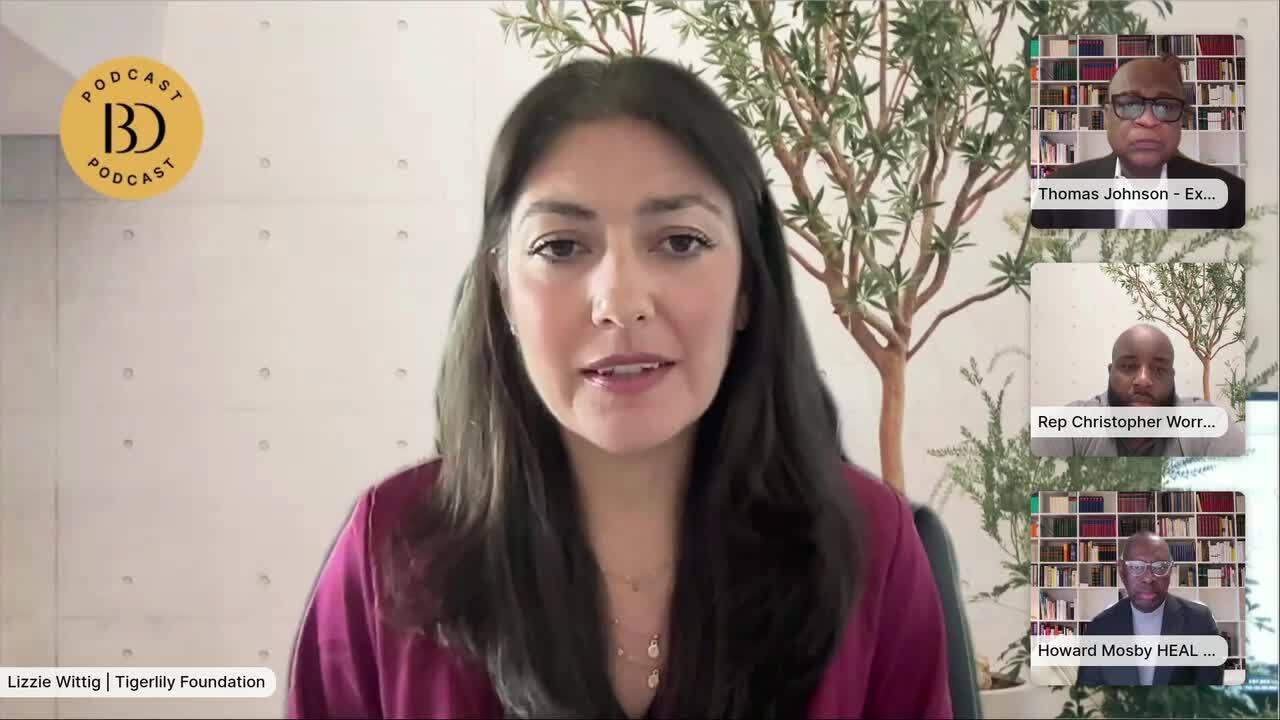


Good afternoon, everyone. my name's Thomas Johnson, and I'm the Executive Director of the Alliance to Save America's 340B Program, or ASAP 340B. Our coalition brings together organizations, representing stakeholders across the healthcare community to ensure that the 340B program supports true safety-net providers and the communities, that they serve. Our work focuses on achieving a federal fix for the 340B program. The 340B program was developed over 30 years ago with intentions to help support true safety-net providers serving low income and vulnerable patients by providing many of those providers with prescription drugs at a discount for outpatients.
However, the program has strayed from its original intent, and patients aren't seeing the savings they, they should be. We are proud that blackdoctor.org is a member of our coalition. Blackdoctor.org takes seemingly complicated topics and makes them simple to understand and act upon. Today, we have three esteemed panelists who will help us understand what the 340 program is, who it's intended to serve, and what is needed to ensure that it's serving the patients who need it. So we are happy to have Howard Mosby, a certified public accountant, former member of the Georgia House of Representatives, Vice President of Grady Health System, and a co-founder of the HEAL Collaborative.
We also have Representative Kim Schofield, a member of the Georgia House of Representatives since 2017 and Chair of the Georgia Council of Lupus Education and Awareness, and Dr.
John Goldman, a rheumatologist practicing in Roswell, Georgia, affiliated with multiple hospitals in Georgia, including Emory Saint Joseph's Hospital and Northside Hospital Atlanta. Thank you all so much for joining, joining me. Thank you. So, Representative- Thank you Schofield, we're gonna start with you, and, we greatly appreciate, your time today. I know you've, really provided some leadership, with regards to addressing, lupus-related issues. and the Lupus Foundation has actually, co-authored a study as it relates to the need for 340B reform. Can you talk a little bit about why 340B reform is important to you?
Yes. Thank you so much for having me here. Thank you to blackdoctor.org and for all of my esteemed panelists. Listen, as a legislator and as someone who lives with lupus, I've been living with it for 26 years, 340B reform is not an abstract policy to me. It's personal. And so the program was created to help a safety net resource and provide resources so patients can access life-saving medication, specialty care, and support services. When the program is manipulated, or restricted, or diverted from patient care, what it does, it's not just a budget issue, it's a health equity issue.
And for communities already facing higher rates of chronic illness, higher costs, medical debt, and more barriers to care, 340B was a way that it should operate the way it was intended. So we do know that reform means transparency. Reform means accountability. Remo- reform means ensuring that it goes directly to the patients and not the middleman.
So we're gonna continue to fight for access affordability in healthcare. But for many of us, it's not just politics, it is our survival. Howard, how did we get here, when the 340B program, that was created as a discount program to help, vulnerable patients, gain better access to medicines at hospitals and clinics, treating the safety net population? So this program was started in 1992 as, from the Public Service Act, really to try to help support, the Medicaid program, to help support these entities, they're called covered entities in this legislation, to be able to provide services to that population by using the discount from drugs.
there are a lot of smart people in healthcare, as, as you well know, and that they know how to actually go in and manipulate the system. And so over time, people have been picking away at ways to figure out how to use more of those drug discounts to, help fund other things in the healthcare setting. it wasn't until the, Affordable Care Act came online when it really saw this big jump in the number of individuals being able to access this program, i.e., your, these contract pharmacies that are out, that are, not a part of a hospital system, but your CVS, your Walgreens, things of that nature, that are able to go out and not buy and, and be in the 340B program and be a part of that, that-I guess that stream of drugs going from the patient, from the, from the manufacturer to the patient.
And so, and then- then hos- certain hospitals found a way to really figure out how to maximize this program to help them meet their bottom line responsibilities, their, them, their margin targets.
And, and not have those benefits go to, those constituents that they serve. And so we find ourselves now in a place where And let me just say this, none of the dollars that are being used in the 340B program are federal dollars. These dollars come right off the bottom line of the pharmaceutical manufacturers and, and they are kind of shut out of the process of being able to understand how their dollars are being used in this space. And it really is, how do we ensure, to Representative Schofield's point, that the, at the end of the day, the, the patient is the beneficiary of this policy, and different hands that are in the middle of this process.
So your contract pharmacies get to skim some off the top, your hospitals get to take some. But at the end of the day, how it, are these benefits getting to the patient or not getting to the patient? And can we quantify that? Specifically in communities that look like us, we want to make sure that every bene- every dollar, every benefit that, that we're supposed to get, that we make sure that those benefits gets in our hands. And this program really has, has gotten off track by, because it become, it became a, a revenue stream for some institutions. Thank you. Dr. Goldman, you, you There is a, an organization, a federal organization called the Council of State, Rheumatology Organizations.
they view, 340B reform as a priority. Yes. can you tell me a little bit about what Georgia's doctors and pharmacists are saying about the 340B program and the need for reform?
Well, I think Howard put it well. The problem is, I apologize everybody, because, my camera doesn't want to talk to me today. However, the issue is that this program was developed for underserved communities, and it's been discombobulated to the point now it's the, quote, covered entities, which are these big pharmaceutical programs, and what they're doing is decreasing the payment to the, the, th- to the patient. but that is being taken over by their other contrast of other programs that they want to do and not It's supposed to go to the patient, but they aren't getting it to the patient.
They're getting it to their own bottom line. I think, it's an important issue. Now, for the rheumatologists in the community, we are trying as we can to get this program working for our patients. But this program is not, is not aimed at our patients. It's aiming at the big entities, from where they get the drugs. And what we're trying to do is help get them to, get them to be covered. Those of us in private practice, they take this away from us, and they are also from a government bureau, they're trying to actually decrease the private practices by having them taken over by the big entities that are pri- prescribing this.
Now, this isn't what we want. We don't want you to lose commun- practices in your community. My practice, which involves, was four places. They had to, close one in what we call Sandy Springs, Georgia. So this is absolutely affecting how, practices can help, these disadvantaged patients.
Okay. Thank you. Howard, coming back to you, I know that, 340B reform is a priority of the, HEAL Collaborative. can you tell us why reform is needed now, and what type of legislative action is needed to get this done? Yeah. And great question, um- Can't hear you certain communities. And on top of that, what are some of the policy implications on why that is happening? And what happens in this space that, that dollars available for individuals to have access to for no-cost medications are not happening. We do a lot of work in the, in the, oncology arena, specifically around lung cancer, and we're find, we're finding that a number of patients are not getting access to oncology drugs because the cost is too high or the co-pays are too high.
And we, and we learned that, in many of these cases, individuals were, were actually 340B patients and that they should have fell under the 340B pricing for these entities. And so we felt that this was, was an important need to understand, to know that they have access that are out there that are not being provided to them. And people like Kim Schofield need to know governmental program that was put in place that entities is not getting there because they're being redirected in greed away from, uh-As, as an existential threat to the healthcare landscape Okay, thank you.
Representative Schofield, I'm gonna come back to you. we've been sounding the alarm that there's a problem with the 340B program in this country, and how it impacts patients. there are a number of patient groups that are starting to become more active, with regards to 340B reform.
can you talk about what patients should do to educate themselves about the 340B program and how they can work with law, lawmakers to advance meaningful change? Yes, thank you. You know, this is just a very serious time when we talk about 340B. I know that it's can be overwhelming, but, you know, as patients and as people, we deserve clarity, not confusion. And so it's important that the people that are impacted most, those are the providers, the people, the patients, and caregivers start to speak up and speak out. And one thing you can do is, the first thing, is to educate yourself a little bit about what is really going on with 340B and what does it mean.
How does this impact me? You have a bunch of advocacy groups that can explain it, but more than that, you can ask your providers, you can ask your hospitals, your clinics to find out where is the cost savings going. Is it pay going directly to their, space or they are Is, is it going to the patient? So we're goal is to reduce the cost. This was supposed to help us, not hurt us. And so the other thing you can do is to share your story. As, Mr. Mosby has said, that it is very important that your legislative body hears from you. We've got to hear patient stories on this is how it impacts us, and the way that we can, we need to move policy is to hear from the voice of the people.
So knowledge is power. Transparency is about asking questions, things you don't understand, and then contacting the people like your legislators. Listen, if we don't con- do something now, we're gonna see an increase in medical debt like we've never seen before.
You're gonna see an increase in, people are already struggling to decide whether to pay bills or to get their medication. How much further are we gonna push people back for a system that was de- designed to help us? So we're going to make sure that people hear the voice of the patients, the people, the providers, and you're gonna educate yourself. This is the part where you get to play a role. This is not the government, this is the people now, the advocacy groups, the time to speak up and speak out. You say, "Well, how do I do that?" First of all, find your legislator.
You can make sure that you know and you go to findmylegislator.org, and you can put those words in and figure out who's representing you, who is making these decisions for you, because you have to partner with your legislators and your advocacy groups and your providers to say, "Hey, we want more, we want transparency, and we need it now." Thank you. Dr. Goldman, why don't we, touch a little bit more about, your view on how, this is all impacting the patient community in Georgia? Well, I think that the most important thing is that they're losing their doctors. Here in Georgia, we have a major problem with the, number of physicians we have now and the number w- of physicians we need in the future, and practices that are trying to Actually, you wanna do the 340B, but you wanna do it to the patient in the practice, not to these covered, entities, because they don't cover.
And it's important that that be available so that the patient, can see their family physician, can see their rheumatologist, can see their oncologist, and yet the, the, they, can prescribe this medicine, for those who are underserved i- from a regular practice, and the program should not be to the, shall we say, the covered entities.
One of the problems is when this was started in '92, and again revised in, 2010, they didn't really have any transparency. They didn't have any guides to how to watch this. And of all the programs that, are available, like, they, they don't do much, shall we say, jurisdiction on them to see what's going on. So the way that I, I, I see this is that this has to be done at the patient level. The patient needs to be told, "In order for you to get the medicine from your physician, you need to have that physician be allowed to give it to you," because they're not allowed to. And the hospitals that do this, they ma- mark up the, what they have to pay, which is a decreased price, and that's supposed to go back to the patients, but no, they're doing it to their whatever, shall we say, issues they want for their, hospital a- and, not for that, underserved community.
Now, we're gonna see where this goes in the future. Georgia had a bill with this, recent legislation on it to stop the manufacturers, from refusing to give this program to pharmacies, so hopefully that is one of the things that'll do it, but there's more that needs to be done. We need to emphasize underserved patients. This was the noble mission of this program, the 340B, but it's been, shall I say, I use the word discombobulated, because it is being held back. It is not doing that, it's being sent to the wrong direction, and, like my camera, it's not f-Transparent, so they can't see what the heck is going on, because they aren't even being governed.
There was very, very little governing when this program came out, and it has not improved. And we need to get this thing under a jurisdiction that we can say, "Hey, this goes to patients. Let's let the family physician, supposedly the family rheumatologist, the family oncologist, be able to do this directly from looking at the patient." And, a- and therefore it'll be definitely honest than what's happening with these large jurisdictions. And, that way we can have that physician be able to use this for underserved patients, Medicare, Medicaid, whatever, and hopeful Uninsured even, and hopefully get them to be able to prescribe this medication for them to them.
Okay, thank you. Howard, let me come back to you. there was You talked about oncology, previously. there was a recent report, that just came out last week, commissioned by, CancerCare, and, released by the Pioneer Institute, that talked about the lack of charity care, around the country, especially as it relates to 340B, hospitals. in Georgia, the lack of charity care is particularly, astounding. can you talk about and, and maybe share some real world examples of people, who have been impacted by lack of 340B transparency? Yeah, so, you're ab- you're absolutely right. You know, I'm born and raised in, in Georgia.
Hate the fact that we end up at the top or the bottom of whatever scale you're looking at in, in this, in this healthcare space. in our organization, we've seen, we've seen a number of stories. We, we have stories where individuals, like I was talking about earlier, went to their doctor, got a prescription, the pharmacy wanting this copay that had a comma in the number.
So, you know, that's 1,000 or more. And, they were a, they were a Medicaid patient, and they didn't have that kind of money to pay for the copay, and they were not gonna get that drug dispensed unless they made that copay. And they decided to not get the drug filled. Fortunately enough, we were doing a program at the time, and they, they brought that to us, and we were able to take that back to the, to that particular drug manufacturer, and they were able to work out through their These drug companies also have, patient assistant programs. But that should not have been the case.
This, this place where this person was getting their medication should have been have ha- should have had access to 340B pricing on these drugs, and being able to have, get, get this medication so that they can continue their health. What you don't want to have happen is policy be, be a life changer to the negative to individuals in these spaces. You would like for policy to, to actually help people, thrive in, in America. And so we've, we've seen the We've seen in, in oncology, we've seen it also in, in other, in other, disease areas. But for the most part, oncology, because of the infusion or the medications, they are very expensive.
And, and when they end up in these, spaces where they are having these high copays and the int- and the organization doesn't have discount, drug discount programs to help them, people generally just don't take the medication. And we've seen premature deaths happen, with individuals just because they just didn't take the medication.
Many times individuals just will refuse to just go to They won't go back to a doctor or get the drug, filled because th- this is something that's a barrier too, too large for them to overcome. And it's important that the 340B program do what it was intended to do, which was ensure that, that organizations could use these discounted dollars to be able to provide programs. And they could be drug programs or any other access issues that will take down an access barrier so that people can actually live and thrive in the disease state that they're in. And this is not a program that's meant to help, organizations build football stadiums, so to speak.
I'll leave that right there. Love it, Howard. Rep- Representative Schofield, the, National, Black, Council of State Legislatures, passed a resolution, in December calling for transparency, in the 340B program. and, organizations that have recently come out in favor of reform include the Black Women's Health Imperative, and the NAACP. regarding the challenges related to health equity and access in 340B in Georgia, how does lack of transparency impact patient care? I think we lost Kim. I, I think Kim dropped off, but, you know, I, I was at that meeting. I, I could I'll pick up the, the question there.
so, so here, here's the deal. And I, and I, and I tell people this all the time. If you wanted to buy a brand-new car from A brand-new Ford Lincoln Navigator, you, it is impossible for you to go to that, that manufacturer and buy the vehicle.
You actually have to buy it from a dealer.And the same thing works with pharmaceutical companies. The price that you see at the drug store is not the price that the drug store got the drug for, not the price that the hospital got the drug for. And so how many hands have been in the middle between the time that you've gotten this prescription, the, the cost of this, and what that entity paid for it? And what we wa- we want to see is how many hands are in the middle of that process. And transparency, these, in, this, this, the legislation that's, that we're trying to see go forward in states is that there is a level of transparency that happens in this process.
And right now, all of this stuff happens in the background in these opaque boxes. And what we want to see is that some sunshine, shone on these processes to know who is actually taking, skimming money off the top that's preventing these communities from having access to, the lowest cost, either medication or service provider, service provided to them for that, that health condition that they're in. In the state of Georgia- Great analogy, Howard. Great analogy in, in the state of Georgia, what we've s- what we s- what we're seeing is the fact that if you look at House Bill, 139, that bill actually is, is shielding, is doing more to shield that process.
And what we would like to see is that turned around. And so in this state, we want to make sure that transparency exists. they did the same thing for PBMs. They, they did provide some level of transparency in the PBM space in Georgia, but they didn't do it for 340B.
And in a lot of ways, these entities, these covered entities are going around selling the fact that if a pharmaceutical manufacturer said, "I'm not gonna give you a discount unless you show me how you use the drugs," they're calling that a access barrier to that patient and preventing that patient from getting a drug, when the exact opposite is happening in that. But it is, it's twisted in a way that it makes it feel like that, that pharmaceutical companies are, are actually, trying to prevent access to this medication. All they're doing is trying to make sure that the, the dollars that they're putting on the table, these are not federal dollars, these are their dollars that they're putting on the table, get to the people that they were designed to go to.
Right. Okay. we just have a couple of minutes left, and so I just wanna maybe ask each of you to just comment, and y- y- look at your crystal ball, and tell me, what does the future of 340B reform look like, and, and what's the road to success? And, Dr. Goldman, I'll start with you. Well, that's a good question. the issue is it has to go through government, through state government, through federal government, and we always get worried stuff gets there and never gets done. This is important for the practice of medicine. You know, we're, we're a business just like any other practice of medicine, and the crystal ball should say, "We'll get this right.
We'll get this for the patient and not for large entities, and hopefully we will get this done." Howard, what are your thoughts?
So we didn't get a chance to really get into this, the, the HRSA rebate pilot that was just, shot down by the federal courts, where it actually, where HRSA was actually asking these entities to pay full price and then get reimbursed on the backside when they were to produce these 340B scripts. I, I thought that was a, a great pathway forward that now has been, been thwarted through this federal courts case. And also, with, HHS deciding not to pursue that, I think is a mistake. I do think that this is a federal program, it should, it should be governed at the federal level.
What we're gonna see now are state-by-state solutions in this space. You're gonna have great 340B, policy out there, and you're gonna have some bad 340B policy. It's gonna be uneven around the country, and people are just gonna start shopping where they actually do their, buy their drugs, if you will, in, in spaces where they can maximize these, these bad processes that they use in this space. And I just, again, I think that this is a federal solution. Best case scenario, crystal ball, HRSA gets back on the, on the stick and goes after a, a federal solution that makes this universal across the nation.
Yeah, it needs to be fixed. Right. Okay. Well, I guess we've lost, Representative Schofield, but I wanna thank everyone for, participating, especially our panelists, for, for giving us some real knowledge about what's happening with regards to 340B reform. this is a hot topic at the federal level and also in a number of states.
I wanna thank, blackdoctor.org c- for convening our panel today, and everyone in the audience, for listening, participating. And, you'll hear more from blackdoctor.org on a number of subjects that's affecting the African American community. Thank you very much. Thank you, Tom.
By subscribing, you consent to receive emails from BlackDoctor.com. You may unsubscribe at any time. Privacy Policy & Terms of Service.