Play Video
Poetry of Healing: A truth about marriage
What does marriage really require?

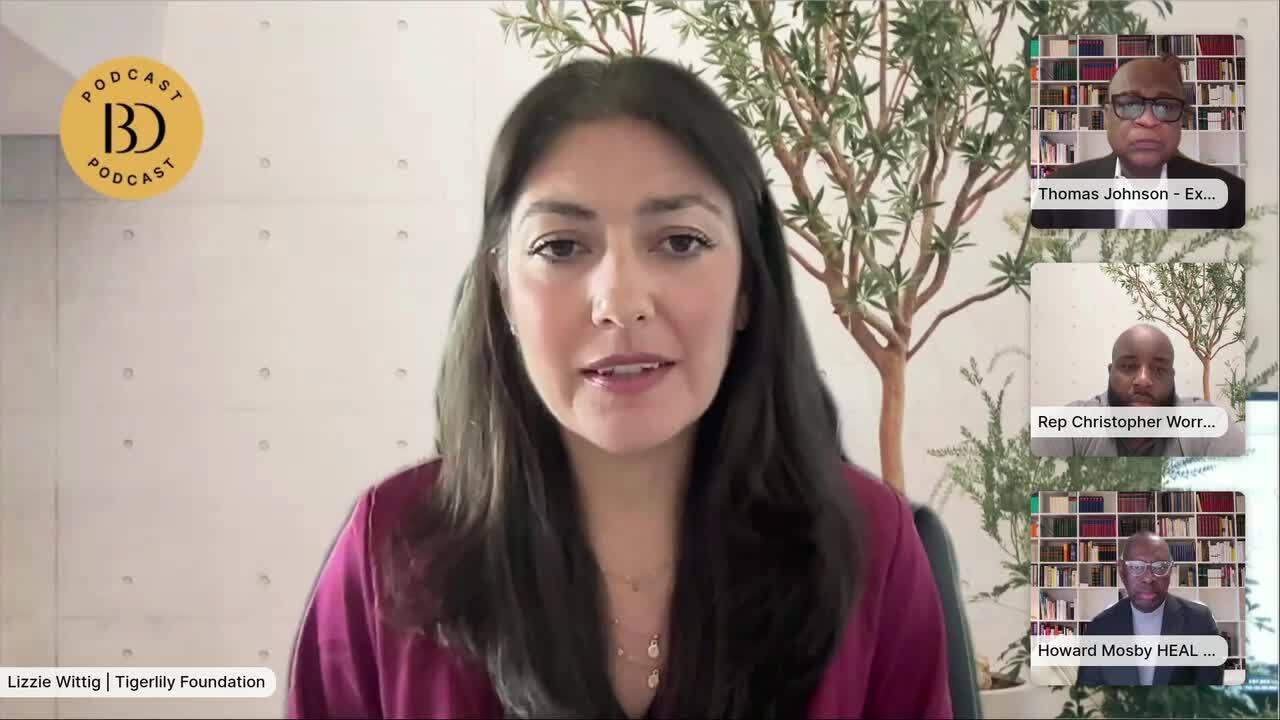
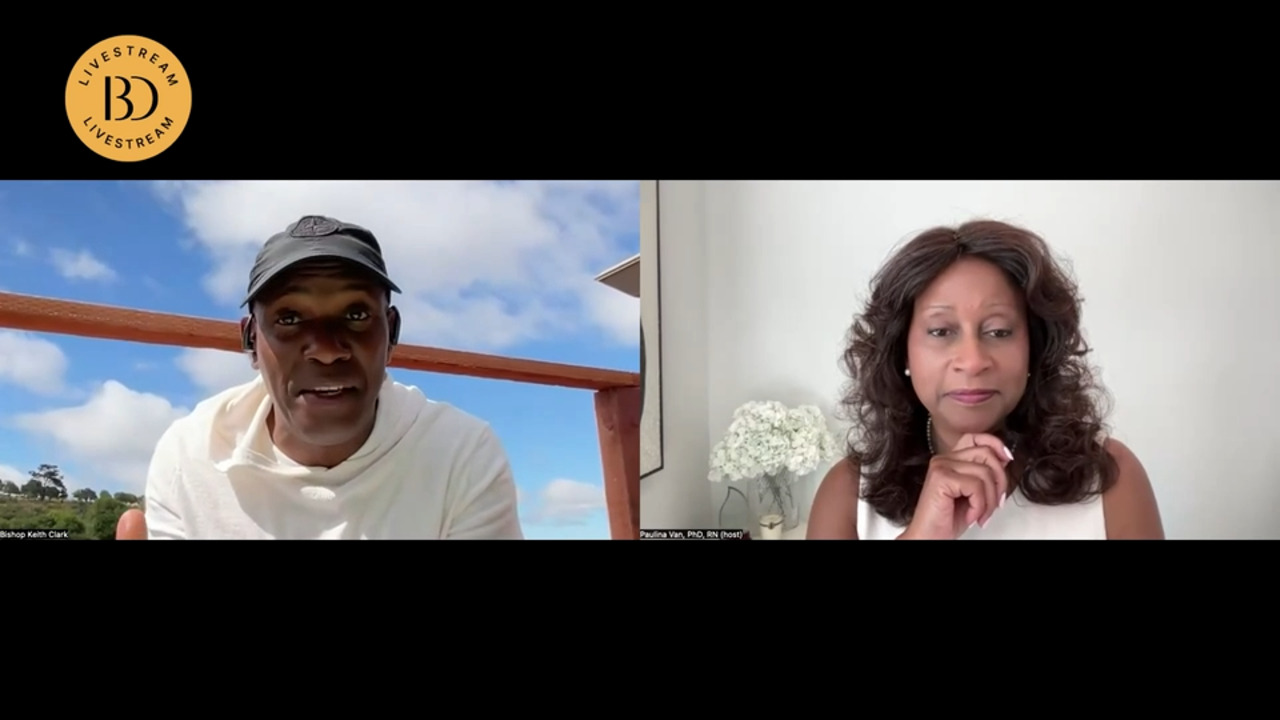
Oh, good. Okay, great. good afternoon, everyone, and, welcome to this panel, which we've entitled our LDL Cholesterol as and a Generational Risk Marker: Rewriting Your Family History. So I'm Dr. Luther Clark. I'm a cardiologist, and I currently am an executive director in our Patient Innovation Engagement Group at Merck Pharmaceuticals. Now, we have a very distinguished panel here today, but before we move into our panel discussion, I'd like to do two things. First of all, this is my first time at this summit, so I really wanna congratulate the team at Black Doctor for really an amazing, program today.
Thank you. The second, if I could, I'd like to ask all of you in the audience, if you have a family member or someone close to you that you know has elevated cholesterol or perhaps has had a heart attack, a stroke, or a difficulty with circulation in their lower extremities. How many of you, have-- know someone? Okay. Wow. Someone there. Okay. So I think that's really sends an important message, and I think that as we've heard several times, during the day, cardiovascular disease, in particular atherosclerotic cardiovascular disease, is the leading cause of death and disability, not only in this country but worldwide.
And LDL cholesterol, sometimes referred to as bad cholesterol, is the leading driver and modifiable risk factor for this cardiovascular, epidemic. Now, we've also heard today that there's a treatment gap, and that gap is not due to an absence of scientific evidence, but is largely due to clinical inertia and barriers to systemic implementation of management strategies that we know work.
So we're gonna dive into that today, but before doing so, I'm gonna ask each of my panel members to introduce themselves, tell us who you are, and also maybe, give us your why as to why you agreed to be on this particular panel or, what, led you to agree to, have this discussion with us today. So I start with my left here, Celina. Thanks so much, Luther, and thank you, to Black Doctor for having Women Heart, at this event again. I'm Celina Gore. I am the CEO at Women Heart. and gosh, my why. Well, I think it really starts with, having lost our mother, at an early age of thir-- She was thirty-nine.
and she didn't die of heart disease. She died of cancer, but the loss of my mom when I was eighteen, I mean, you can imagine what that was like for me, for my younger sisters, and for the family. She was, the, the linchpin for the entire extended family. She was the counselor. She was the mediator. she was the letter writer. I mean, she was so many things to our family, and I would say that even to this day, we haven't recovered as a family. So when I and I was a freshman going through my first quarter of finals when she died. so when I think about what led me to this moment, sitting next to Luther and Terra and, and this great panel, it is because I don't want other families to unnecessarily lose mothers at such an early age.
And heart disease being the number one killer of men and women, is a great place to start and which is why I've devoted my career to this topic and why I take every opportunity to have these conversations.
Thank you. Terra. Hi, everyone. Can you all hear me? Okay. thank you, Black Doctor, for having me. I would say my why is Well, first, I'm Terra Robinson, co-founder of Black Heart Association, but most importantly, a three-time heart attack survivor. my why is simply beyond me now. I almost lost my life at forty, so I do feel your pain having children of my own. I would say my why is my community. heart disease has taught me that it's beyond me, but I am capable of helping. And so I feel like we're just a small piece in the, of the puzzle unfortunately. But what we do is, mighty work in our community and saving lives and making sure no one else has to wear that black suit to a funeral unnecessarily.
And so if we can stop that pain, that's the goal, and so that's why I agreed to be here. Thank you. Dr. Rios. I'm Dr. Elena Rios, president of the National Hispanic Health Foundation, and I think I'm, I'm re- I'm really here because I've been passionate about advocacy for our communities, Black and Brown, Native American, Asian, all of our communities that are not the golden standard white sixty kilogram male that I learned about in medical school. we all have our distinct needsCultural values. and I really believe that, and I'll talk more about this, about the importance of getting together and, and building a, a, a stronger voice for health, the healthcare delivery system.
And our NHHF is, is, kind of in a startup phase. I left the National Hispanic Medical Association June of twenty-twenty-four, and we decided to shift our foundation to a mission to transform the healthcare system instead of just talking with each other, right?
And we're now a, a coalition of all the National Hispanic health professional associations who all have conferences, all believe in caring for their patients, and improving the quality of care for underserved, whether they're nurses or doctors or pharmacists or PAs or, the doctors, NHMA is a part of the group too, but they all talk they only talk to each other. And if we're ever gonna build, advocacy for our communities, I think we need to all work together, and that's why I'm here. And I think that heart disease is the number one killer of the United States, and we're a bigger and bigger part of the United States.
We need to be at the table on how we make changes in healthcare and for heart disease patients especially. Great. Great. And Derek, you've been up here multiple times today, so how did we get you on this panel? hi again. Derek Lane, chief marketing officer at Black Doctor, and, I'm honored to be up here with these esteemed panelists, and I believe, you know, why I'm up here is also personal. You know, when I was sixteen years old, my mother, had a septuple, I'm trying to say that correctly, bypass surgery, where it was seven times, seven bypasses. and now, as she is entering her seventy-fifth year, living with us now, you know, I'm seeing just the health challenges and just living through that.
Also, I'm turning fifty this year, so then, you know, you start to look at your health as well. So it's a whole, like, you know, circle moment. You know, I heard when, when Tara mentioned that she was a three-time heart attack survivor, heard somebody in the audience say, "Dang!" Like Like, how can that be?
so being able to just arm myself, but also while arming myself, help others as well. So that's why I'm here. Great. Well, thank you. And I guess I would just add to that my own why as moderator of this panel. It's, it's an opportunity really to show that the company that I'm currently working for is committed to, generational health and to listening to patients, you know, lived experiences and using that to contribute to solutions. So I'm looking to take back, you know, input that's gonna help guide us, you know, as we move forward. So Tara, three times heart attack survival.
So if we think of generational health as the blueprint, I mean, how do you think of cholesterol, you know, and its measurement, and something that should be thought about not only at the individual level but, more broadly? Yes. We have this saying in my family, w- and I say it to my children often. I say, "You know, every choice you make impacts the entire family, not just yourself." And so that's kinda how I think about generational health. Every choice we make as individuals impact us as, a family and then as a ecosystem, if you think about the entire community. And then you look at the fact that many of us don't know our numbers.
Well, our, you know, don't know our numbers or don't understand our numbers after we leave the doctor's office, it becomes a issue. And so when we talk about generational health, we're looking at a multilayered issue here, I think from, especially in our culture, like how we engage our stress, how we engage how we eat.
We're talking about habits, that go from one generation to the next generation. And so I think we have to start much earlier in life having these conversations, with our children about, about health, about cholesterol, when to get checked, and I think that's another issue that we have, is when. Some doctors believe it's later on, but I believe it's way younger. You know, I heard a doctor, at a panel say that you should get your child's cholesterol checked at twelve, and but then a, a mother was also on that panel speaking about how her child was born with elevated, LDL, and I'm like, "Okay, he must have missed what I just heard." So this is the issues that we're having.
So when we're talking about generational health, we have to come to a conclusion or be o- at least on the same page with the doctors and with policymakers and all these other people on when. When do we start to have this conversation? W- when we take our kids to the doctor is a great start, right? To have this begin to talk about generational health. It starts the minute we take our kids are born, and then we, we get in these deep conversations because this is not, it's not just about the numbers. It signals a conversation about how we engage each other from one generation to the next generation and to the next generation.
And, and also, when we think about generational health, it's not just the generations that follow. Right. But in a, a particular family, there could be several generations living at that moment in time.
I mean, as you mentioned, children, you know, parents, you know, grandparents, so it's really a, a broad, concept to, to think about. It really is because I think about my grandmother, who has now passed, but I think about the lessons that she taught us. I remember it's, it's, it, it is, might sound minute to someone else, but I remember me saying that, "Oh, when I eat pork-It makes my head hurt. And I just remember her telling me, "Stop eating pork." You know, just as simple as that. And guess what? I haven't touched it in over thirty years because she was saying it's having an impact on your body.
But just having a c-- we didn't have a conversation about hypertension at that point, but it was just, "Stop doing that." You know, "Stop eating it. I don't care who makes it." So I think it's just we-- you have to assign someone in your family that talks, that's not afraid to talk about health, and, we have done that in our family. Like, we have appointed a person to keep a record of what has happened in the family, keeping the history of our health. So I think it's impo-- we can add that to the conversation. Yeah, absolutely. And Dr. Rios, we know that, the effects of lada-- LDL cholesterol is cumulative over years or decades.
So could you tell us and the audience, I mean, what science has taught us about the cumulative effect of LDL over decades, perhaps silently, and then the impact on events, and, and particularly how that might, impact, you know, Black and Hispanic communities?
Well, I think, just like Tyra was saying, we have to start younger with understanding that heart disease does start with, elevated LDLs and, and, and having not only the, the measurement, but the treatment. And I think that's the biggest problem we have with underserved communities that don't have Black and brown doctors and nurses and PAs and, and then we don't have insurance to get in the healthcare system. So we really need to focus on media and education with campaigns to our communities. And I think, you know, the, the TV ads that, that have been direct to consumer have really done wonders to educate people about the importance of diseases, but they don't talk about, well, go to your doctor.
They talk about the drug, and we need to, we need to change the conversation. So I think that's part of the biggest problem is that we don't have access. We don't have as much access as we need, to be able to have proper treatment. So I, I think Hispanics, right now about thirty-five percent of Hispanics have high cholesterol n-numbers, you know, bad cholesterol numbers, LDL numbers. But, most of those people don't even know. And or And then you have less people that get treated because of the barriers, and it could be as simple as not, having, an application that's simple to apply for a clinic or for a hospital, a lab, you know, or, or, as h-hard as not having the, the money to pay for going to the doctor.
Great. Thank you. You know, one of the things that makes, this particular panel so timely, and, I don't know if this was part of the Black doctor planning, but, five days ago, the American Heart Association and the American College of Cardiology, along with a group of nine other, major organizations, really came up with new guidelines for managing cholesterol and there are recommendations in there that do go across the generations from the very young to teenagers to young adults to, to older.
So, Selena, I mean, given the work that y-you do, I mean, cholesterol is measurable, it's manageable, so why are we falling short? I mean, what's been the, the difficulty, and what kind of supports do you think are needed to sort of change, you know, the trajectory here? Yeah, that's a great question, Linthor. I, I think about, the evolution that's happening on a number of fronts. we are starting to talk about prevention of heart disease earlier and earlier. It used to be that we were working on a ten-year risk model, so if you were not imminently at risk of having a heart attack in the next ten years or a heart event in the next ten years, you-- your doctor wouldn't really have any reason to address it.
So as we move earlier and earlier, you know, the, the advocacy that we've been doing at WomenHeart has really tried to say, "Look, we should be talking about lifetime risk. Why are we talking only about ten-year risk?" and I think, you know, whether it's guidelines like this or, the work that we have been doing to, to not move away from disease-specific, advocacy and outreach, but thinking about risk factors, right? Cholesterol, blood pressure, other types of risk factors. The earlier, the better is the motto that we have around prevention. The earlier, the better. As early as possible, right?
Because the earlier you can do something about it, the less likely it's gonna be that you're gonna have that heart attack. And in the public he-health space, all those of us who are all very nerdy public health people, the challenge is when we try to prevent something, it's really hard to say that you prevented that thing because you didn't do-- because you did or didn't do X, right?
So that's a really big challenge for us, but that doesn't mean that we should stop trying. I guess the, the other thing to say is we also know that high levels of cholesterol could be genetic, so we should be looking at cholesterol levels, again, as early as possible, right? It's not just what we eat. In fact, what we eat is less than thirty percent of what impacts our cholesterol level.Right? So it's not just pork that Tara ate thirty years ago, right? It's what our genetics sort of m- what our genetic makeup is that determines our cholesterol level. and for that reason, I think, you know, I'm, I'm glad to see AHA, ACC, and others sort of getting on board with more, I don't want to say aggressive, but more proactive recommendations.
and at the same time, we, as advocacy organizations, need to take that up to do as, as we've just heard from Dr. Rios, we need to get it, get the word out there. These guidelines are no good if they just sit on a shelf, right? We've got to get out there. We've got to talk about this. We've got to engage our communities. Yeah. Well, that's really important, and I think, you know, this panel is focused on, LDL cholesterol, but, throughout the day, we've heard the importance of knowing your numbers and how often, individuals don't know their numbers, either because they don't appreciate the importance of it, they don't have access to screening or monitoring, or don't trust, you know, the providers or individuals that they're, they're working with.
But, and, and, and we've called this panel Claiming Your Number, but is that a term that will resonate with women heart?
Or should it be owning or knowing or- I don't know I mean, which of these phrases are you going to take, babe? We, we had a very lively debate about what, what word to use. and I'm going to go with owning. Owning. Yes, yes. Okay. For a hundred points, owning is my- Okay final answer. Okay. So knowing, claiming, but owning is important. Okay. thank you for that. Uh- Can I add to that? Sure. Absolutely. I'm not sure if knowing, claiming, owning matters. I think understanding, uh- Mm-hmm what your numbers matter the most- Okay and how it impacts your, your heart health or whatever's going on in your body.
I think when we go out into the community, I know I spoke to a gentleman, happened to be Hispanic, for forty-five minutes convincing him to get a screening just because of his bad experience with the healthcare system, and his wife was in tears. So when it comes to know, owning, claiming, what is it doing to make sure that I'm here with my family? It's a story. It begins, your numbers begin to tell a story about you and, and your legacy, and I think we just have to be careful, period, across the line, how we engage our community and treat them with care. but I do believe that once they leave the doctor's office, we're missing a opportunity, or once they're in the doctor's office, we're missing a opportunity to make sure they understand what their LDL-C means to their health.
Yeah. And I think all that's important because if you don't understand why it's important, you may not get it measured.
So if you don't get it measured, there's no way to know what it is, and if you don't know what it is, of course, there's little that one can, can do about it. so Derek, you mentioned that your mother had seven bypass grafts. So in the context of generational health, I mean, as a son, as a father, I mean, how, how do you think about generational health and, what, what are you doing for your own kids in, in terms of education and awareness? Ah, that's a great, great question. So when the panelists were talking about starting early, that's what we're doing. We're starting early.
We're talking about not just food, but what other factors contribute to your health condition. Also, another thing that I admonish everybody with aging parents to do is to go with them to the doctor's office. Now, I'm going with my mom to every appointment. She's asking, "Okay, how does this," you know, trying to understand the numbers. but also being an advocate for her as well, because there was one doctor, one of her heart doctors probably about five years ago, where they would always, it would take maybe almost an hour when we got there to actually see the doctor for five minutes, and they were in and out.
You know, so we've got, we got to find somebody else, somebody else that is more invested in their health. So being able to say, "Okay, I do have the power to be an advocate for myself and my family," and teaching them, okay, some right ways and some negative ways to avoid in order to make sure that your heart health, your cholesterol numbers, and everything like that are good, but it starts off with saying, "This is what I'm going to do." You got to see it before you see it.
That's what we say in our house. You got to see it in your mind before you actually see it come to reality. So what is it you want? We all want to be healthy, right? So you got to imagine that, see that, and then say, "Okay, well, what does it take?" It takes doing this, learning about this, going here to talk to this doctor, to talk to this specialist. All of those things in concert together is what we're doing now in order to change the generational health from my family's past moving on to the future. So, so was the wake-up call for you at the time of the procedure that your mom had, or had there been discussions prior to that or?
Great, it actually was. That was a wake-up call. Because, you know, my mom was like many Black moms back in the '80s, working hard. We were latchkey kids coming home. We were cooking ourselves. Wow. So she was busy at work. So then there came a time when she had to have this surgery where it just literally everything stopped. So she had to be in the hospital for a, a number of weeks, and then so I would go to school, come visit her after school. So it was this whole thing that we weren't used to before, and I said, "Okay, there's got to be something different."We've got to have a different life than this.
This can't be normal, so let's change that. Let's do something about it. So yeah, that was my, my wake-up call. Great. And, and so Selena, coming back to you and your work with, Women Heart, I mean the question-- I mean, where does the system breakdown occur, and what is most important?
Because often, you know, y-young women, even when there's a family history of high cholesterol and heart disease, or they go in, they're told, "I mean, you're young, you're thin, you're active. Don't worry about it." I mean, h-is, is that real? Is there something that can be done about it or? I, I mean, I think there's, m-I mean, like any complex system, there's multiple breakdowns, right? There's at the family level d- you know, I, I really love sort of Derek inviting us into his home, sort of imagining what that looked like, when his mother had to go through that procedure.
I think that for many of us, for example, talking about heart health or health in general in families is difficult for one reason or another. But I, I heard a different framing of this to say each and every one of us is the accumulation of everything that came before us. That's such -- I mean, when somebody said that to me, I just thought, "That is so powerful, and that's such a different way to approach this conversation with families." So I think that's the first thing that just has to happen, and I love appointing a chief health officer as Tara has in, in her family.
I j- I just love that idea. so that's sort of at the family level. The next, y-you know, the, the HS, panel earlier, I took so many notes. That was such a powerful panel. and partly because so much of what is-- they experienced in their journeys happens in just about any condition that women have to face the healthcare system about, even heart disease, right?
A-as, the commonest condition we've got out there, and women are facing challenges of being believed, of being ignored. It took me two years to get a heart disease diagnosis and ten ER visits to finally arrive at a diagnosis. So, you know, these are, these are inefficiencies in the system, if you want, o-on the one hand, and also they're societal and they're structural, right? You know, when somebody says to me, "Why do you think it is that a woman, takes so long to get a diagnosis for heart disease when they show up with chest pain?" And I'll say, "Well, w-why is it that women have har-a hard time in society, period?" That, like, you can't isolate healthcare from society and what's happening out there.
What's happening out there is happening in the, the medical system as well. it's just a, you know, one lens through which we can see what's happening in society. But bringing our voices together, knowing we're not alone, again, going back to the HS panel, knowing we're not alone. My doctor, when he diagnosed me, actually said, "Happy birthday. You're not crazy." So knowing we're not crazy is actually really important in this journey. and I think, Luther, to, to really, you know, put a fine point on what Dr. Rios said earlier, it matters to have women cardiologists. Right now, only fifteen percent of cardiologists are women.
One five. So it's probably irresponsible of me to tell women, "Go find yourself a female cardiologist," because setting themselves up for failure, right? But the fact is, women cardiologists have better patient outcomes, whether their patient is a man or a woman.
So I'm, I'm gonna say, like, if, if it's somebody who, you know, is in my close circle, I'm gonna hunt for the right female cardiologist for them. So I-I mean, I'm sorry I'm not answering your question. I'm just showing, like, there's so many different entry points to addressing the many challenges that we're finding ourselves in. But the fact that we're having this conversation, the fact that we're sitting on a panel, and we're talking to a, a broad audience out there, the fact that women's health in general is having a moment, the fact that now we're talking about menopause and heart disease, right?
Th-like this is, it's, it's a true, it, it feels different, I'll just say, to seven years ago when I first joined Women Heart. And, and I wouldn't worry about the questions that I'm asking, I mean, because we're, we're here to, we're looking for solutions, and those problems that you think are, are important to, to be solved are points you'd like to make, in addition to the one we'll ask in, in just a couple of minutes on, too, so. But before we start to wrap up, I don't know, Tara, you've had three heart attacks. I mean, when you look back, I mean, is there something that should've been done differently in terms of your own care and given what we've just heard?
Oh, yeah. I don't even know where I'd get started. I was listening to her talk about, the women cardiovascular doctors. I would have to say we s- even in that, we have a problem. I would like to have went in, as a White woman, and maybe I wouldn't have had three heart attacks or been sent home twice, un- and I was facing a White cardiovascular female doctor.
So I would say that we just need people to care, and that's the problem with the entire system. It's, it's American, and unfortunately, based on that, it, it impacts us in a nev-negative way, especially as Black and brown people. So, for me, the lack of care that I received was irresponsible. it lacked integrity, it lacked love, and it lacked care, so, and it almost cost me my life. And so for that, I'm very passionate about how Black Heart Association navigates, when we're out in the community.And it, it, it bothers me. You know? I, I was so mad listening to the kidney panel about all their ex- their experiences, and having a nine-year-old granddaughter right now that is in double kidney heart, you know, kidney failure, because of blood pressure issues.
Nine years old, and this is what we're dealing with still in America, where healthcare should not be Sick care, should not be optional for anyone. And so I just have a problem with it all, and don't get me That's why I said, "Don't you" I might not be the one for this panel. Because, really we have to wake up, and we keep expecting this system to help us. In reality, it needs to be burnt down to the ground and rebuilt and, and, and, and that's the only way I can put it. Right. Ex- ex- ex- exactly. Well, okay. Thank you I knew. So, so Doctor, Doctor Rios, uh- Yeah. I just need to echo that so, so, so, so you've, you've had all the issues posed and, teed up, and, and even though we're focusing on cholesterol, we're really thinking about cardiovascular disease and the SCVD, prevention.
So, so how do you change that from maybe a one-time measurement or prior? I mean, patients do have multiple issues and problems, but how, how do you prioritize- Well, I think, I think, I think the priority- Yes just like has been said, is that we need to have a system that represents us. Mm-hmm. And that, and representation matters, and, y- with our National Hispanic Health Foundation, we have a health careers program, we have a scholarship program. We, we are focused on workforce development among our communities, which are Black, brown, Native American. But we very much think that we need to change the discussion about treatment.
You can't get treatment without having the numbers, a- and that was the whole focus of this panel. And there's new treatment now for, for the, LDL cholesterol problem, and I think that not only that, there's, there's legislation in Congress to have more increased access, with the three forty B program. I know that was discussed earlier. but also the Mini Act for the genetically, targeted medications, and I know that these medications are targeting cholesterol and heart disease. So there's a real, opportunity and a turning point in this, in this country right now, but our communities aren't going to hear about it if our doctors aren't there learning about it, the doctors that we go to, the clinics, the primary care doctors.
It's not just the cardiologists, and I think we need to expand the discussion since heart disease is the number one killer. You know, we were always taught in medical school that hypertension is the silent killer.
Like, "Oh yeah, you have hypertension, but you don't have that much." You- Until you start having, you know, angina and an elephant on top of my chest, and then you, "Oh, you might stroke out now. We better take care of you." So I think the attitude about treatment needs to be earlier too, not just the numbers. But having the numbers to get the treatment. It's, it's, it goes together, and I think that that's part of the, conversations. I mean, I grew up in the nineteen fifties and sixties, and we al- always knew, you know, our grandmothers, our mothers always taught us about how to, how to be safe and not get injured.
You c- you know, they didn't want broken bones 'cause they didn't have money to go to the hospital. Yeah. But so you need to be able to understand, from the mothers to the children, generational, discussion about the importance of having a healthy body. And it is heart disease. I mean, you can I mean, diabetes is rampant in our communities, but what do we die from if you have diabetes? Heart disease. A- or it's kidney disease. But- Yeah but I mean, honestly, I think that there's a lot more education about the importance of understanding that you can be treated, and you need to have support groups that show people that, that people do live through heart attacks and s- you know.
But, you can prolong the quality of life if you take care of the, the treatment of the disease. And our, and the disease is rampant in our communities. Can I add to that? I think we can learn a lot from the community too, especially around bad cholesterol, because one of the things I hear often is, "Oh, I have cholesterol," or, "My cholesterol has been elevated, but my doctor hasn't said that I need any treatment." So I think it's a disconnect between treatment- Yeah like we talked about earlier, the care, because they, they, they And how it impacts heart disease down the line.
So I think it's somehow we're missing the mark when it comes to, again, how patients understand what should happen or how long should I have elevated cholesterol before something is done. Mm-hmm. So, so there, so the disease is manageable. There, it's largely preventable, and I think we've had a really wonderful discussion as to how we should begin to think about that. And I realize we're running out of time, but before we do, this has been such a robust discussion. I must ask each of you if there's one point, one message you'd like to leave our audience with that you may have stated or didn't get a chance to state, but you want to make sure they remembered it, what would that be?
And let's start with you, Derrick. let's just kind of- if there was one thing I would leave with the audience, I would say is use your resources. Use those tools that are out there. I think today, and I'm, I'm so happy I'm on a, a panel with folks that, that tell it like it is. You know? These folks tell it like it is, and I think we've had a, a full day of panels of folks that tell it like it is. So there are resources out there, just like Black Doctor, you know, where we're based on twenty years of content specifically from Black doctors and the Black community that we've aggregated together, on our site, on our platform.
So use those tools, use those resources.And understand that there is power in your voice. That you can take those resources and go to the doctor, take those resources and go to the policy maker, and then talk to them about changing, turning the tide, because your family is that important.
We've talked about data so much today, but every data point behind every data point is a name, and that person matters. So using these tools that you have at your disposal for your family, for the next generation and generations to come, I think is so important. Great. Dr Rios. I just think we have to be more optimistic about the future and have our communities, and, and I'm talking Latino, African American, and others, that we all get more involved in our healthcare opportunities to educate the next generation. And I'm talking clinical trials, research, treatment, stories, and, and, and, and get really-- I think we need to get more involved with media, in terms of trusted messengers to our communities.
We have a lot of bilingual media and Spanish media in this country that doesn't look at healthcare because they don't understand it and, don't wanna talk about negatives. But we have a positive story. We have treatment. We have, we have, doctors that do care. We need more of our own doctors and pharmacists and nurses and physician asso-associates. And, and I think that we all need to be-- do more, to work together and with the healthcare ecosystem, pharma companies, insurance companies, everybody needs to-- We shouldn't be blaming each other for anything that's happening.
We need to work together to make, to make the change in this country to help our communities. Great. And Tara, I'm sure you have a list, but what's at the top of your list? I would say at Black Heart, what Black Heart Association wants you to know is that you matter, and I think, we need you to just book the bus.
We wanna show up at your house parties, your family reunions. So wherever you are, we wanna be, and we screen for free, whether that's blood pressure, kidney, lipid panel, lipoprotein A. We are here for you, and we, and we know that you matter, and we wanna show you that. So book the bus, blackheartassociation.org. Thank you. And Selena, to wrap us up. So I, my wish for everybody is that we dial down the celebration of women's suffering, women's martyrdom, and women's, sacrifice, and we dial up women, taking care of themselves. So I would say everyone needs to go to their doctor.
Book that appointment. I heard so many people today say, "I forgot to book my appointment," or, "I haven't done it in a long time." Book that appointment, understand what's going on inside your body, and then take a woman that you love to do the same. Well, with that, let's give this panel a big hand. It's terrific. Okay, wonderful. Thank you. Thank you. And
By subscribing, you consent to receive emails from BlackDoctor.com. You may unsubscribe at any time. Privacy Policy & Terms of Service.