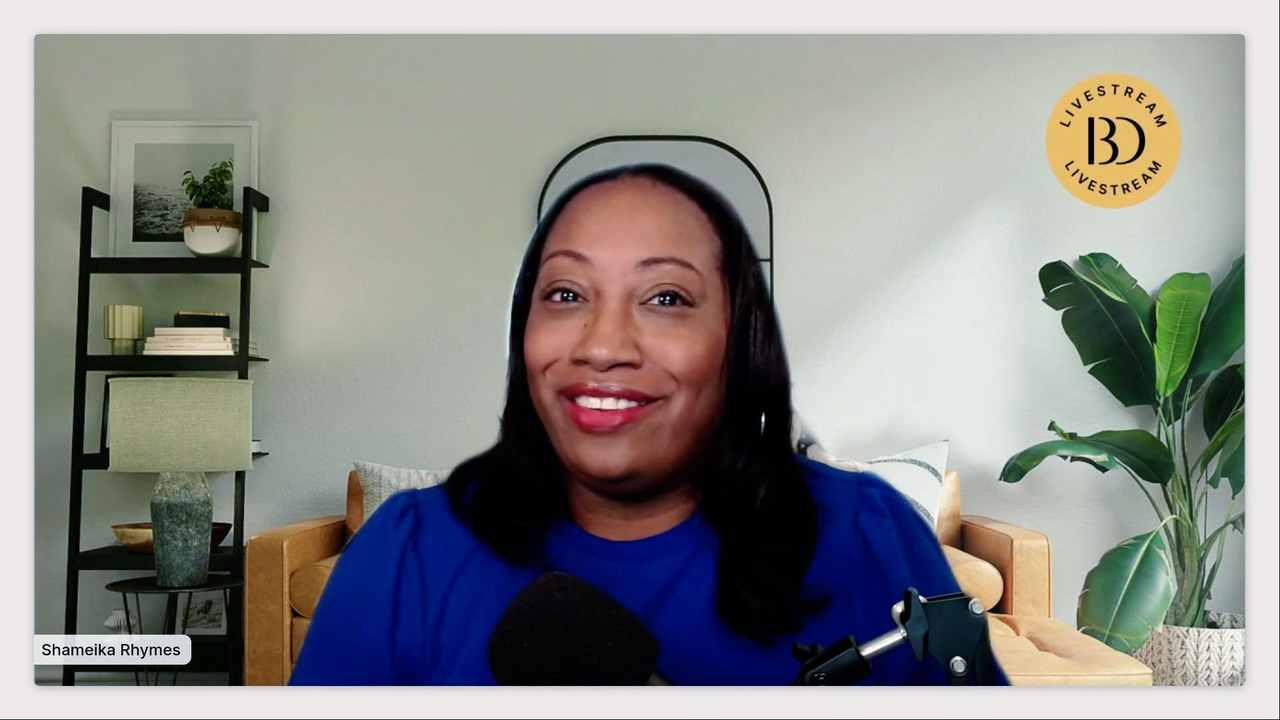
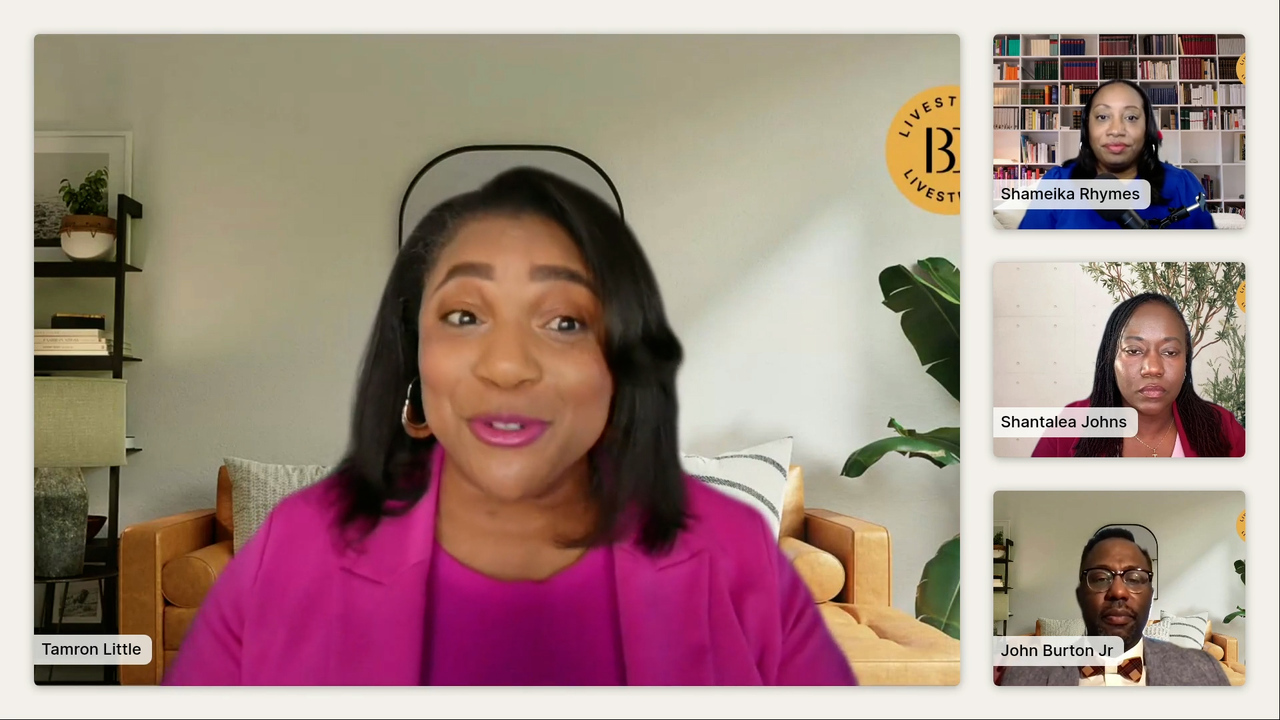
So I like to make sure that everyone is aware that HS is more, it's more again of that occlusion of the hair follicle or, inflammation of the hair follicle, followed by that immune system dysregulation and systemic inflammation. What I hope that we can take away from the panel today is that HS is not something because the patient's hygiene practices. It is not something that is contagious or something that the patients did to themselves, and that is oftentimes what patients may be told early in their diagnosis or before they even reach a formal diagnosis. it can be associated with other, metabolic conditions that we're gonna talk about on the panel.
And as such, because it can lead to chronic disfigured scarring, and it can have such an impact on a patient's quality of life, it really requires a comprehensive approach that is very compassionate for any patient that comes to us seeking care. Absolutely. Oh, absolutely. And thank you so much for sharing that insight. And so I know a lot of women or, or people with, living with HS actually live with HS for a bit longer without even knowing it, right? And so I wanna lean into Jasmine and, and your story and what your journey has been like, both emotionally and physically.
And when did you realize that maybe something wasn't right, and what was that experience like? Yeah. well, my name is Jasmine Ivanna Espey, and I'm the founder and CEO of a nonprofit organization, helping people living with HS and inflammatory diseases reclaim their lives.
and so I was diagnosed with it when I was in high school, but I developed it when I was thirteen. so if you can imagine, just from the description of HS, I had stage three, so it was very severe, and it progressed rapidly. So any semblance of a childhood was, extracted from me because of this disease. I was in and out of the doctor's office. I was poked and prodded. You know, that was my life. and even before that, I was still chronically ill. I was chronically ill out my mom's womb, which was great. but, it really impacted a lot of my, social relationships, my relationship with my own body.
I just, was talking to my therapist about the grief that I've had to experience dealing with a chronic illness like HS. I think anybody with a chronic illness can relate to that. Grieving the body that we have before the body we have now, and then, okay, what does treatment look like, you know, in that body? You know what I mean? So there's just so many stages of grief that I've experienced, and that I've had to work through, as an adult because as a kid, I didn't have the language of what I was dealing with. I didn't know how to articulate it to my parents. I acted out.
I put them through so much, you know? But, I- I've grown to really find tools, beyond talk therapy. Like, I definitely do talk therapy for sure, but things like EMDR, things like somatic healing, sound bowl healing, Reiki healing, so many things that deal with trauma in the body and energy work and things of that nature that have helped me to deal with it emotionally and mentally.
And then, of course, the treatment aspect of it and just going to, you know, dermatologists, physicians, things of that nature to get, my body and inflammation under control. So, you know, I'm in remission now, which is a blessing, and I definitely don't take it for granted. well, what I consider remission, I'll say it like that. but it's been a tumultuous journey getting to this point and being able to, like, even sit here, even being able to start a nonprofit, being able to talk, you know, publicly because there's so much shame and isolation that is experienced. And for me personally, I felt like if I came out and said I had this debilitating condition that disfigured my body, that I would ostracize myself from or be ostracized from my community.
But so many of my friends, whether they're in the community like Imani or whether, you know, my friends back at home who don't have any relationship to the disease beyond me, you know, they have been a great support system, and I honestly wouldn't trade, you know, not speaking about my condition for the world. You know, I'm really grateful that I was able to talk and be at this point because advocacy, this work really saved my life, to be truthfully honest. Absolutely, and thank you so much for, for sharing that experience. You know, HS is a, a condition that really shows up physically, but I love that you spoke on how mentally it impacts you, the isolation, the shame, and things like that.
And so, Imani, I would love to, to ping that over to you to talk about some of your experiences, how it's infected your, your self-esteem, and maybe even some of the things that you have done to help get through some of those challenging moments.
Yeah. Hi, everyone. My name is Imani Futrell. I've been living with HS for about ten plus years. I got diagnosed a week before my birthday. I was like, "Oh, man." So but at that point, I didn't know what was really going on. But it kinda started around eleven. I just noticed, like, a lot of stuff was happening, like, in my groin area, and I was like, "Ma, what's going on?" And we just thought it was because I wasn't cleaning properly. So I was like, "Okay, I gotta scrub better. Okay, I gotta keep myself clean." But it kinda chilled out for a few years, I would say. And then, when we noticedI guess it coming back, it was under my arms because I was trying to shave and I was trying to wear a tank top.
I was trying to be outside. But, I ended up shaving and there was this huge like reoccurring boil, like abscess under there. And my mom was like, "We need to go to the doctor's and just get this figured out." So my primary doctor, she diagnosed me with HS and she was like, "Yeah, this is what you have." And I was like, "Okay, what's that?" Like, what Like, you know, I didn't have the knowledge on it. So I didn't start seeing a dermatologist until like two years later because I had to go to the emergency room for another one that I had. And she ended up kind of cutting into it, and I was bleeding out all over the, What's the thing that you sit on?
The, um- Exam table. What's that thing called? Exam table. The exam table. Yeah, yeah, yeah, yeah. I've been there so many times. I should already know.
Jesus. but yeah, and from that point, it was just like, oh my goodness, like, I need to go see someone. So I didn't know too much about HS at the time. I didn't know about it affecting me mentally, and I didn't know about it affecting me emotionally. I only knew the physical because you see the scars, you see the drainage coming out, you see it in those uncomfortable places, those tender Like, to the point of where it's just so draining. But I, I didn't see it because I was so focused on, you know, bandaging, bandaging myself and, you know, getting myself together. And I would say, like, recently after finding my community and really learning more about my HS, it made me tap into that, you know, mental side of it because there's a lot of things that have changed in my daily life because of my HS.
Like, I see things through a different lens. But as I continue with my journey forward, I redirect myself. So there have been times where, with my HS, I'm like, "Imani, you can't cry. Like, you gotta, you gotta get this done," and everything like that. But now I've changed that to be like, "I've got to let this out." Crying is like an emotional release. I was like And I'm a Pisces too, so I gotta, I gotta let it out. Yeah. I gotta let it out. So, but it doesn't make me weak. That just means I'm just releasing it. I'm tapping into my emotions. And then after that, I'm like, "All right.
What we got to do? The bandage is right here. Ooh, that means I could do a little self-care. I can get in the shower.
I could chill out. I could do some flare care. I could watch a movie." You know, I had to really sit down and redirect it because my mindset plays a huge role in how I got confident in my journey and my community as well too because I just saw so many people talking about it when I first posted about it. Like, everyone was like, "I got this. I got this." I'm like, "Wait a minute." So just seeing that and knowing that there needed to be space for us to be in those spaces, I was like, "Yeah, let me tap into this." And ever since then, I've been growing on my self-love journey.
I've been growing on my self-care journey and learning more about HS and raising awareness with so many people, and it's just been a blessing. It's been awesome. Absolutely. I actually love that you touched on the emphasis of community, right? And so I know, I think Jasmine and I were on a panel maybe two years ago talking about this exact topic and how much having community can make such a great impact on your overall condition and your overall wellbeing and hearing what other people are going through and helping it helping you get through what you're going through as well.
And so I know with having community, it can also help those who are kind of just now getting into it or just now finding out or day one, just diagnosed, right? And so, Dr. Guies, I kind of want to talk to you about the importance, right? Our theme today is generational health, so the importance of making those changes so the next generation doesn't have to deal with some of the challenges that these ladies have dealt with, right?
So what are some of those changes that could be made right now that could improve the outcomes for those who are to be diagnosed in the future? Absolutely. hi, everyone. I'm, Dr. Manda Guies. I'm a board-certified dermatologist, and I'm also the co-founder and chief medical officer at Tono Health. and so I think this is an incredibly important and impactful time in HS because even looking back into the, last ten years when I first started in this condition, just the magnitude of knowledge, science, and treatment options that we have today was not available. And so I think that building some of the systems and community and processes to be able to support our patients with, with these new tools makes such a big difference.
some of the ways that I think we really need to prioritize are, one is early diagnosis. I mean, the current delay to diagnosis, which you touched on, is currently seven to ten years, which is crazy. I mean, that is half a generation. It's already gone by the time you get your diagnosis. and so how are we bridging that gap? How are we increasing awareness of this condition? By, Imani and Jasmine and everyone sharing their stories, I think it's expediting that path because I see patients every day who are coming in sooner and sooner, because of that increased awareness. another one I think is getting access to specialists who understand your condition and who you trust and who you can build rapport with because, like Dr.
Davis said, it's a chronic condition, and it's a little bit more of a journey rather than, you know, a one-off.
And so establishing rapport and trust with someone over time really makes a difference as well. and finally, justGetting treatment, I think shifting from more of a reactive approach that was previously used for HS towards, proactive care because we want to prevent some of the irreversible scarring and damage that can occur. those are some of the ways that I think we can, help the next generation. Absolutely. And, and Dr. Davis, I would love for you to follow up with that. And I know that you touched on some of the access, but are-- Dr. Davis, are there any other systemic barriers that are, I guess, particularly impacting Black patients or patients in general?
Like, what can we do to see an improvement in these overall outcomes? For sure. I would say, you know, one of the things that we really need to recognize is that there is still structural and interpersonal bias, especially when it comes to HS. And so I think, you know, really looking at the systems that we're working within, the ecosystems that our patients are going into when they're seeking their care, really making sure that we're listening to the patient's stories. We are not minimizing their pain, we are validating their pain. I want everyone to have a little bit of a clear picture with HS.
As I previously said, you know, it's not just a simple boil or a small skin infection. That we can do some warm compresses, you can do a little topical antibiotic, it will heal. With HS, you have to think about this is a chronic boil that will recur in this same place.
A second one will recur next to it. A third, you know, possible lesion will recur next to it. And then you create this tunnel track underneath that can lead to scarring. For some HS patients, the scarring is so severe they start to lose their mobility. I have had to write, disability papers for patients who cannot lift their arms, patients who are unable to do their job because their, you know, their lower extremities are affected by the degree of inflammation and swelling that they have. So t- you know, to then come in for someone, you know, for a possible practitioner to then minimize their pain or give them an antibiotic and tell them, "Well, try this and see if it works," not, you know, look further into what is going on, why is this recurring?
Again, it comes back to that early diagnosis. These are the things that we need to make sure that we are discussing in these open forums so that more patients can be aware of it, but, but, but practitioners as well. I think we also have to think about the limited access to care to dermatologists. You know, part of that is because of either insurance barriers, the wait time to see a dermatologist, you know, the cost it is to see a dermatologist. I mean, this is something that I know that we are very aware of as we practice. so trying to make sure that we are not only increasing access to care, whether that's gonna be via telemedicine or creating some open forums or panels where we can have these discussions, and also being aware of the cultural competency.
S- HS disproportionately affects Black patients and in particular Black women. So it may be that again, being comfortable going to speak to that practitioner who looks like you, who understands some of our skincare practices that we may do that are different. So I think just working to also increase the number of minority dermatologists, you know, that's another, you know, barrier that we have. And then also just remembering it is not just a dermatologist or that ER physician or that urgent care practitioner that needs to take care of our HS patients. You need that mental health specialist.
You sometimes need to bring in the OBGYN because there is a hormonal component sometimes. You need that endocrinologist because sometimes there is again, a hormone component from that perspective or do we need to look at some other things that are going on? So making sure that when we do diagnose these patients, we coordinate them with a team so that they can have the best outcomes is what really is gonna be that change that we need. Absolutely. And I love that you touched on some of those day-to-day challenges because as you mentioned, it's not just something that you experience on your body, it's something you can experience in your body.
and, and have challenges, as you said, raising your arms. I have a friend who also is living with severe HS. She has three children, and some days it's so severe and so painful she can't even pick up her kids. So it's, it's, it's really hard hearing those stories, especially from her, but I can only imagine the other stories that we aren't hearing.
And so as we speak about those, some of those day-to-day challenges, Jovette, do you care to, to chime in and, and speak on some of those things? Good afternoon, everyone. my name is Jovette Simmons. I've had HS since I was eleven, diagnosed at thirteen stage three. and with relationships and confidence, right, at such a young age, I had a stor- distorted image of myself. So that carried on into romantic relationships, the way I handled just being in relationships, right? For there's a lot of shame and fear attached to HS. I spent so much time trying to hide the pain. I'm an assistant controller and accountant, so there were a lot of times I would-- was in board meetings, right?
Just sitting like this, right? I don't want people to see that I'm in pain. I don't want if they see it, for them to ask me where the pain is. People are nosy, right? Like they'll start asking you. And so like, I don't even want that conversation to happen. And so spent a lot of energy in just having this put together persona. And so also I'm a type A personality, so I tend, my husband will attest, I like to control ev- things because HS is one thing you cannot control. and also there-- if, if we were the healthiest people, like ever, I'm not saying I'm the healthiest, but if, if we were the healthiest, you would still have HS, right?
Like sometimes I used to say to myself it felt like a curse because I'm likeIs there something I could have done differently? And literally, like, there's nothing I could have done differently.
And so I had to settle that within myself and accept HS, right? But it does-- I came to this point that it did not define me. and so I came re- like, relentless in my search of finding the professionals that will see and hear me. And so I met Dr. Guillias just in a search of, a Facebook post. You know, I found out about her practice, and it's completely telehealth, right? So I just met Dr. Guillias within the last year, but she's been treating me for years. And once I got good treatment, it's no coming back from that. Like, it just was empowering. I went almost a year without any flares.
And the one key thing I will say I don't know if I'm answering the question. You are. Okay. the one thing I will say is a patient that knows their doctor sees and hears them, it produces hope. Mm-hmm. And hope produces empowerment. And then mentally, your mind now says, "I don't, I don't deserve to be in this pain, this much pain. I deserve adequate quare- care." Absolutely. So I've had to become a advocate for myself. Even in a doctor's roo- room, even in an emergency room- Mm-hmm I had to stop the doctor as- assertively and nicely and tell them, "Listen to me." So when Dr.
Guillias met me, I, I was on I was ready. But then I seen, like, she knows what she's talking about. Yeah. And so I was empowered. Mm-hmm. And so we need that. Absolutely. We just need to be seen and heard, and that encouragement, it does something in you. Absolutely. and my whole quality of life changed. I love that. I love that.
And, and I love that you emphasized Dr. Guillias. I've heard incredible stories about Dr. Guillias with similar stories to yours, right? But I also wanna acknowledge you three ladies as well to stand up here- Yes or to sit up here and tell your stories and be brave enough and allow other people to see you, allow other people who are living with something similar to as what you are living with to be seen and feel seen and know that they are not alone. And so with that, Jasmine, I kinda wanna pass it off to you, because that is something that you have emphasized or, or made a part of your career, a part of your, your What is the word I'm looking for?
A part of your purpose, right? And so I would love for you to speak a little bit more about your ability to create these stories, these documentaries, to record people in their day-to-day lives and to help them feel seen with HS. What inspired you to do that? Yeah. so my background is in journalism. I got my master's and bachelor's in journalism. and I always say nonprofit work found me, 'cause I definitely was not looking for it. it just so happened to be the right place, right time, and I, like, kind of pivoted my career. but, because of my background in journalism, I had always been covering, marginalized stories and stories that were often, either not talked about enough or not highlighted enough.
And, you know, based in Detroit, there are a lot of those stories, you know? So it was across tech, business, art, culture, music, everything.
And so from that, I had opportunities and access, you know, to newsrooms or magazine publications where I was just able to share my personal story. And so, as I started to do that more and just wanting to, like, e- elevate HS in, publications, you know, any publication I could touch or, like, talk to or pitch to, I saw just, like, a bigger purpose. And I personally wanted to, like, elevate my career as a journalist, 'cause I felt like I hit a wall in Detroit. and so I applied to the University of Southern California. I got in on a scholarship. And, for my master's thesis, I did a documentary on Black women living with HS, specifically because I'm a Black woman living with the condition, but also because at the time there weren't a lot of stories that centrali- like, focused on our stories.
You know, a lot of us were telling our stories online, on YouTube, and things like that. Like, Black women really pioneered awareness for HS, if you really look at, like, the, the timeline. there are a lot of Black women who pioneered a lot of the conversations that are happening now. and so I just knew that I wanted to use what skills I had to just elevate that a bit more. And so, that documentary, you know, because of my scholarship and things like that, with Sony Pictures Entertainment, I was able to, like, premiere the documentary on their lot, and, that segued into just me being able to do more advocacy work, and then that snowballed into nonprofit work.
And so for me, I don't, I don't like to pe- see people suffer.
since I was a kid, like, I used to wanna be an oncologist when I was a kid. I wanted to cure cancer. then I found out that I should not be trusted with somebody's life like that. So I was like, you know, let me not do that. and so I chose something else that was a little bit better, which was storytelling. I, I've realized that I was pretty good at it, and so I just really wanted to make sure that other people, if they are suffering, that they have a space to feel seen and to feel heard. Like, we've said that a few times here today, and, I think it's used a lot, but I don't think I think we should not es- underestimate how much, it means for people to be able to tell their stories, and to own their stories.
And so for me, as a, as a journalist, as a nonprofit founder, as a storyteller, as a filmmaker, it's important for people to be able to, you know, live in their authenticity, without barriers. And so for me, journalism, documentary work is about that. It's really about just kind of like allowing for people to be themselves authentically, and then for the audience to take away what they will, 'cause that's the job of a journalist. At least that's what I got taught in J school. So yeah, I, um-I, I make sure that I incorporate that in my nonprofit work now, and we're That same documentary I did in grad school, I'm-- I got funding to kind of like recut it, so we're in the process of recutting it now.
And I'm really excited about that, and it's-- I don't know when it's gonna come out, but we're working on it for sure.
and then there's another documentary I'm a part of with, Insight that's coming out, that's Naked Truths, and it's, it's an amazing, doc. I didn't film that, but I was a part of it. but yeah, that work is incredible, and I think, if you look at history too, journalism and film have changed systems. And I think that that is why I wanna do this work too is because I wanna make systemic and generational change. Absolutely, and congratulations. Can we get a round of applause for that? Yes, ma'am. Absolutely. And, you know, I will, I will never downplay the ability or the magic of storytelling.
Even in my day to day, I put out information about, you know, how to make, you know, health and wellness more accessible, easier to understand, but nothing is more impactful to our audience at Black Doctor than those personal stories. Nothing. Nothing gets that amount of reach like the personal stories do. So it truly makes an impact. And so, Dr. Geass, I would love to-- for you to speak on the importance again of personal stories, but also how damaging, not just personal stories, but of sharing your story, sharing your experience with those around you, and then also how damaging it could be to not talk about what you're going through.
Yeah. I mean, I think that when it comes to sharing stories, it's also about increasing awareness because I think, as we've discussed, HS can be an incredibly isolating condition, and it's also a condition that can stay hidden for a very long time. you know, not easily, but, but still, given the sensitive areas, I think that a lot of people carry that with them and can almost like retreat a bit more or feel very isolated or a-alone.
And, that by sharing stories and by getting patients to a place where they're living their best lives, they are able to, you know, do all these incredible things and, where HS, yes, is a-- it's a part of their lives, but it's not their entire life, by getting the condition under control. And I think that that makes a huge difference because it really reinstates a sense of hope for patients. Absolutely. And, and speaking of hope, I wanna refer back to my patient advocates. and I know we touched a little bit on some of the things that help you feel like your best, but I feel like that's kinda what I want you three to leave us with.
Are-- What are some of those things, whether you live with HS, whether someone doesn't live with HS, what are some of those things that make you feel powerful or feel like your best self every day? I think definitely giving yourself grace. I was talking to my therapist about that. She was like, "We need to work on that." And I was like, "Yeah." I was like, "You're right." Because it's so hard. You always wanna show up for people. You always wanna put your best foot forward. You always wanna do the best that you can, but every day isn't gonna be sunshines and rainbow. We wish it could be.
But, you know, there's gonna be days where you have those cloudy days. There's gonna be days where, you know, it feels like you, you can't do it, but you have to really look forward. There's so much light at the end of the tunnel, and what I think about now is like we're all here sitting in this room today.
We made it. We're here. Like, we're really-- We showed up for ourselves. We took the time to get here, to talk to everyone, to listen to stories and everything like that, and that's something to be so proud of. So when it comes to telling your story or just anything with HS, it's a really big thing of just giving yourself that grace, showing yourself that same kindness that you show to so many other people, and it really does make an impact on your life, and it makes an impact on your journey. So And to also remember that there's so many other people going through th- different things.
Everybody always got something going on. Somebody, somebody may not have HS, but they may have another condition or just different things that they're going through. So that's why it's so important, again, to show yourself that compassion and to show p- other people around you that same compassion as well, 'cause we never know what people are going through. So I think that's definitely a thing that keeps me going is just to know that I'm showing myself that love, I'm showing myself that care so that I can feel good and make sure that I'm putting myself out there to help others and h-help them help others and just keep that chain going within this journey and in life.
Absolutely. Yovette? I would say just being here, right? This awareness, it shows my eleven-year-old self or another eleven-year-old, another twelve-year-old that they will not have to go through what we went through. Seven to ten years of not being diagnosed is crazy, right?
And so I'll be honest, I know it's a room of doctors, but I'm gonna be honest with y'all. I lost hope in the medical. Like, I was just over it. And a lot of the times where people will start, going to other ch-- like, chat rooms, other places to find their care, that can be helpful, it can be hurtful, right? And so it just takes that one doctor, that one doctor to show that they care about you. And for a HS person, I will say, like, help-- If I was talking to someone, help is here.Right? Like help is here. You do not have to suffer anymore in silence. And don't settle. Please don't settle.
If there's a doctor that you're just like Because you get to a point where you're in debilitating pain, you just wanna get out of the pain. You don't care who it is, you don't care if the doctor don't like you, just help me get out the pain, you know? But that becomes a reactive treatment, where there were so many doctors that were treating the symptoms of HS, but my girl, Dr. Ghias, she got it. She got it. I'm like, "I don't wanna have to wait until the flare is horrible." She understood. Sh- it became proactive treatment. And so I think we're living testimonies, liv- that evidence that it is real.
and now it's a re- it's a proactive treatment where we're, we're trying to minimize the flares. Like for example, knowing I know, I've learned to know my body. I'm an accountant, right? I'm studying for my CPS, CPA. Stress is one of my triggers, so I've had to learn how to s- "You need to stop. You need to go get your nails done." "You need to just, like, your husband can feed himself." "Your son can feed himself.
Just leave." I've learned to choose me. Yeah. So in HS, choose you. I love that. I love that. Jasmine? Yeah. I think hope for me is, like, building community. and I, like, I'd, I'd used to think that there was no one else living with HS. Oh. I thought I had a rare disease, you know? And, you know, as we know, it's not rare. But I definitely thought when I was a kid, I was like, "I must be one in 10 people who are living with this condition. I wish I could meet the other 10. That'd be great." but as an adult, you know, instead of, like, longing for finding people, I found those people and built spaces for people to be able to be themselves.
Like, I'm really excited about Like we, we, my nonprofit, Acid, we host a summit every single year. it's the I Reclaim HS summit, and it's for people living with HS. There are other conferences that talk about HS, but they're for medical professionals. There's no spaces for HS patients and caregivers to be in a room and learn about the disease and be with people who are living with it. And so I was like, "Why not we, why not create that space," you know what I mean? "That I wanna see." You know, create the change that you wanna see in the world is what I keep in the back of my head.
You know, if I don't see something that I like, I change it, 'cause I have that power. You know what I mean? and so that, and then just personally for me, I've had to learn to pour back into myself because nonprofit work, advocacy work, you pour from your vessel constantly helping people, and so it gets draining.
And at the beginning of this year I was like, "I don't know if I wanna do this stuff anymore," because it was, I was not taking care of myself. And so I had to sit down and really have a conversation, like internally, and say, "You need to create systems for yourself," you know? And so I had to restore hope within myself for this work just in general. And so a lot of that looked like, you know, what JoBeth was saying, like getting my nails done, like making sure that if I have a panel, like I'm putting on clothes that make me feel confident. I'm, you know, doing my hair however I want to.
I'm You know what I mean? I'm just presenting myself how I feel like I wanna present myself, and I'm living in my authenticity because I've lived in shame and silence for so long. I'm like, "You're gonna see me, and if you don't like it, I don't care." Yeah. So that's, that's my hope. I love that. That, that right there is Black girl magic. That's what I'm talking about. Do we still say that? We do. And so with that, my experts, if there were, if there was one thing that you wanted our audience to leave with, Dr. Davis, Dr. Ghias, what would that be? Dr. Ghias, I wanna start with you.
I would say that it's, you know, it's never a great time to have HS, but if, but I just think that this is an absolutely incredible time for HS for the magnitude of new treatments and options that we have at our disposal. And so I think it's just, yeah, I mean, hope inspiring and, reclaiming, reclaiming your life, and for a better future for the next generation- Mm-hmm and the current one.
Yeah. Yes. Dr. Davis? I would say i- it's, it's about ti- it, the time factor. And, you know, if you know someone or if someone comes to you and they are mentioning these symptoms, that's the time to say, "Let's get you connected with care." Or for that patient that's listening, if you have something that continues to recur or it is something that is affecting you, go seek out that help. And if you do not feel like you are getting that answer, it is okay to go get a second opinion or ask for a referral to a proper source. Don't ever feel like If you don't feel confident in that relationship, like we've just seen here, you know, with JoBeth and Dr.
Ghias, then seek that out, because we are out here, we wanna help you, and we wanna make sure that you are educated so that you can make the best decisions. So I really think that it is about there's no better time to ask those questions and get that proper care. And you do not have to wait, you do not have to suffer, and it is an exciting time to see what is coming down the pipeline to bring more hope to our patients. Mm-hmm. Absolutely. Well, ladies, thank you so much. As you can see, HS is in a great place. We have the advocates, we have the experts, we have the people doing the work.
You guys are raising the awareness, so thank you guys so much, and thank you all for sticking around. And, get ready for the next panel.