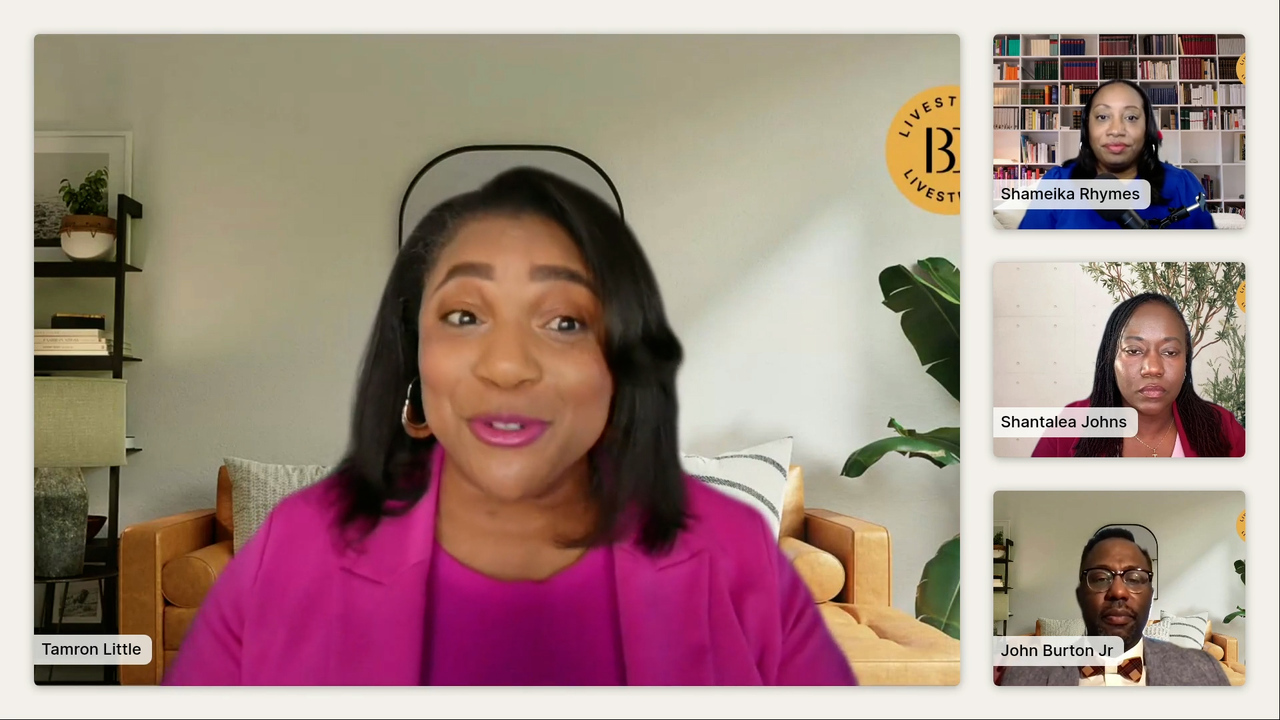
Hello everyone, and welcome to this installation of Black Doctor Live. My name is Dr. Ashanti Carter, and I serve as the chief academic liaison to Black Doctor. So I know you guys know that February, it's not only Black History Month, but it's also Heart Health Month. And boy, oh boy, do we have a show for you because we at Black Doctor, we are so fortunate to partner with the Association of Black Cardiologists, otherwise known as ABC, to power this informative discussion. Okay, you guys, the Association of Black Cardiologists, it's committed to eliminating the disparities that lead to poor cor- cardiovascular outcomes in underserved communities.
And through the Cardiology Deserts Campaign, ABC integrates public education, healthcare provider collaboration, and cross-sector community engagement to address geographic and systemic barriers to heart care. All right, you guys, so I know you're ready to meet our esteemed panelists, so I'm going to introduce them. First, she is the former director of cardiovascular health programs in the Mississippi State Department of Health, we have Miss Augusta Bilbro. Let's bring her on the screen. Hello, Miss Augusta. How are you doing? Well, I'm doing fine this evening. How are you?
Oh, I'm great, thank you. Mm-hmm. And so our next panelist, she is a former state director of public health nutrition in South Carolina Department of Health and Environmental Control, let's bring on the screen Miss Phyllis Allen. Hey, how are you doing, Miss Allen?
I am well. How are you? I'm great, thank you. And we have Dr. Pierre Wright. He is a heart disease survivor and advocate whose lived experience we're going to talk about, and it underscores the roles of genetics, access, and early screening. How are you doing, Dr. Wright? I'm very well this evening. How are you? I'm great, thank you. So let's do some level setting. All right, this question is for all of you. I'm gonna start with you, Miss Augusta. When you hear the term cardiology deserts, what does it mean from your professional or personal perspective, and why does it, why does it matter during Heart Health Month?
Well, it means that Mississippi has a shortage of cardiologists, and being that we are a rural state, access to primary care, also to secondary care is essential, and having those cardiologists across the state could really benefit our, citizens well here. I love it. I love it. What about you, Phyllis? Well, in addition to what Augusta said from the food perspective, you know, in cardiovascular deserts, there's limited access to affordable healthy foods. There's a high concentration of fast food restaurants and convenience stores. There's fewer safe places to walk and be phys- or be physically ac- act- active.
And then there's, higher stress from economic and social pressures. I love it. Okay, Dr. Wright? Awesome. I would actually add that we also have missed opportunity for primary prevention- in our food deserts. Mm-hmm. Okay. Okay. I love it. I love it. So listening to all of that, it sounds like the social determinants of health, right?
Those non-biological factors that impact our health, such as a lack of access that you all spoke about, in addition to having access to healthy foods and all of that, and, and the medical, the access to medical care. Are we aligned on that? Oh, yes. Yes. Absolutely. So for this segment, I wanna talk to you, Miss Augusta. So just talking about public health systems and policy, one of my favorites, so let's bring you to the forefront. All right. You've led statewide cardiovascular and hypertension initiatives. What structural barriers most often prevent equitable heart care in rural and underserved areas?
Well, there's definitely a shortage of primary care practices within, the rural communities in Mississippi, shortages of pro- providers, as well as access to insurance and transportation. on a prevention forefront, there's limited, partners and partnerships who can provide those screenings to make, people aware of their numbers around cholesterol and hypertension control as well. Mm-hmm. So knowing the numbers, that is super important. Mm-hmm. I, I know that's right. So talk to us about what lessons from Mississippi's hypertension and stroke prevention efforts are most transferable to other cardiology desert states?Well, it is essential to build those partnerships within your communities, to, screen the residents, to make them aware of their numbers.
You know, as simple as it is to put a blood pressure cuff on- Mm-hmm a person's arm and teach them to check his or her blood pressure, and the importance of knowing their numbers.
cholesterol screening has been a barrier here, but in, Is, you know, having those partnerships there in place who can help, screen participants or residents so that they can know their, cholesterol numbers as well is, is very important. Yeah. I remember- Hopefully. yeah. I remember when I was working at GW, the George Washington University- Mm-hmm we would actually have, you know, health fairs where we actually gave out those cuffs. So I think that is just excellent. And so what the community members would do, we would give them the free blood pressure cuff, and then that they could track their numbers.
So I think that's, that's great. So I have another question for you. How do community health workers strengthen cardiovascular systems of care in places with limited specialty access? I remember straight out of college when, you know, graduating from UC San Diego, big ups Tritons. So I worked- Mm-hmm as a community health worker and, that was actually my first glimpse into working in a s- a public health system, and, and I, I just loved it. So can you tell us about, you know, the community health workers, and the great work that you guys are doing with them? Yes, definitely.
So the community health workers are definitely our jewels here in Mississippi. we actually integrated them into the community health centers across the state and some private practices as well. They serve as a liaison for the providers and an advocate for the patients. They provide the informal education. they remind the patients to attend their appointments.
They are the ones out there in the community educating the community about, knowing their numbers and the importance of that. they are the ones who actually even link the patients to those referral sources. Mm-hmm. Mm-hmm. Yep. I r- I remember doing that. We would do- Yeah the, the home visits. I, I would do all of that, the home visits, get the resources, and share it with, our clients. So, you know, I- Yes you know, they would, they would say clients, but they're really our patients and our friends, you know? So I love that. But you said something that pricked my ears.
Did you say that the community health workers, they actually work with the doctors in private practice? Even in private practice here in Mississippi, we do have some that are working with them, and they are just as engaged as those in the federally qualified health centers. And see, for me, and listening to what you stated, that's a game changer, especially as we look at workforce development. Yeah. Because when I was a community health worker, I worked for a nonprofit. But hearing that you can be a community health worker and actually work in a physician's office, that's huge.
Oh, yes. That is. Okay. So I have another question for you. Sure. So just bear with me. Okay. So from a state public health perspective, what barriers, Ms. Augusta, actually prevent people from getting routine cholesterol and LDL-C screening, particularly in rural or underserved areas? Well, in Mississippi, we have very few partners who had access to the cholesterol screening tools.
So for that reasons, they really limited themselves to, screening for high blood pressure more so than with cholesterol testing. But now through the partnership that we have with the Association of Black Cardiologists, we are expanding and scaling across the state and now providing those screenings in the community. Wow. Wow. So ho- how have these, these hypertension and cardiovascular initiatives you led show the value of early detection and knowing the numbers, including the LDL-C? The, you know, the benefit of it is actually when a patient identifies his or her numbers and they become aware of them, they can make an appointment to follow up with their primary care provider.
Or if they don't have one- Mm-hmm the community health workers are usually on site, and they can recommend that the patient come to their practice, to, or the participant come to their practice, to receive that care that's needed. Mm-hmm. And s- and in some instances, we've identified, patients who, or participants who have, elevated blood pressure readings where they've been referred directly to the emergency room. Wow, that's great. That's great. So now let's look at this from a policy and a system level strategy, right? Mm-hmm. So what policy or systems level strategies can help ensure that, LDL screening doesn't stop at awareness, but leads to education and connection to care?
So I think a- as far as policies go, there needs to be, policies in place where, as participants are identified and screened with high blood pressure that, or with elevated cholesterol, that they have follow-up appointments with their providers, and they are rechecked there.
as well as policies and protocols in place around the workflow so that they can make sure that those, uh...Those individuals have, access to transportation and that they are referred to various, providers and even to a cardiologist when necessary. Absolutely. And, and transportation, that can be a barrier for a lot of people as well. That's something that we found even in DC. Oh, yes. Mm-hmm. Thank you so much, Augusta. It was, it was great speaking to you. I wanna shift gears now and bring in Ms. Phyllis Allen, because we wanna talk about nutrition and prevention. Yes.
All right. Okay. Ms. Phyllis Allen, how does nutrition policy and access intersect with cardiovascular disparities in cardiology deserts? Well, first of all, you know, heart health isn't a just about personal choices. It's about what choices are available. you know, where you live can strongly shape, can strongly shape what you eat, and what we eat can strongly shape our heart health. And so some neighborhoods make it very easy to eat healthy, and other neighborhoods make it real difficult. And so when you're thinking about the cardiovascular diets and the limited access to free and affordable foods, the high density of, fast food restaurants and convenience stores, those lead to higher, high rates of high blood, high blood pressure, diabetes, and heart disease.
And so, and, and when you're eating a diet like that, you know, where there's limited fruits and vegetables, it's generally, it's higher in sodium, it's higher in fat, and saturated fat and calories.
And so we really And you know, and then I forgot to mention the processed foods. Mm-hmm. So, many neighborhoods lack those. And so, even people or who are very highly motivated, in those kind of food swamps, as they're called, it makes it very difficult to make a healthy choice. And, so And then the other thing, you know, mis- nutrition policy comes in there because you need, we need to know what food is affordable, where food is being sold, a- and how we, how we wanna support people in communities to buy healthy foods. So we wanna have healthy meals in schools. We wanna have placement of products in the grocery store.
If you think about a little child in the grocery cart, all of the real sugary cereals are right at their eye level, so what they gonna ask mommy or daddy? "Let's buy that cereal." And that's not a healthy cereal that will build healthy habits down the road. And so really, those kind of policies, you know, what we serve in school, grocery stores, food assistance programs, and then food marketing really can influence the heart health of our communities. Absolutely. Absolutely. And, and when you talked about the food swamps, I know I'm, I'm on the West Coast, but there's a place by, I'm not gonna mention, I'm not gonna mention the name of the university, but they call it Restaurant Row.
Yes. And it's all Well, it's Fast Food Row. And it's all of these fast food restaurants that's close to this college, this university, this huge private university, and when we think about, you know, cardio, food swamps, right?
Yes. Think of also college students. We, we take it lightly about the freshman 15, or in my case, it was a transfer 20, right? So we laugh about that, and it's just like, no, that isn't healthy, right? Yeah. So I, I appreciate you for breaking that down with the nutrition policy and how it intersects with our cardiovascular disparities. So I, I wanna ask you this. So what role do public health nutrition professionals play in prevention when specialty care is scarce? Well, you know, especially when, cardiovascular care is short, a, a new public health nutritionist and educators, community health workers can all play an important role in educating people.
they can promote healthy dietary patterns. Mm-hmm. they can help people manage weight. They can help people, you know, re- reduce diet-related hypertension and, and diabetes and abnormal cholesterol levels. And you know, if you start early, especially with young children, you can learn, they can support lifelong habits and behaviors that will lead to healthier hearts down the road. Also- Yeah. Mm-hmm. No, no. Keep going. Yeah. Okay. Also, you know, there are good resources for nutrition education sessions. we don't always want people to come to us when we're providing education.
We need to take that education out to schools and workplaces and churches and other faith-based, organizations, and we wanna train, as we talked earlier, train community health workers to provide that education and support. you wanna be sure that you're not asking people to, to buy foods that aren't locally available.
you really need to help people eat healthy in the environment that they live- Mm-hmm and make it realistic for them. And then we really need to adapt our messages, to, cultural food practices. You know, there's a lot of emotion and history in what people eat, and I think, you know, most times if you help people keep the foods, some of the foods that they eat, but make them healthier, they're wo- more willing to adapt their behaviors to promote, healthier cholesterol levels and heart health. Absolutely. I, I know because my, my parents are from the South, so we have our, our collard greens.
Mm-hmm. And so, we, we add pork to it. And so, you know, after getting my master's in public health and really learning more about our foods, like you stated, especially culturally, you know, I came back to my parents like, "Hey, maybe we can put, you know, some turkey necks or something like that in our greens, like some smoked turkey." And we did it, and it's, oh my gosh, it's so delicious. It's so delicious. You know, and, and, and then even, like, some people don't use or eat meat. Some folks use just, like, a vegetable or a vegan-based diet. Mm-hmm. You know, and, and I like what you said, just starting where people are.
Mm-hmm. And so I love that, and that's something that we would even do at our church when I was a health minister. Yes. And it was, it was just so wonderful, so thank you for that. So now, you touched on it before. Mm-hmm. You touched a little bit on it, but I want you to go more in depth.
Talk to me more about the strategies that communities can adopt now to improve heart health outcomes through food, education, and, and systems change. Okay. What can we do now? Okay. We really need to, provide some incentives for grocery stores and farmer's markets to come into communities. Ooh. you know, there are lots of, mobile food markets, especially for produce. you know, there are some, healthcare providers that pr- provide prescriptions for people, and, community gardens are an often an o- are often a way for especially children to learn how food, food grows, and then pick it, you know, and then put, prepare it, and put it on the table.
So that's a wonderful way to, talk about sustainable food. and then, you know, there have been some food assistance programs that if people buy healthy fruits and vegetables, they'll get that same amount free, you know, doubling up their fruit and vegetable access. we r- really need to see some change in the environment. w- we need to continue to have standards in schools for what's served to children. Mm-hmm. we continue to we need to continue to reduce fat, sugar, and sodium in, our diets. And then once again, you know, we need to promo- promote culturally relevant healthy foods.
There's not one size that fits everybody. you know, price and placement, as I talked about earlier, where grocery stores, you know, they have a whole marketing strategy to get you to buy things that maybe not aren't as healthy for you. Right. start early and provide consistent nutrition education.
you know, some, there are some programs that, you know, teach parents and children how to cook healthy together. Mm-hmm. and we really have to meet people where they are, as I mentioned before. We need to start where they are and, use, peer educators and community health workers to deliver the message, and then we may need to deliver, messages in people's, languages. We, we can't expect everybody- Mm-hmm to understand well in English, so we also need to think about that. And, as I talked earlier, you know, w- wanna pair experience with education and behavior change 'cause we need, you need to, people need to, you'll g- help people to eat healthier.
and then we need to talk to people about connecting the h- the knowledge with what's available in the community. w- as I said, we don't want to ask people to buy something that's not readily available in their community. Of course they're not gonna eat They're not gonna buy it, and it, it may be more expensive. Mm-hmm. And so, we also need to pair, with healthy eating, you know, walkable, safe communities where people can feel safe walking. And, we should, you know, try to, look at requiring healthy options at gatherings, in the community. we need to, mirror the behaviors that we want people to do.
and, the other thing is to, you know, kinda screen for food insecurity. A lot of people are food insecure. Mm-hmm. and, reimburse for nutrition counseling and prevention service. There is some reimbursement for nutrition counseling, but it's not available to everyone.
Mm-hmm, mm-hmm. So those are just a few of the thoughts that I have. No, no, but you said something that pricked my ears. You said a lot of people are food insecure. Talk to us about what that means. they have don't have access to, enough food to sustain health- Mm-hmm and to, eat healthy. And it's access, it's availability, it's, it's all those things, and their income. It's economics. you know, if food assistance programs were never, planned to provide 100% of the food needs of the, of people. And so if it's only planned for two-thirds of their diet and their other resources are limited, where is that other third going to, come from to add to, their current food, income, and make sure that they have enough food to feed their families?
Absolutely, and, and I've seen that with the numbers or, or the populations that we see, folks who are food insecure, college students- Mm-hmm and then our aging population or our elderly. Yeah. Is that true? Yes, that is true. Okay. And many colleges now have established, because they identified food security as an issue for college students- Mm-hmm they've set up their own pantries and, so that students have adequate food because, you know, learning, you can't, you know, even if as an adult, you can't learn or even pay attention well if your stomach is calling to you saying, "I'm hungry, I need nourishment," and you can't think well.
So yeah, so many colleges have taken on food secur- food insecurity and making sure that their students are food secure.
That's great. That's great. So we're almost done with, with, this, this section, but I just have a few more questions for you. Okay. So nutrition, how does nutrition education intersect with LDL-C awareness, especially in communities with limited access to specialty care? Okay. you know, we need to teach about, you know, what LDL is, of course. Mm-hmm. And we need to talk, talk about the LDL-C in- Mm-hmm a language and at a level people can understand it. We don't mean to make it too simple or too complicated.And we also need to, emphasize food-based, lowering strategies, like changing to a diet that's higher in fiber and unsaturated fats.
And we also want to emphasize that you can also help to manage your, LDL cholesterol by changing your diet. And, sometimes diet is the only modifiable factor, so that's where that people can have control of. And so that's where that education come inst- comes in to help them make those behavior change. And, and oftentimes, people may just be very bay- vague and say y- your cholesterol's high. And we need to let people know what their numbers are, number one, and where we want to see those levels go. And so, we don't wanna wait until after they've had a cardiac event to say- Mm-hmm you know, "Let's lower your cholesterol now, or your LDL f- you know, LDL-Cs now." We need to start early so they can modify their diets and their behavior so that, they're, improving their, blood lipid levels.
Yeah. Yeah. And so speaking of that, what are the common misconceptions people have about cholesterol and LDL-C that you've seen in your public health nutrition work?
Okay. number one is probably that if you're thin, you have- Mm-hmm you're healthy, and you have good cholesterol levels. A person can be very thin and still have elevated, LDL levels. And so, we just don't wanna make assumptions that just because you look healthy, that, your, your body's healthy. So that's number one. And then, the other one is that, y- we, I lost my thought here. Okay. We, people, talk about cholesterol, you know, that cholesterol, food cholesterol impacts your LDL the most, but it's really un- it's the saturated fats and those fats from highly processed foods like, you know, lu- lunch meats, hot dogs, sausage.
Yeah. Those really have the greatest impact on your LDL levels. Um- Say that again for the people in the back. Lunch meat and what else? Lunch meat, all that sausage, the highly processed foods and the fats- Mm-hmm from those highly processed meats, those really have a great impact on your LDL levels. And, you know, we, we, you know, we often hear people say that your LDL cholesterol is bad and your HDL cholesterol is good, and people don't W- we need to, we need to break that down a little bit and say, you know, it, it's, it's all of the choles- all of the components together that, make your, your, cholesterol healthy or, at a hu- a, a healthy or unhealthy level.
And, and if, people may assume that if their cholesterol is normal, that my heart d- disease risk is low. It may not be, because if you have high blood pressure along with it, you smoke, you have diabetes or insulin resistance- Mm-hmm you may have a genetic, lev- propensity to have high cholesterol, you know, you have some ongoing inflammation in your body, and your physical activity and what you eat.
those are other ris- risk factors. So you have to combine all of those together. And, and then, you know, especially with, you know, the diet, you know- Mm-hmm we need to just talk to people about moving away from those really highly processed foods. and those are the foods And, and that can be difficult for some people because those may be the foods that are, a little less expensive. Um- That's what I was about to say. Yes. Yeah. I mean, lunch meat, I remember eating- Yes my fried baloney sandwiches as a kid. Yes. And, you know, so how do we balance, asking people to eat healthier- Mm-hmm at the same time we, that, you know, food prices are going up, and the healthier foods can be more expensive, and how do we help them develop strategies that will, that they can, incorporate healthier foods into their diets?
and, and there's one other thing I wanna say about processed foods. Okay. you know, moving towards a plant-based diet can be healthier, but some of those highly processed vegan foods are just as harmful for you because they're high in sodium, they may be high in fat, and so you've got to be careful. And, everyone needs to focus on label reading and knowing what's in those foods. so just don't assume that because it says vegan or vegetable-based that it's healthy, because it may not be. It may have more sodium than the meat-based vers- version of something because it's so highly processed.
And so I think that's another misconception, that because it's vegan, it, it's healthy, but it may not be.
Moving towards a plant-based diet is very healthy for your heart. Mm-hmm. But be careful with some of those highly processed foods. Absolutely. And that was so helpful, because there are some cookies that are vegan, but, you know, - Yes not so bad for you, so- Very- Absolutely. Yes. Very high in sugar. Yes, very much so. Yeah. So for this, this, I wanna round out, this segment by asking, how can community-based nutrition programs empower individuals to improve LDL-C levels through realistic, culturally relevant changes? You touched on it when you talked about, okay, starting where, you know, the person is, starting where the community is, and even, you know, talking about the, the prices, you know, just culturally relevant.
But how can we, you know, really empower them to improve the LDL levels? Mm-hmm.Um, we, we need to, help them, know that it is possible to do it. It may take a little work and it may take some skills building, and that's where I think that we can use a lot of the community-based, educators like peer educators- Mm-hmm and, community health workers, because sometimes they've lived that same experience that- Mm-hmm the people we're targeting, that, that we're looking to help, improve their LDL levels. And so they've lived that experience. And sometime hearing, hearing the education from someone who's lived that same experience, you can embrace it more.
Mm-hmm. And so I think we need to advocate that we have we use as many people from the community as possible to help pass on these messages.
And, you know, focus on practical skills. You know, cooking skills, how to, how to use, low saturated fat, low cholesterol level recipes- Mm-hmm and make them taste good. And, gros- and ha- doing grocery store tours can help people. Now, if you can't go to the grocery store, if it isn't accessible, there are lots of, there are some virtual grocery store tours a- available online that you can do the same thing. So making those kind of things, accessible to, our families in, in communities, and helping people with meal planning and budgeting. You know, as, items, as schools change, they had so mu- so many things to do in school that we've lost the home economics where they taught those kind of things.
So we need to help young, young adults and young children learn how to make a budget, plan for meals, and then stick to a food budget. So, those are just a few of my thoughts. So it really is helping communities to build those skills and removing the barriers that keep them from, having healthier, making their diets healthier. I love it. Thank you. Thank you so much. You're welcome. Thank you. This was, this was great. So now I want to bring Dr. Pierre Wright to the conversation. Dr. Wright, I would like for you to share, just briefly share your story with our audience, and I'm going to jump into my first question after you just share a little bit of your story.
So I'm gonna give you the floor. Go ahead, Dr. Wright. Thank you, Dr. Carter. My journey with cardiovascular disease, was a surprise to myself, and to others.
I didn't match the typical profile, that one would assume. I hold a PhD as well as a master's degree. I don't fall in the low socioeconomic status bracket. I've always taken care of my health. I'm not a smoker. I practice yoga. I exercise. I ran a marathon. and I pretty main- pretty much maintain a pretty healthy lifestyle. I struggle with issues around hypertension, maintain my appointments. Out of nowhere, I was kind of told I had fatty liver. From that, I continued to receive treatment. still experiencing issues of chest pain, heartburn, discomfort, eventually led to, basically quadruple bypass surgery, and as a result, I am now an advocate for, cardiovascular disease health and lipid A testing.
Wow. Wow, that is so powerful. So just looking at, looking at that, I mean, you said so much that pricked my ears. You said that you were not the typical, you didn't have that typical profile, right? Your, your story, it, it challenges so many assumptions about heart disease. But I want you to walk us through what warning signs were missed and why. Well, I think there were many warning signs, but I think the primary one was the communication between me and my providers. The focus was on numbers and hypertension, but I was focused more on the big picture and why am I experiencing this?
How can I regulate my blood pressure? How can I do things to mitigate factors? being that I was not obese- knowing I did have family markers of, cardiac disease, I, I did everything I could to, to, to be more preventive in nature, but I didn't get the real explanations around what fatty liver meant.
And it was almost as though hypertension could only be controlled through medication. So I hear you. I hear you. So Dr. Wright, how might earlier screening or better access to care have changed, how might that have changed your journey? Well, I think, surviving quadruple bypass surgery- that is something I would have wanted to prevent, and I believe that having my numbers around fatty liver and really understanding its relationship- Mm-hmm between, really my physical body, my hypertension, and my cardiovascular risk factors, if I understood what that really meant, I could have made probably more effective choices- Mm-hmm around holistic lifestyle choices, because I think we make small choices on our own, but we really have to have, a little more supervision around bigger choices.
And I need, I think that was a bigger lift for me, because it's beyond just my body. It's my genetics, it's also my psyche, it's my emotions, it's, it was everything. Mm-hmm.And so you, you said something just understanding what fatty liver means. What does that mean with regard to your, your whole health? I, I hear you with that. So better understanding, better communication, right? Yes. Yes. Yeah. So what do you want clinicians and policymakers to understand about the patient experience in cardiology deserts? Well, the patient experience is, is making sure that primary prevention is available, early screenings, early detection- Mm-hmm but making sure we understand why we're doing these things.
I think that is a, is a hodgepodge of things that were just accessible to us.
do this test, do that test. But people really don't understand the, the, the reason around knowing your numbers, why it matters. in my case, it was long-term prevention because if I didn't deal with the early-stage issues, it was gonna become a long-stage problem, and I think that I'm dealing with now a long-stage problem that because my ar- arteries are now narrowed, I have to continue to work really diligently to, to keep things as healthy as possible, maintain a healthy lifestyle, continue doing all the things, that I was doing before. But more, I think it's now important that I underscore my mental health needs and my emotional needs around my health.
Talk, talk to me more about that. So your emotional needs and your mental health needs, walk me through that. Well, I think that, that we, we, receive a diagnosis around hypertension or a diagnosis and, and we know that it's related to, our diet. it's been mentioned on this call that we m- wanna think about, like, financial concerns, planning meal, m- planning, all those things. in my world as a psychologist, it's executive function. I need help around making sure I can plan ahead, making sure that I have physical support to buy the food necessary, but also know what type of foods I should be consuming based on my genetic makeup because I felt like my profile was uniquely different.
being physically fit but with a family disposition of cardiovascular disease, I, I think I need to understand clearly how to read a food label and how to make better choices over the period of a whole day versus my incremental diet of just pushing something away.
Right. So that education, right? More of that education, and then being able to sit in the diagnosis, but also knowing that it's, it's not Even though, okay, so with the diagnosis, understanding that you can come out of it, you can still, it, it isn't a death sentence. That's what I'm trying to say, right? Correct. You can still live with it. You're, it's something that you're living with. It's not a diagnosis like, "Oh, I have cancer." I'm living with dot, dot, dot. Yes. Right? Or fill in the blank. Yes. Right. Okay. Okay. So before your, diagnosis, what did you know or not know about LDAC and inherited cholesterol risk?
Because you, you talked a little bit about, okay, the genetics, like you're physically fit, but then there's that, that genetic piece. Well, there was a discussion around high cholesterol, but no one really explained what that meant. even the acronym, LDLC, that was new to me. I found out all of this information after, experiencing open heart surgery. and that was a unique experience in that I didn't feel like I had been heard, I had been listened to, because I had some challenges all along with the process- Mm-hmm regarding treatment. but I just lacked understanding. I feel as though- as I'm a competent person, I, I, I sought Google.
I, I sought direction. I sought my medical doctor friends, and they were told when I revealed symptoms, they said, "You must go to the doctor now." not to get too deep into it, but I did go to one hospital and demonstrated certain signs, and I was turned away to go to another hospital, which basically they performed the surgery of the stent.
So I received multiple stents prior to receiving, you know, experiencing quadruple bypass surgery. Okay. So it was an experience. Well, but you- But I still didn't know the terms. Mm-hmm. But you glossed over the And, and I got you. But you went to the hospital and you were turned away- Yes doctor? Okay. Okay. Let's, let's sit with that. You went to the hospital, and you were turned away. Let's sit with that for a minute, right? Because our physicians, our clinicians, they took an oath to do no harm, and that's why we have Black doctor, that's why we have ABC, the Association of Black Cardiologists.
Remember, w- we can't just turn people away. We have to listen to our patients. They know their body better than we do, right? Okay. So being turned away, not being listened to, right? So let's, let's take that in. Let's take that in, and then going to another hospital where they actually performed the surgery. All right? So we need to sit in that and really listen to that, okay? So, Dr. Wright, talk, talk to me, how might have knowing your numbers So we heard from Miss Augusta, we heard from Miss Phyllis. How might have knowing your LDLC numbers, how m- might that have changed, your health journey?
Well, I think my journey would have changed, primarily by I would just have stopped eating meat. I would have stopped eating the s- the some of the things that I was exposed to as a child, because I did live in a food desert as growing up in North Carolina.And, my household had certain predeterminants where we had to eat what was given to us.
And, as an adult, I don't eat the same. my lifestyle is totally different. I think that I've taken the LDL more seriously, and have been told everything I needed. I probably would've been a vegan, moving forward because I probably didn't need that. Um- Mm-hmm that's where I am now. So I, I think more holistic care and, and the food, both, clean intake mentally as well as physically. Mm-hmm. we have to make sure we're, we're receiving clean deposits as well in our, our mental psyche. So all of that would be helpful to, to know that, would, would have prevented the long-term stroke that I'm actually dealing with now.
Wow. I would have made wiser choices. Wow. I, I, I like that. And I love what you said, just taking care of just taking in the clean stuff mentally, right? Because we have a saying in my family, garbage in, garbage out. Mm-hmm. So we, we wanna take in the nice, clean stuff. So Dr. Wright, I, I wanna end this segment with this. So what message do you want the audience to hear today about taking ownership of their numbers, even if they don't fit the typical picture of heart disease? Well, I think taking ownership of your numbers means when we hear people discuss any sort of struggle with cardiovascular disease or concerns, that they must have a clear, communicative conversation with their provider, and allow a moment to kind of frame what's happening with them, with the provider, to give the opportunity to explain whatever questions they have.
And have others sit when there's any barrier to communication, whether it's because a person's elderly and just doesn't quite fully comprehend it, there's a language barrier, if you're just not in the emotional space to receive the information.
Mm-hmm. Just whatever supports are the necessary, to make sure the communication is effective. because we all think differently and we receive information differently, and so that was a huge part of what I experienced. I wanted to do something with the, the, the treatment. I didn't want the provider just to provide it. Right. I now wanted to know, now you gave me this medication, now what can I do? What foods, what supports can I give this medication to be more effective in my body? And I wasn't given that. Right. And I like what you said. What you described is what we say at Black Doctor, being your chief health officer.
And if you can't be one, there's actually one that you have in your family. So in my family, I'm the chief health officer. Mm-hmm. So I go with my parents. Yep, I go with my parents- That's good you know, to their appointments. And because I, I am, you know, kinda like the only one in the family with a master's in published health, I understand the lingo, and I've, I've even had to talk to the doctors, "Hey, you know, you're using a lot of medical jargon. Can you just bring it down a little bit so that my parents can understand?" And it's, "Oh, oh, I apologize." So you need that.
That's true. You know? We have to have that because education and information, it's key. It's powerful. So I thank you for that. Thank you. Thank you. Yes. So now I wanna shift gears and bring on Dr. Anthony Fletcher, the president of ABC. How are you doing, Dr. Fletcher? We can bring on Dr.
Fletcher. So, with Dr. Fletcher, we can unmute him and bring him on camera. And if we can't do that, that's okay, because we can then go into our cross-panelist discussion. So panelists, this is for each of you. Where do you see the greatest opportunities for collaboration between clinicians, public health leaders, and community advocates? I wanna start with you, Ms. Augusta. Well, I think the greatest, collaboration, is where they all are caring for the patient. It's a holistic team-based care approach. The community clinical linkage comes into play there, and that is where the community is making the referrals, to the providers based upon community screening events.
the providers in, in return are referring the patients to resources that are available in the community, as well as for, that self-measured blood pressure monitoring and for those community screening events, and linking them to other resources to address the social determinants of health. I love it. How about you, Ms. Phyllis? Well, I think in addition to, what Ms. Augusta said, I mean, we've got to, really educate people about what it means. And, we are that, public health professionals, are really in the community, are really the link to providing that, group or individual education that people need to really understand, what LDL is, and, really help them take that and make it into some actionable behavior changes that they can realistically make in their lives.
All right. Dr. Wright? I, I underscore communication and just transparency, really looking at threats to service and making sure that we're all on the same page to just open the dialogue to see how we can serve each other better.
Yeah. I, I, I think that's true too. I mean, we're a team, and we're a team of you.So yeah, that, that is how we can, how we can work together. So, how can communities without cardiologists still create a culture where LDL-C screening and education are routine and, and expected? you wanna take that, Ms. Phyllis? well, I think it's through partnership and collaboration. so, we just need to continue to build the partnerships that make that, readily available to communities and, that, they know it's available, and they, they, will access that service since they know it's available in their communities.
Mm-hmm. Mrs. Bilbro? I, I agree 100% with what she just said. I think it's essential that, they are aware of the resources that are available there, and if, if not, utilizing databases such as Find Help, for example- Mm-hmm and other resource databases to locate those resources, and/or building partnerships so that they can gain access to those resources that may be available. Absolutely. Absolutely. I love it. I love it. So, Dr. Fletcher, are Can we see and hear you? All right. Not a, not a problem. We're just gonna keep on chugging through. We're gonna keep on chugging.
Okay. So, I want to ask you this, panelists, so what does success look like if more people truly know and understand their LDL-C levels five years from now? I like it. It's not a zinger. Well, it seem we would have a reduction in cardiovascular, disease, and, um- Mm-hmm we, we want to reduce, morbidity rate related to cardiovascular disease.
Okay. Yes. Augusta, nothing- And, yes, I agree also. It, it will reduce the mortality rate. it even reduce, amputations, as a result. Ooh. yeah, so the, the morbidity and the mortality rate both would decrease, significantly, if, if there were more. Okay. Mm-hmm. Ms. Phyllis? Well, I, you know, I agree with the other panelists, but also I think that people, r- people know those numbers, and they know what they need to do to improve them, and that of course, you know, that we're seeing, reduced rates of heart disease and other chronic diseases. Okay, okay. So, um- We could- Go ahead, Dr.
Wright we could also collaborate with organizations like ABC, I think it was just mentioned. But that would be a partnership we might wanna conti- continue. Absolutely. And then just I'm so thankful to ABC for collaborating with Black Doctor. So just looking at our powers combining with you all that's doing the great work, Dr. Wright, Ms. Augusta, Ms. Phyllis, you know, Black Doctor and ABC just- Mm-hmm coming together to have this very important, conversation about heart health, right? Because Black Doctor, I think we have, like, millions of followers online and millions of, of visitors to our website, and these are people just seeking information, not just doctors, but also just regular people.
You know, they, they, they care about their health. Mm-hmm. They just need the information, and by us coming together and sharing the information, that's key as well. Mm-hmm. So, you know, I, I love it.
So, Dr. Fletcher, are we able to get that together? Oh, you know, I'm, I'm, I'm gonna keep trying because I, 'cause I can see you. I can see you, Dr. Fletcher. I just can't hear you, but I can see you. Are you able to say something to us so that we know that you're here? If not, then I want some last words from our panelists, starting with you, Augusta. What is it that you just want our audience to know about their LDL and, and this great work that you're doing in the state of Mississippi? Take it away. Well, w- I would like to really express how important it is to, get the screenings, know your numbers, follow up with your primary care provider, and, follow their guidelines or their guidance that they're providing to you.
It's essential that you do that. and, make sure that you maintain a healthy lifestyle. Okay. Maintaining a healthy lifestyle. Mm-hmm. All right. Ms. Phyllis? Well, I'd like to, say that I'd like people to know that they can it is possible to improve, your dietary patterns, and I'd like people to think about it in s- in terms of starting early. If we start with our children, we can break the cycle of, you know, heart disease and diabetes and, you know, the chronic diseases that are impacting our community. So start early. It's never too early to eat a heart healthy diet.
You know, you can start with your children once they're toddlers and, so, and that's building, the behaviors that will last a lifetime.And so it is, it is, a lifetime, of eating a healthy diet that will make a difference in your health down the road.
I love it. Dr. Wright? Well, I, with my gener- genetic markers and my family history, I really would like to promote family, systems where we can promote dynamic exchange around this topic among our family members, not just- Mm-hmm immediate, but the broader extension of our family. even if that means our ecosystems where we work, live, play, all those things, we need to promote it, internally because, I believe that when people, consider you a trusted person, they listen, and so sometimes family is the best way to do that, so we wanna promote education internally. Mm-hmm.
I would suggest, and I thank you for all that we've done so far. Yeah. Yeah, and so, you know, of course, we could not have done this without ABC, so the assoc- the, the Association of Black Cardiologists, thank you for powering this, this conversation. There is a reel that we want to show about the great work that we're, that you guys are doing with the Cardiology Deserts campaign, and of course, we have to thank Amgen, AstraZeneca, Nova, Novo Nordisk, and Novo Nordisk, you know, for supporting ABC's, Cardiology Deserts campaign. You know, they, they do this work, and we're in this together, so let's show this reel.
Take it away. We saw that about 50% of, heart disease, which is the number one killer, does occur actually in areas where they lack heart and vascular specialists. The survey findings released yesterday by the Association of Black Cardiologists show that many Arkansans have to travel at least 20 miles or more just to receive access to cardiology care.
Dr. Anthony Fletcher, the organization's president, identifies the southern and southeastern parts of the state as regions where there is most of the concern. New survey shows a major education gap around heart health, and, why is the lack of awareness so dangerous? Every Heart Counts ABC Cardiology Desert campaign is going to address, is now addressing care gaps head-on. All right. Wasn't that a great reel? Bravo, everyone. It was. Wow. Mm-hmm. So once again, I would like to thank, the Association of Black Cardiologists and also Amgen, AstraZeneca, Novo Nordisk, and Novo Nordisk, right, for supporting ABC's, Cardiology Deserts campaign, and, take action today.
Know your numbers. Take out that phone and scan those QR codes, and you can find a location to get tested because every heart counts. We have to say it together, everybody. One, two, three. Every- Every heart counts Every heart counts heart counts. Woohoo-hoo. So thank you so much, everyone, and thank you- Thank you thank you to ABC and our esteemed panelists, Dr. Pierre Wright, Ms. Augusta Bilbro, Ms. Phyllis Allen, and of course, Dr. Fletcher, and Dr. Fletcher, we'll see you next time. All righty, everybody. Thanks and stay healthy. Bye. Bye. Bye. Take care. Bye, and thank you.
Have a good day, everybody. Thank you.