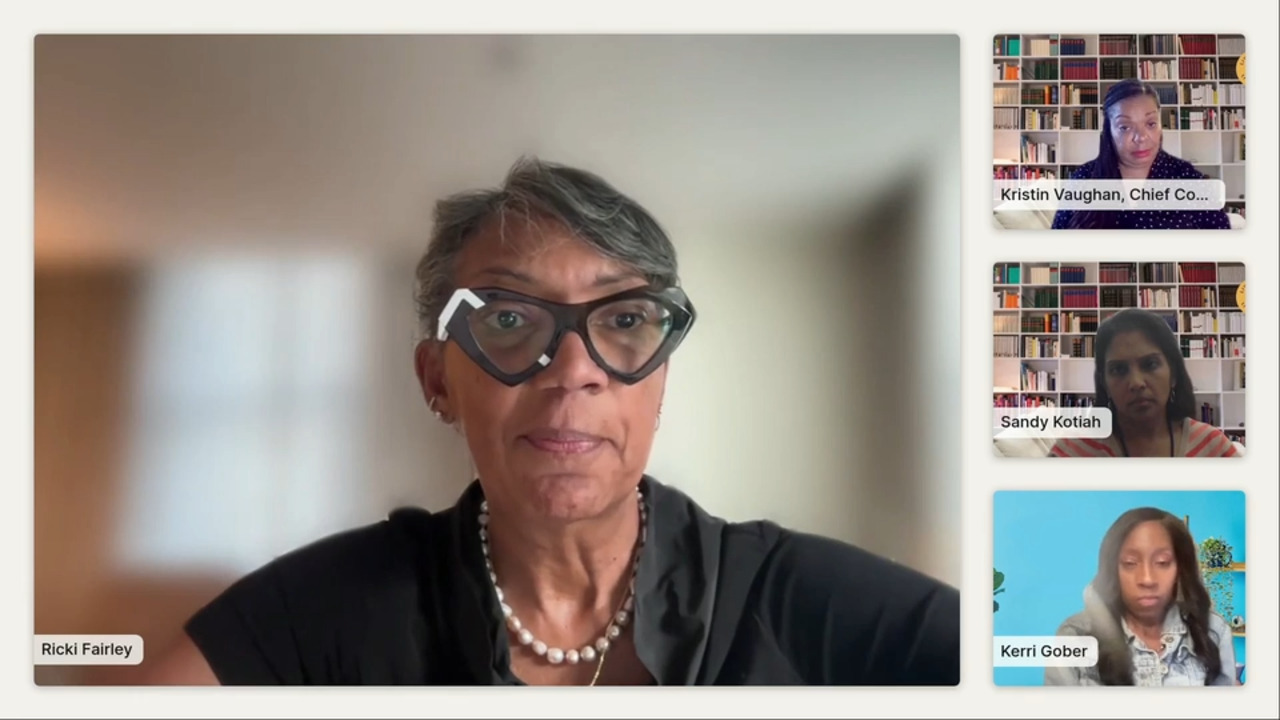
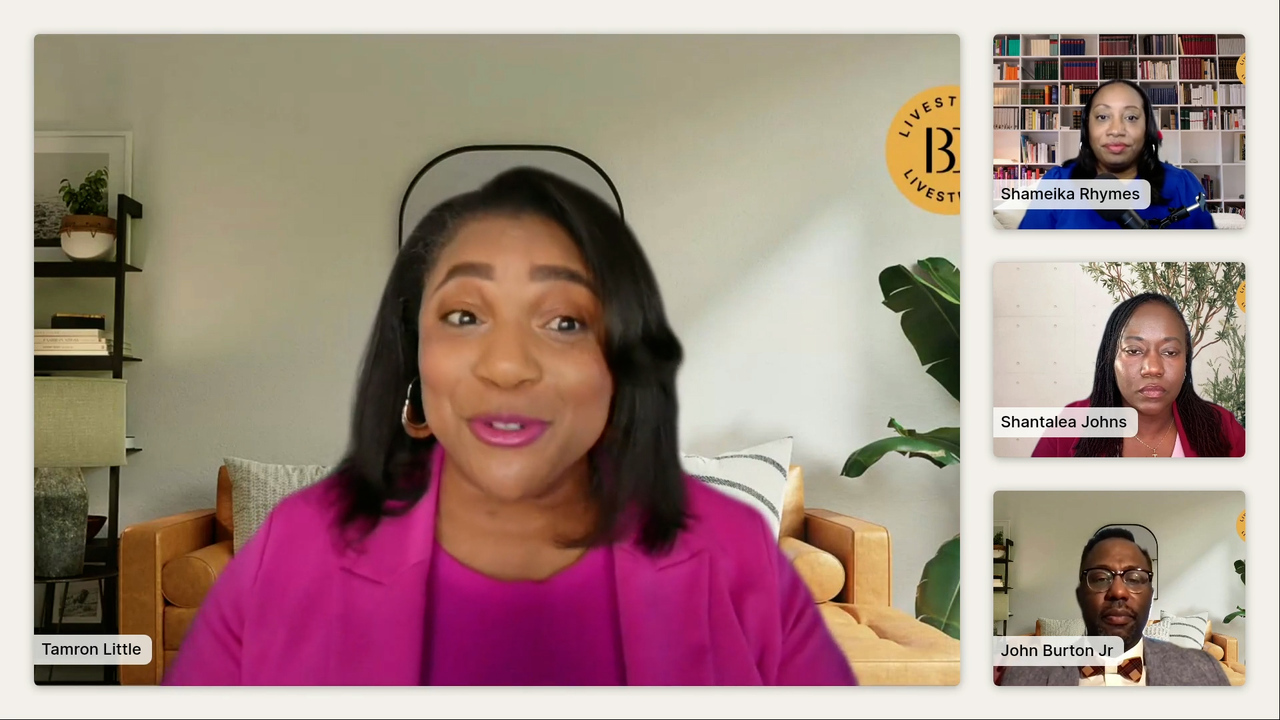
This particular panel, as we have mentioned, is going to discuss ancestry, innovation in oncology, related to generational health. many of us come to oncology from a science perspective, and research as well, but a lot of us also come to oncology due through the personal, experience with either family or friends. I'll start by introducing myself. I'm Kari Gober. I'm the Chief of Staff of Research for the American Cancer Society. I have the esteemed pleasure to moderate this amazing, panel, and so I'm gonna jump right in and allow them to start. Matt? Sure. So my name is Matthew Zachary.
I'm a thirty-year I'm one of the few privileged people who get to say I'm a thirty-year pediatric brain cancer survivor, diagnosed in nineteen ninety-five. Odd thing to get applause for, but thank you. You're alive. I was originally gonna be a concert pianist. I was a concert pianist. that got kind of shot to shit 'cause the brain messed everything up. Plan B became plan A when I didn't die, and I wound up working in Omnicom for about a decade, back in the fun days when there were fax machines. And, I, I bumped into Livestrong kind of by accident in the heyday. I met one of my best friends, Tamika, during that process.
And I got, I was asked, "How would you like to be a cancer advocate?" And I said, "What the hell is a cancer advocate?" This is two thousand and three. And they s- kind of more or less said, "You can help make the next year have a less crappier time." And I kind of accepted that.
And this was before the internet. Like, "All right. W-what can I do?" And in just getting to meet my tribe, getting to meet my, my gaggle, this, this Gen X crowd of sort of angry us's, it inspired me to start a nonprofit, which I don't inspire people to do these days, called Stupid Cancer, which was irreverent for twenty years ago. Today it's fairly commonplace, but it was really this, this sort of this spark of a national sort of a generational patient rights movement. and it really took off, and this phenomenon, it changed the planet. It was a privilege to do that. And I was Some-someone gave me a microphone before there was an internet and said, "Talk to the internet." I said, "Who's listening?
Doesn't matter." And I'm officially the host of the world's first healthcare podcast, back in May of '07 when it was just like you had to dial up and hear that screeching sound and hope you can hear me over a twenty-four K bit stream. I stepped down in twenty nineteen after leaving the organization, and I'm now a, a new author. My book's coming out, May nineteenth from Wiley. It's called We the Patients: How to Understand, Navigate, and Survive America's Healthcare Nightmare, as appropriately as you think a patient voice would have from this perspective. And, I do a lot of talks and keynotes and consulting, but mostly I'm f- and I still do my podcast called Out of Patience now, and, I'm-- it's a privilege to be here, so thank you for having me.
Irea? Wow, it's hard to follow that. I don't, I don't know if that's fair really.
I'm Irea Corley, the Head of People for Black Doctor. My career has been dedicated to both wellness individually and in the workplace, but my mission was built through my life as a daughter. By the age of thirty-four, I buried most of my immediate family to cancer. My journey started at eight, watching my mom fight AML, acute, I'm gonna mess up the second word, myelogenous leukemia. watching her go through bone marrow biopsies and, watching her be in sterile environments and talking to her through plastic bubbles at times. decades later on Thanksgiving Day, I found out my father was terminal with stage four lung cancer.
So that is my introductory to this panel and who I am. Joy? Hi. I wanna thank, USA Today and Black Doctor for hosting this summit and for the opportunity to be part of this conversation. I'm Joy Jones. I'm, an Executive Director of the WIN Award program, which is a national program that was created to increase representation in clinical research to ensure better science for all. but for me, as an adoptee with no medical history, my connection to ca-- to oncology is kind of a blank slate, which became more of a personal call to action after losing, my brother-in-law to pancreatic cancer after just three months from his diagnosis.
So I think about my son who, you know, inherits a medical history from his father, but a mystery for, from me, which makes pro-- proactive, inclusive research, kind of his, his safety net. And so through the WIN Awards, you know, we are looking to ensure that all generations, regardless of ancestry and, ZIP code and income, have access to and can benefit from all of the, medical breakthroughs of medical innovation.And Tamika Thank you so much.
So I'm Tamika Felder. I am a-- Woo. I was diagnosed with cervical cancer when I was twenty-five years old in two thousand and one. And I started an organization called Cervivor, spelled C-E-R-V-I-V-O-R. And I wanna thank Black Doctor, USA Today, my friend Matt, from having me here. And like you heard from other panelists, I lost my dad to colon cancer, my mom to multiple myeloma, and many other family members have been touched by cancer. So to say I have my own personal war with cancer and wanna spread awareness is a very true thing. So we're gonna jump right into our panel and ki-- and discuss a couple of different things, related to what does advocacy mean in twenty twenty-six, and beyond.
also the shaping, outcomes across generations, and also just the practical, experience for patients, families, and the community in this complex healthcare environment we're in. I wanna start with, Matthew. again, you mentioned your book, We, the Patients. What prompted you-- I know you shared a little bit in your introduction, but what prompted you to write the book? what gave you that inspiration? The dimester answer is it all came from my work with Stand Up To Cancer. Stupid Cancer was Stand Up's, like, secret little brother when it got started in two thousand and eight, and we did a lot of work with them helping get Gen X to buy into what they were trying to accomplish.
and then just meeting the council of founders and working with Hollywood. That sounds so cool. It wasn't that cool. I met a lot of people who live and work in entertainment, publishing, marketing, media, and they're the ones that encouraged me a couple of years ago, that I should write a book.
But I learned, like, being a theater kid, they explained it to me like an understood. It's not about what I wanna say, it's what America needs to feel. What does the country need to read and hear? And I wanted to build-- write a book. And my, my writer, my, my collaborative writer, she-- Her-- Jen, where are you? Shout out to Jen Singer. Hi. Fellow rock star, cancer survivor, award-winning ghostwriter, and author. like, I think America's first mommy blogger, if that's correct too. Yeah, so lots of pedigree there. We wanted to write a book that I think told our story, like the collective story of the angry cancer patient, of the angry American patient.
And not that American healthcare is broken, but it was built this way. And there's a historical component going back to the nineteen tens about where it all started with Teddy Roosevelt. Takes us through civil rights and the Orphan Drug Act and the HMO Act, and it's a bit of a history. It's a dark, sardonic, Gen X, funny comedy book, if you can try to figure out how that gets funny. But, there, there were no patient books on the shelves about the story of us on the receiving end of care, getting mostly disabused by a private sector system where, yes, profits over people.
This isn't an anti-capitalist strategy. It's really giving everyone permission to be pissed about what it is here. But I always felt like there was a separate call to action, going back to where I wanna hear what everyone else thinks about the word advocacy, that we've done plenty of advocacy.
No one doesn't know cancer exists. No one doesn't know, right? I hate double negatives. Where I feel we're at a point in this country, tipping point wise, especially since as we wrote the book before all the terrible things that have been going on, we had to, like, constantly adapt the book to the moment to moment, is I feel it's time for the country to organize the cancer community not as a PAC, but a voter bloc. So I'm on a mission now for the next four years to build America's first cancer patients' rights voter bloc, and that's the purpose of the book. Awesome. I think that's worthy of That is really awesome.
we know that our cancer experience, looks different for all of us from generation to generation. and this question is for, Tamika. You sitting in a seat as an advocacy leader, what guidance or what, what things do you think that can impact the future? Well, I think especially with our community, we have to share. We heard it earlier today, share. If someone asked me, you know, did I have breast cancer in my family, I think I know I have a cousin, but I know maybe somebody else 'cause we don't talk about it. We grew up saying the C word or, you know, whispering it and mouthing it.
And generationally, that's still going on, so we have to talk about it. We also have another hard truth in this country, that until we, not for, you know, anyone in this room, but people outside of here who do not acknowledge systematic racism and slavery and how it's played a role generationally to where health is in this country.
Until we acknowledge that and talk about it, we're still gonna be stuck in the same places. So it's twofold. I think a lot of times it's us being able to share in safe spaces, not only with our family and friends, but also collectively, but also in this country acknowledging so many wrongs that have been done, and it's been a domino effect generationally. That's really good. we wanna get a, a little bit personal with our, experience. I too, this, this-- And I'm gonna tell you a little bit of background about this particular panel. before we were doing our rehearsal, there was just a wonderful connection between this group.
so if you-- you're gonna see that exude through our discussion as well. but for ArayaUm, we all have experience and know that, cancer is a family story. Yeah. From where you sit, as an employee of blackdoctor.org, tell us about your experience and, how it also is gonna help move, you know, the needle with health and gen-generational health. When I think about my role at Black Doctor, I think about awareness for health for the next generation and the legacy I wanna leave. I wanna build for my son, AKA, my assistant Taylor, it's what I call him, a culture where we aren't afraid to talk to each other.
Does he need to worry about cancer? Do I? You know, my mom was incredibly fit, and she took a two-year prognosis and stretched it out to six because she took really good care of herself. I wanna institute new rituals, you know. I wanna Instead of people just saying grace, let's start asking each other questions.
"Did you get your mammogram? Did you get your colonoscopy? What are your numbers?" And really start normalizing those conversations at the dinner table, especially around holiday time, which is when most Black families come together. Let's just not eat. Let's just not give thanks. Let's talk about these things. Too many people are not living long enough to tell their story, especially people of color. We're living sick, and we're dying young. I'll just, make a quick data update. as you mentioned, we are dying young. the American Cancer Society, we just posted or published our colorectal cancer statistics, and one thing if, that you'll notice in that report is that, colorectal cancer for aging or older adults is decreasing while younger adults it's increasing.
So as many of the other panels talked about, it really starts generational health. We need to be talking about our-- talking to our children now about health, having those conversations in every facet. They're not being taught, complete public health and the things that we're talking today, about today in their schools. So we really, it, it really does need to start at home and with our families. Joy, my next question, we're, we're gonna come to you. I know that, again, many of the pan-panels have been talking about access to care, treatment, and things, but tell us a little bit more about what you're doing, in the, in your program with WIN, with WIN Clinical, Pathways Program.
Right. So with the WIN Awards, we're actually trying to break the cycle of, of exclusion, with the I'm sorry.
Through the Career Development Award for Early Stage Investigator Physicians and the Clinical Investigator Pathway Program for medical students, we're creating a new generation of what we're calling community-oriented clinical trialists who are changing the way that science comes to communities. so we're teaching them or they're learning how to address the, or how to close the trust gap and the data gap, by building partnerships with communities and understandings, the communities that they serve so that they become participants in the research. And we're showing some early success from, from the program where some of our scholars', data show that they are recruiting or they're leading trials that are recruiting more inclusive patients or more representative patients than the industry standard.
and so with, with that, we are hoping to, you know, set a course for the future where by investing and ensuring that research is inclusive today, it's going to support, better health outcomes for generations to come. Thank you so much. you, both Matthew and Tamika, you've already talked about the advocacy, piece in, in depth, but is there anything else, that individually that we can take from this conversation regarding advocacy? Like, the, what is one thing that you think the people in the room and beyond, that are watching? I, I, I Through the lens of history, okay, advocacy is now a very user-defined term.
I feel like from a per- maybe not a semi-controversial, it's been become bastardized like the word patient.
It doesn't really mean anything anymore because we all feel so powerless and hopeless most of the time, which is unfortunate. But there is always gonna be a need to help the next you have a less crappier time, and if that is the baseline definition that we can all live with to sleep at three in the morning, then that's what I would stand by that would hopefully give us meaning and purpose in our lives. No one asks to be sick, but the least we can do in our own way of recompense with the universe is help others. That's the basic tenet of Judaism, tzedakah, giving back. Like, there's nothing better than that as a human being.
I'm taking the position in the book and in my talks that activism is collectivism versus advocacy, which is individualism and communityism, I made a word up, where collectivism is the new advocacy in my mind, and until we organize, and this is America, and this is love it or hate it, and this is democracy, and this is whatever it is. Until we all organize under one-I almost say single issue purple umbrella that we have the right to be protected from harm regardless of our skin color, regardless of our race or religion. We have the right to be protected from the harm. The over- the overarching narrative is that in- individualism and community, I'm just gonna say communitism, you know what I'm saying, versus collectivism.
The barrier that every single human faces, and this is a very American answer, is that no one cares how great things are if your insurance says no.
That is the single most defining common denominator of every American, I almost said in this country, every American, that your insurance should not determine your outcome, and we are not considering that as an upstream beyond our traditional determinants. Your zip code only matters if your insurance says yes. And that's my interpretation and where I'm taking my thought leadership. Awesome. as you were talking, it, it made me reflect back on BlackDoctor.org, their launch brand event, and I may have the, the term of, of that event wrong, but, there was one image, that I remember seeing on the wall that says, "Health is personal." And so when I reflect back over the other panels, you really have to understand and have a good, strong support care team, and sometimes that care team is going to be your oncologist, doctors, but it's also friends and family and, and coworkers.
And just like in many of our relationships, we have to hire and fire sometimes, depending on, you know, who needs to be on your journey. But with that, Araya, the question is, a- give us some insight on how we share with others how to navigate, how to navigate in the healthcare system. Yes, yes. at Black Doctor, we are truly focused on closing the health equity gap. And that starts with self-advocacy, although it's still communal. We'll use your word. healthcare, like you said, is a complex system. My mother's doctor was incredible. He had to fight insurance companies tooth and nail to get her experimental treatments approved.
But not every patient knows how to navigate that system. Many people in our community, the Black and brown community, are intimidated by these systems because they weren't necessarily built for us, and they're afraid to ask questions. They're afraid to ask for those second opinions. They don't understand their coverage. They don't understand how to find a specialist, especially if they live in a specialist desert. My advice, bring that pushy cousin with you. If you're overwhelmed by a diagnosis, bring the person in your family who isn't afraid to ask those hard questions, who isn't afraid to ruffle feathers.
Demand a referral or a follow-up. Ask questions about your bill. We call this the chief health officer of the family. It's about being an active partner in your own care and not just a passenger. Don't be afraid to ask for the clarity you need. It's your health. It's the difference between being a fatality and being a survivor. Thank you so much. before we-- I'm gonna ask one last question of everyone on the panel, but before I go into that, I'll just te- a short snippet of my own personal story d- which I didn't mention earlier. both my parents, did not survive their cancer journeys.
so, and I, I think everybody takes a personal thing that they do, and one thing that I'm doing, I have actually, entered our own study, Voices of Black Women. And so that's how I'm, And if you are eligible for that study, please go on cancer.org for more information. Just a plug there, because we are still looking for other Black women to join, and enroll into that study.
also, one thing that you, each of you, would leave with the au- a- audience now that all the pa- panels are finished and everything that we've collectively heard today, what is one thing that you would like to share, with the audience? Tamika. That individually, collectively, every single story matters, no matter how big, how small. And even when it seems hopeless, you know, identify someone to help you fight. Identify someone to help you get there. When I was diagnosed and my fertility wasn't covered, I ended up fighting the state of Maryland and my insurers, and I got denied.
But a decade later, I changed the law in my state, and I'm helping to change the law others. So it's bittersweet because it won't help me. Thank you. But it'll help generations to come. So also think that what you're doing, unfortunately, may not help you, but it may help the next generation and the generation afterwards. It matters. Yeah, and that speaks to, how I've defined advocacy, which is if you do it right, no one knows. No one knows that you fought for these rights. No one knows that I built Stupid Cancer so young adults can have a voice. I don't-- We don't do it for guts and glory.
We do it for the downstream. please buy my book. I'd be- Buy my book. I, I, I would be excoriated for not demanding that I would, would say that to you. But in all seriousness, please start paying attention to the narrative around patients organizing in America. There are PACs, there are lobby groups, there's no voter block.And we care about one thing: your insurance shouldn't determine your outcome.
Man, I, I wanna leave with a couple of different things. number one, take care of yourselves. If there is a yearly annual, take it. Go get it checked. Ask your mom, ask your dad, ask your cousin, your best friend, your sister, everybody. We need to make sure that we're taking our health seriously. You're gonna have to spend on your health. If we can spend on so many other things, we can spend on our health. So I wanna make sure that people are clear. Get your test taken. Secondly, if you are unable to advocate for yourself, bring that person who can do it for you. Bring the person who's not afraid to throw a couple of chairs in the doctor's office.
Wow. You know? Like, that is really able to ask those questions, because those are the differences between life and death. I, I really think it's important that we have to ask those tough questions. We have to ask for second opinions, and we need to advocate for ourselves, because no one is going to save you. Say that we're in a time where the possibilities for medical, breakthroughs in science is incredible, but that's only, that's only gonna have so much impact if it's effective and accessible to all communities. And so we wanna get to a time where, you know, our slogan for WIN Awards is Better Science for All, that that's not just a slogan, that it becomes the standard of care for all communities.
Thank you so much. insurance nor zip code, as we say, should affect your health. We appreciate you, and thank you, panelists. Thank you.