Play Video

Poetry of Healing: A truth about marriage
What does marriage really require?




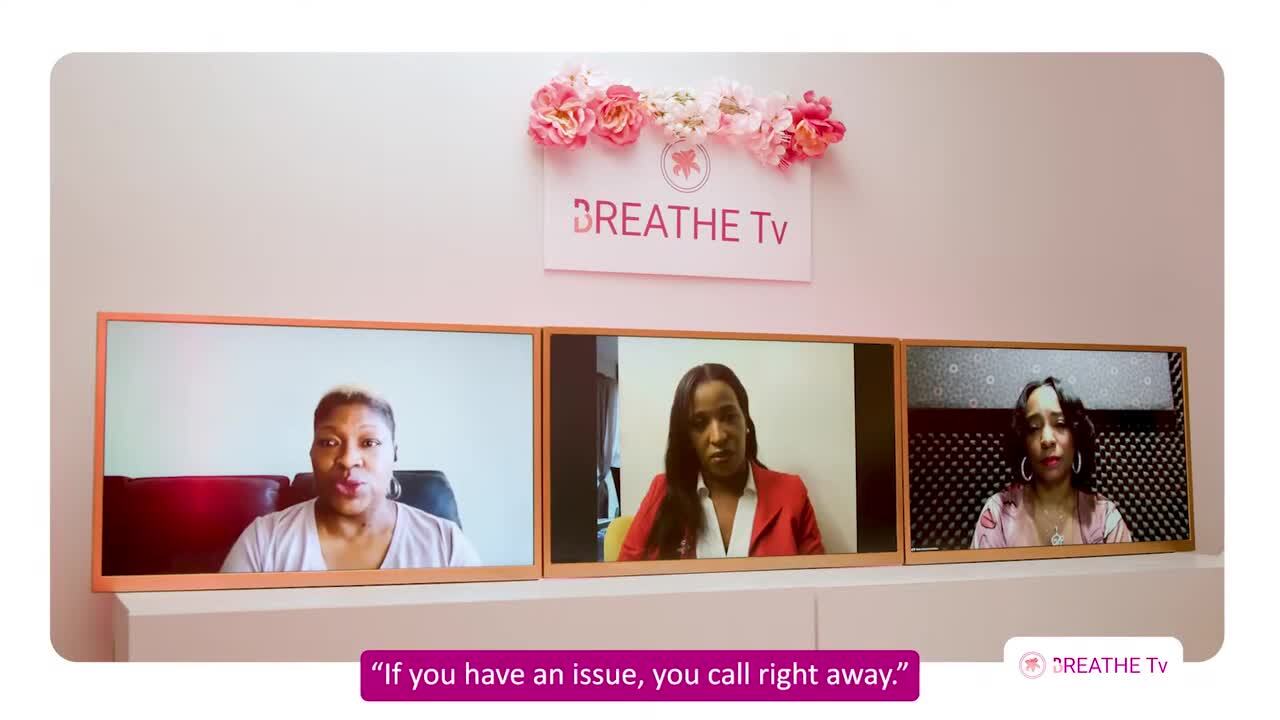



The fifth key, fifth of the five keys to caregiver survival is to put your mask on first, which is what flight attendants tell you to do in case of an emergency. Because if something happens to you, think about what will happen to the person you're taking care of. So it's important for you to find ways to maintain yourself while you're being a caregiver, and I recommend that people find something that makes them joyful and do it on a regular basis, even if it's only ten minutes a week. You put it out there, and I know those of you who are runners know that when you're running, you go, "Oh, can I get to the next tree?
Can I get to the next fire hydrant?" That's what makes you continue to move. If you put it out there, "I'm gonna have lunch with my girlfriend on Saturday," or, "I'm going to go to a Bible study on Wednesday", it has to be a regular activity that you do and that you can look forward to. You don't wanna wait till your tongue's hanging out and then try to pick it up on the back end. You want to be proactive about it. You also want to decrease the stress in your life. You have to get help. You have to get help. There is no way for us to do this alone. If you don't wanna have to drive all the time, you have to take your hands off the steering wheel.
You have to let people help you. Do you care if somebody eats chicken salad or tuna salad? I mean, if a caregiver is gonna have a helper, you need to let that helper do it their way, unless their way is contradicting what the primary care team says.
The fact that you don't like it is not good enough, and you have to value what help they give. So whenever somebody won't help you, ask yourself, did you ask them to help, or did you tell them what you wanted them to do? Did you ask what they could do, and did you value what they did? Maybe they can't give Mom a bath, but can they get the oil changed in your car? Can they pick your kids up from basketball practice? Can they bring a dish? Can they do groceries? I mean, don't worry about what should happen, worry about what is happening. And if somebody repeatedly lets you down, stop depending on them.
The problem is not that your sister won't help, the problem is that you keep expecting her to. Get help where you can get it. Don't worry about what should happen, but what is happening. I also write fiction under the pseudonym Taria Robbins, and my logo is a woman who's standing on a ball, juggling, and the j- the balls are boss, wife, mother, daughter. And she's juggling these balls, and she's looking at these balls, and at her feet is a ball that is broken, and that ball says "me." If you don't at- attend to that ball also, you're not gonna be able to keep the other balls in the air very long.
So the first sign is whether you're getting more irritable. People around you, not just people at home, but people at work, are you having different interactions with people than you used to? Or are you having fewer interactions with people? 'Cause a lot of times, caregivers isolate, and that's the worst thing that you can do, 'cause you're in an echo chamber with your own thoughts, and you're not getting any help.
But if you find that you are more irritable, if you find that you are more tired all the time, and there are spiritual fatigues as well as physical fatigues, but if you are bone-marrow level weary, and you're getting back up there at a cost or at a, at a difficulty, that's a sign of burnout. And you don't wanna wait until you start making medication errors. That's really important. You wanna get this when you first see that there's something happening, and if someone who cares about you that you trust mentions it, listen to them. Listen to them. And I had a pastor once tell me that counseling clarifies what you need to pray about, because many people in our community see counseling as a lack of faith.
You know, Jesus is gonna work it out. But sometimes the blessing is the hands of the surgeon, is the interaction with the counselor. So if you are unhappy, and no, we're not gonna be happy all the time, but if you are basically dreading the day or not happy about getting up to do your next day, it's time to talk to somebody. These are the earlier signs of burnout: dreading your day, irritability, and lack of concentration is another. If you're not doing well on your job, there's something that we call presenteeism, which means your body's at work, but your mind is somewhere else, and that can lead to disciplinary actions and not getting promotions and having more financial difficulty, because the face of financial insecurity in aging is female, and a lot of that has to do with what happens when you're a caregiver.
So you need to look at all of these aspects and get some counseling. I recommend that people work with your department on aging to start there, to see what resources are available for you. The National Council on Aging has a software program called the Benefits CheckUp. You put in all the information about the person you're taking care of, nothing that would get their identity stolen, but you know, what their medications are, what their resources are, and it will spit out every resource, municipal, state, and national, that they may be eligible for: medication, food, housing, and also even employment and income.
There are so many factors that you can get help with for the person you're taking care of, and even for yourself, so that you can get the help you need to avoid burnout.

By subscribing, you consent to receive emails from BlackDoctor.com. You may unsubscribe at any time. Privacy Policy & Terms of Service.