Hello everyone. Hope- hopefully your afternoon is going well. A lot of, lot of exciting panels, so glad we're able to, add to that hopefully with the 340B Transparency panel. just a little bit of background. 340B is a federal drug pricing program to expand access for low income and uninsured patients. It allows safety net hospitals and clinics to buy outpatient drugs at discounted prices. But is the program meeting intended objectives? For example, one news report focused on a New Mexico hospital clinic that billed a woman twenty-two thousand seven hundred for a drug that carried a list price of just twenty-seven hundred dollars.
The woman's insurance company paid ten thousand, but the hospital wanted more. They charged the patient another twenty-five hundred. How is this possible? 340B is meant to help safety net providers improve care for underserved communities, yet in many settings, 340B savings don't reduce costs or expand access for patients. We have an exciting panel of experts today who will share their thoughts on what's missing and what could be done to improve this very pivotal program. Today, our experts include Dr. Sharon Allison, a health strategist and CEO of Caraldyn Inc.; Reverend Kimberly Williams, CEO of Choose Healthy Life; William Smith, a senior fellow at Pioneer Institute; and Pamela Barnes, a health policy and 340B expert.
So I'd like to start it off with some questions. panelists, we'll start with you, Dr. Sharon. What is the current structure of the 340B program, and how does it impact patient access and affordability to medications, particularly in communities with high burdens of chronic disease?
Hi. Thank you. Hello, everyone. one question is, what is the structure on paper versus what is the structure in reality? And if 340B worked as it should on paper, we would have little to say. As a person that's committed my life to health equity and making sure, that persons, that need healthcare, I'm an internist and geriatrician by training. I am a health strategist and consultant. so the structure is that federally qualified centers, as well as hospitals, are able to purchase drugs at a significant discount and pass that on to the patient, as well as making sure that you're able to provide other services to patients that need it.
That is what is supposed to happen. But however, how do we know? The greatest place-- Someone said once, "If you wanna hide something, put it in a book." Right? So what some of the opponents to transparency, and I'm all about the transparency, are saying, "Well, we don't have to tell you what happened to those rebates. We can now go open a center. We can go open a fee for service pharmacy in an affluent neighborhood," when this is supposed to be a safety net, position. And then you gave one of the egregious examples of how 340B is not working. and then I will end it by saying there are cases, particularly with federally qualified health centers, that it is so important.
So we don't wanna throw the baby out with the bath water. We just want tell the truth, take the covers off. Show us what you're doing. Okay. Pamela, I'd like to go on to you. what do you think is the disconnect between 340B savings and how patients may or may not be benefiting?
Sure. Thank you for that question. so I like to start off by just looking at the numbers and the data. I, I know it was mentioned earlier about the gaps in life expectancy. So if we look at the nation's capital specifically, we can compare southeast in Washington DC and look at the Barry Farms neighborhood, where the life expectancy is sixty-three years, and let's compare that with northwest, the more affordable, a more affluent neighborhood, where the life expectancy there is ninety-six years. So that's a thirty-three-year gap. in our nation's capital, within the Beltway, both of these communities are served by 340B hospitals.
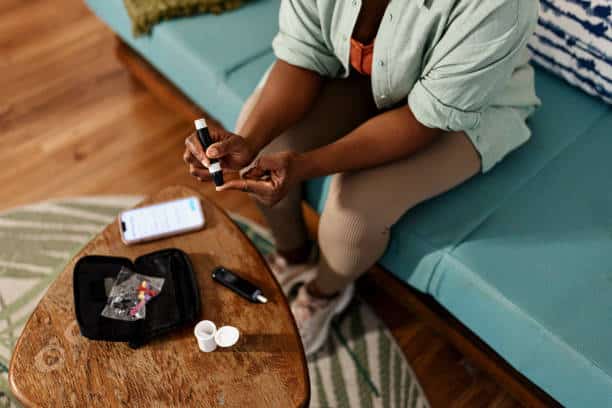
And so if you think about what patients are benefiting and what patients are not benefiting and look at chronic diseases, communities like Barry Farms have a higher rate of chronic diseases. Let's look at asthma, hypertension, diabetes, right? And all of these can be managed by medication. But unfortunately, these communities are not reaping the benefits of 340B, and so they run into medical debt, and a lot of people go into foreclosures. And so we have this thirty-three year life expectancy gap in the nation's capital, right? And the people are still suffering from chronic diseases, partly because they can't access the medication, and the medication is not affordable to them.
And so that's what-The problem of the three four two B program is it was beautiful by, you know, the spirit of the law, right? It's to make sure patients have access to the medications.
But when you have such a disparity of gap in DC is a very small district, right? When you have such a huge disparity of life expectancy within the nation's capital, something's wrong with the program. Thank you. That's, that's a very jarring example, thirty-three year gap, and that's something we need to address. Reverend Kimberly, what do you think are the long-term generational consequences of inadequate access to these essential medicines? Good afternoon. Thank you for that question. So, as the president and CEO of Choose Healthy Life, we see, I would say generational cycles, right?
when our elders grow old, what tends to happen is that the family jumps in and provides that care. And, when there are challenges, within that home in order to be able to purchase medication for those family members who have illnesses, that starts to create, I would say, a pain effect. along with when you have maybe a father in that home who has some type of chronic illness or disease, and they have to purchase medication, and then they cannot work to get the medication that they need. They're missing work, and that becomes a family burden. And so with three forty B, what was supposed to be able to provide, the cushion for families to be able to purchase medication, what we find is another big gap, is that the community doesn't even have knowledge that the three forty B program even exists.
And so they find that they are in a, in a real, difficult situation where I need a medication to help, with my life and with my, my health and wellness, but the funds that were supposed to go to me tend to go back into the system that was supposed to provide it.
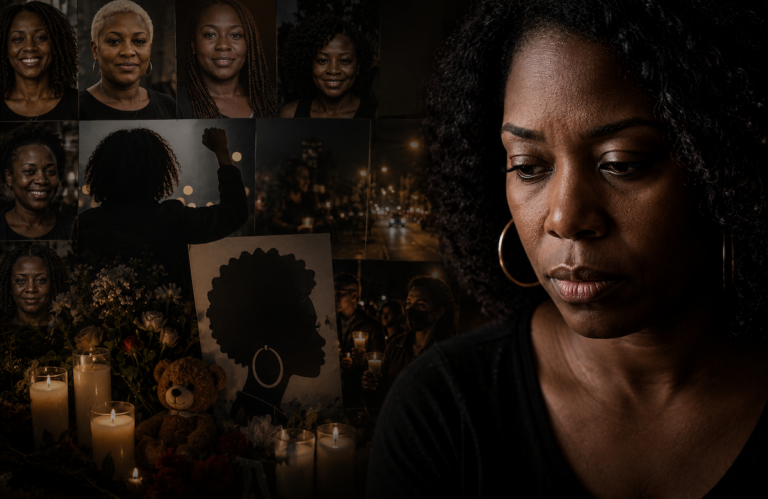
And it impacts generations because then the generation who is normally giving care, I've seen the generation below die before the person who needed the medication, when that medication could have become affordable to them. And so health and economic mobility are not separate issues. They're one in the same. You need your health, and you need the ability to be able to get the medication that you need for your family. And so the only way to break that cycle is to be able to see three forty B reform happen so that the funding actually goes to the patient that's in need and not to the system, that has the paperwork in front of them.
So thank you. Great answers. Great answers. Thanks for, thanks for that. And William, there's a-- in the news we, we talk a lot about pharmacy benefit managers, some called, sometimes called PBMs for short. how are, how are PBMs profiting off of the three forty B discounts given, and, and who tracks that spending? Well, PBMs are making a lot of money off the three forty B program. They own pharmacies. Optum and, CVS are very prominent players in the three forty B program, and they have contracts with hospitals, and s- their contracts are enormously generous compared to a regular retail pharmacy, where you might get a twenty dollar filling fee or something.
The PBM-owned pharmacies can pocket a percent of the spread that the, the hospital is making on the medication, and i-it's, it's billions of billions of dollars. That's a, that's an a-awful lot of amount that, perhaps patients could benefit from.
Dr. Sharon, hospitals are buying independent medical practices and specialties, and it's suspected that this is a strategy to gain three forty B profits in part, as well as overall market share. what are your thoughts on this? Well, I'm known as Dr. Sharon, let's keep it real. So I, I'm not-- I'm gonna keep it real. Before the Affordable Care Act, we knew that, and I know my colleagues, many are in the room, in a lot of the underrepresented communities, you had Black doctors in private or group practices providing care. Then all of a sudden, it became a little bit more attractive for hospitals to come into our community.
They didn't want anything to do with us. They didn't want us to do anything with us before. But now that there was money to be made in our communities, and this is not to villainize anyone, this is just the truth. Now you come in and say, "We're gonna buy practices, but you have to have these criteria. We're gonna put academic centers and into areas." So Dr. Jones was taking care of patients, doing fee for service, doing, okay, bring some chicken in and, and we gonna work this out. I'm gonna see you. Now, it became that we had, a way for larger centers to come into the community with or without culturally appropriate.
And that does not mean minority. And I, I'll say that. I've said this publicly. Just because you're a Black doctor does not mean that you're culturally appropriate, right? Ouch. Right? But everyone needs to have training in cultural appropriateness in patient care.
So what do we think about the hospitals coming in? Great. If we're gonna take care of patients and look at patient care versus profit. Now, the other part, specifically related to three forty B, don't put a center in the hood.Right? That will see ten patients, say that I'm now providing care, but then you take and put the money for development of the larger centers, the larger and affluent areas, you take that profit and dump it into an area that does not need your help. That's why we need transparency. If you're in the underrepresented minority community, put those funds back to patients and back to centers, back to testing that will offset the cost for the people that need it versus building another ivory tower for people that don't necessarily need the help.
Can I ask one follow-up there? you raise a really good point on transparency and investing minimally in communities that need the help, in terms of diverting money to more affluent communities. how, how would we track that? How would we make that more transparent? What, what would you like to see? I love, love history, and I love being practical. When you go to the doctor right now, and we can ask the people in the room, in about two weeks, you'll get something called an EOB. You, you see that, right? It's I saw you, I took your blood pressure, I charge you this, your insurance paid this, and your copay was this.
We're just asking for you that get the discount, the hospital centers to say, "Hey, we got X medication for two dollars.
Of the two dollars, we charged the patient, or we charged the healthcare program ten dollars. That eight dollar profit, we put it back into the community." That's it. And I challenge anyone that says, "Well, I don't have to tell you how I use the profits." What are you hiding? Tell us. I want you to scream from the mountaintop, "I am helping," right, "underrepresented, minorities, I'm helping our rural communities, and I'm giving access." What is there to hide? If I could follow up to, to, Dr. Sharon's point there. I think it's important to look at who benefits from the lack of transparency and follow the money there because it's a billion sixty-one, eight-- eighty-six billion dollar, right, industry, second to Medicare Part D.
Someone's benefiting. If it's not the patients, then who? And so there are groups and entities who are fighting and, and suing the government, because they don't want to be transparent. So we need to look at, you know, stop asking whether or not the program is broken, but ask who benefits from the program being broken, because it's not the patients. Great answers. Reverend Kimberly, can you shed some light on how strengthening transparency, accountability, and community reinvestment within the program could help generations, in terms of health equity and outcomes, and any impact on faith-based, underserved, historically marginalized populations, please?
Well, we are, at Choose Healthy Life, we fund, train, and deploy health navigators into the community to provide health literacy, and access to care.
And so from a transparency, accountability, and investment, perspective, the transparency goes beyond the dollars, right? most people in our communities have never heard about three forty B. If I haven't heard about a thing, how do I know about a thing, right? and so reform really means making sure that three forty B is used to provide funding for organizations that are in the community, who know the community, who work with the community, who see the community day in and day out, and provide that, that, I would say, support, to the community through this particular policy.
And in most instances, I mean, for example, cancer impacts our communities in a huge way. There are medications for cancer patients that the hospital gets, and the price, the cost impact is three to four times the cost. And so how am I to already deal with a condition that is already heavy for my family, but then the medication is priced at a price point where I can't even get what I need? and so the squeeze is real, right?
and so the ability to be in the community as a grassroots organization and provide that support helps us to be able to make sure that as we're working with people in the community, and particularly our clergy, our clergy has helped to support, just recently, we wrote letters, to, to the Michigan, legislature to say, "Hey, we support three forty B reform." And our clergy members have supported us by being on the front line, basically working with their representatives in Congress to say, "We will not allow our community to not see the dollars that were meant for them." and so it, it, it impacts reform is what not only serves the generation that needs it now, but protect the generation that's coming behind it.
Because if we don't see the medications at a cost, at a price point that allows them to be able to get that through three forty B reform, then we will not see the generations behind this current generation. So that is what we're doing within the community through our model to ensure that, that one, we're advocating for the transparency. What are we-- what's happening, with these funds? And we need to hold our people accountable.Um, we have to put the message out that we will not allow for these dollars to be, to come into our community and not be used by our community. And I think Dr.
Sharon said it right, don't let the, don't let the face or the color on the face fool you. Everybody knows and understands the cost of medication, right? And so the accountability is necessary. We have to hold folks accountable, and then we have to ensure that those investment dollars are b- being put back into the community where they're most needed, so that we can create pathways, for better health in our community. Health is a right, it is not, a privilege, and we need to make that very clear through 340B reform. That's, that's a great example of what's happening in Michigan.
open it up for the entire panel. Can you think of any state-based pressure, state-based reforms that might be a model for the nation? Is that a question for me? Mm-hmm. Anybody. Anybody. so just one thing, since we Ada, I'll add, I think one thing, we talked about transparency and accountability. another thing to think about is fixing loopholes within the 340B program.
So there are large urban centers that are being classified as rural locations, and they are gaming the system, right? So obviously, downtown Chicago is not a rural location, right? Down- you know, downtown, inner city, New York City, that's not a rural location. But they're gaming the system very smart. And so when we think about transparency and accountability, we have to close some of these obvious gaping loopholes, that the money's just being funneled through. Great answers. And, and I'll open this up for the entire panel. if each of you could say what, what's one thing we could do to fix 340B, so the program can live up to what it is supposed to help, the communities it's supposed to help?
Well, Teddy Pendergrass said, "Take off, turn off the lights." Turn on the lights. Well, now. Turn on the lights, and let's make sure that we, again, tell the story. I'm doing a wonderful job with these rebates. I'm doing a wonderful job with these profit margins and giving back to what was designed with the legislation in 1992 to help, areas with persons in lower socioeconomic areas and rural areas. Just tell us what you're doing. and I go back to what one of the panelists say, "Why would you not want to?" Mm-hmm. And who is benefiting? So you cannot come against and say, "Well, we don't want transparency." What?
We're in medicine. How can we not be transparent? I think the one thing that we're looking for is to ensure that the 340B, policy li- li- lives up to its promise. That's right.
It was created as a generational promise to help people to be able to, to basically afford their medication. And so when a family has the ability, a mother for pers- for, for, for instance, with a child, when she can afford her medication, she can care for her family in better ways, right? when we can meet our physical needs, then we can consider how we can help our families move forward. And so I think we're looking for the, the policy to live up to the promise that it was designed for. And we're doing that in our churches. We're making sure that we're out there, that we're addressing social determinants of health so that people have at least some window, to say, "Now that my basic needs are met, I can focus on my medication." but we're asking that the, the policy lives up to its promise, so then that way, those dollars can indeed be reinvested into the community.
So I would just say we need the transparency. We need to ensure that there's full accountability for those dollars, and lastly, that they're reinvested into our communities for the people they were meant for. That's right. yeah, let me say the, the program needs a lot more transparency. I was in Illinois last week, and I, I make it a habit when I visit a city to look at the 340B hospitals and how much charity care they give out. Cook County Hospital gives out eleven percent of their operating revenue in charity care. That's over a hundred million dollars a year in charity care.
That's five times the national average.
So there are good players in the system, which is why I wouldn't wanna cut this program. However, we don't know There are, there are also academic medical centers in Chicago that give less than one percent of their operating revenue in charity care. So there are good actors and bad actors, and I think a little transparency so that the program is not so opaque. How much money are you taking in from the program, and where exactly are you spending it? They can just tell us that. and there are states that have moved towards these reforms. Minnesota now requires a certain transparency.
Indiana's coming up and will require some transparency. It, it's not unusual for states to require nonprofits to disclose what their revenues are and, and for tax reasons. So I, I think a little transparency would go a long way. So for me, the, the answer to the question, is, is simple. Thirty-three years later, the program started in 1992, so thirty-three year la- later, the gap in life expectancy in Washington, D.C. between Barry Farms in the Southeast and Friendship Heights in Northwest is still thirty-three years.Nine-mile distance in the nation's capital, both of the populations are being served by 340B hospitals.
So when we think about how can we align the program back to its original intent, I would say prove the patient. Prove that the patient is benefiting from the program. You, you mentioned some interesting points here, like the idea of more transparency and the, the example of what Cook County delivers.
do you think that there needs to be more oversight just by and large for non-profit hospital systems and, the amount of community benefit, they provide to maintain their non-profit status? And is 340B a key component of that, or can it be a key component of that when you're looking at things like mergers w- through physician and specialty a- acquisitions? Absolutely. period. I mean, that's why we were all quiet. Yeah. A- absolutely. Mm-hmm. Again, what are you hiding? And why don't you tell the great stories that are going on? I Because I don't wanna be negative. There are great stories- That's right about reinvestment into communities, about families that are having an impact because they are being, are being impacted because they are able to afford medications more, and it's working correctly.
It is important for us not to throw the baby out with the bathwater. But for goodness sake, put some lotion on that baby, shine them up- and take a picture and say, "This is what we're doing." Mm-hmm. And that's all we ask. Yeah. And, and for me, I don't know about the rest of the panelists, if you do that, that's one step in the right direction. Mm-hmm. But when you now say, "I don't really wanna tell you"- Mm-hmm that's like a cheating husband. Well, well, why don't you wanna tell me where you at? Mm-hmm. Right? I think we have a good baby, though, in New Jersey. Yes, that's right.
New Jersey is one of the few states, that I would say- That's right does 340B reform very well. and so I would say if you're looking for a good baby, one that's healthy- Cute round, plump cheeks- you would come to the state of New Jersey, because that is the state, that really has done well with 340B reform.
And they've been very successful at, at ensuring that the medication is at a price point where the community can afford it, and the dollars are being reinvested back into the community. Yeah, what you see in New Jersey is that, in most states that have s- expanded Medicaid, they give out less charity care in the hospitals for obvious reasons. They have more insured patients coming in. In, in a state like Texas where they haven't expanded Medicaid, hospitals give out a lot of charity care because they have to. and New Jersey, despite the fact that they've expanded Medicaid, still gives above the national average in charity care.
It's, it's really an, an anomaly. and the people of New Jersey should be commended for that. Thank you. I'm from New Jersey. And, and you raise a good point. We, we should highlight the, the, all the positives that are happening in these programs. So, so thank you, Reverend, for, for bringing that up. is it a, you know, we're, we're coming at a time where we have, we're staring down potential Medicaid cuts. we've already been through the Affordable Care Act, enhanced premium tax credits that went away and made policies a lot more expensive for a lot of Americans. is, is it important to, to tell, tell the public when, when this program works, and how can we better do that?
Absolutely. I think today's panel is a demonstration of how to do that and do that well, thanks to blackdoctors.org. And I think the other thing that we need to prepare for is be on the end of more preventative care.
when we find ourselves in life needing that medication, it's because we've been reactive, not proactive. and so the work that I do, we provide an at no cost full blood panel, within our communities, through our Black churches, to ensure that they're on the front end, not on the back end when they've been re- reactive and in, and endured, I would say medical debt. And so it's important, that we continue to have these conversations, that we pay attention to the policies and how they're moving within each of our individual states, and that we, I say, make some noise.
I'm proud of the clergy members that I work with day in and day out because they are on the ground doing the work, not just behind their pulpits, but they are on the front lines making sure that there's letters, there's information, that they're in contact with their Congress folks to ensure that this 340B reform happens not just for them, but for their congregations, for their community, and all that is inv- involved in that. So I think that this is a great, demonstration of what's taking place, and it's an important conversation to continue. Okay. I think we're at about time, so appreciate all the expertise.
You provided a great overview of this program and, and pointed out some of its areas of improvement, as well as highlighted some successes, so I thank you very much. Thank you.