

BEST Baby Bok Choy Kimchi Recipe – Easy & Delicious
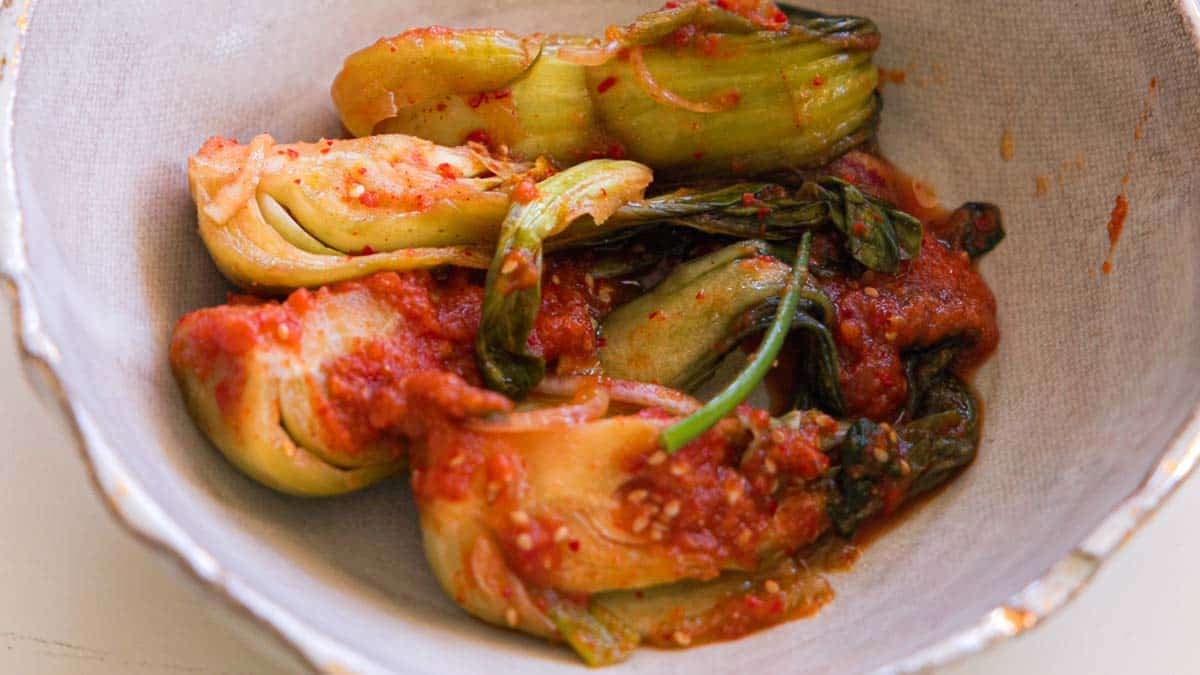
Easy.
Healthy.
REFRESHING.
Bok choy kimchi was not on my radar until my friends at Support & Feed asked me to come up with a recipe using baby bok choy. Randomly, I received an email from one of my followers telling me about how their mom made bok choy kimchi because she had trouble finding napa cabbage in Canada when she first immigrated from the Philippines. It was like the universe was telling me, You need to make bok choy kimchi. This bok choy kimchi recipe (vegan, ofc) is refreshing, easy to make, and exploding with flavor. As you’ll see, it’s very reminiscent of cabbage kimchi, but has some important differences, which we’ll discuss below! So, without further ado…
Let’s get into it!
Disclaimer: Some of the links in this post may be affiliate links for products I use and love. If you make a purchase after clicking one of those links, I may earn a small affiliate commission, perhaps enough to buy some extra gochujang or gochugaru 🙂
What is bok choy kimchi?
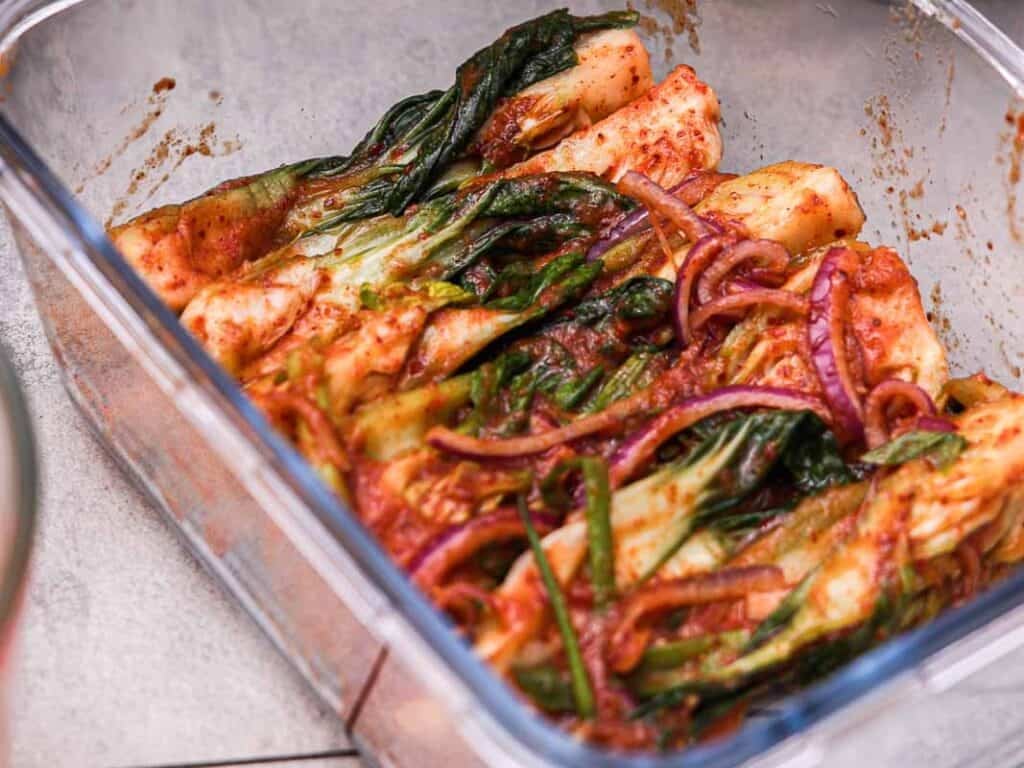
I’ve said it before and I’ll say it again: you can “kimchify” virtually anything. My friend Eric says, “Kimchi is a verb” (not a noun). Bok choy is no exception to that rule, hence this introduction to bok choy kimchi. Hopefully, this gives you some idea of the history–or lack thereof–behind bok choy kimchi. It isn’t a dish that Korean people have been making for hundreds of years. Bok choy kimchi is a fairly modern adaptation of traditional kimchi, typically something you make when you want something lighter that takes advantage of spring’s bounty.
Don’t get me wrong, though–this is a dish that many people in Korea make and enjoy, and there is a definite repository of recipes that follow a general set of principles (as opposed to just random people pickling bok choy and calling it “kimchi”). After consulting with several recipes, the general rule for bok choy kimchi is that the saucing must account for the more delicate structure of the green. This means the sauce is more liquid-y and less paste-y, if that makes sense. As you’ll see when we discuss the ingredients, this, in turn, means less gochugaru (the dry Korean pepper powder that forms the basis of cabbage kimchi).
One interesting note about “bok choy kimchi” is that some people mistake it for “baechu kimchi” because they sound similar. “Baechu” is the word for cabbage and, specifically in reference to kimchi, napa cabbage. Thus, when people refer to “baechu kimchi” they are talking about the very popular Korean side dish you see on virtually every Korean dining table. The word for “bok choy” in Korean is cheonggyeongchae or 청경채 so the Korean way of saying bok choy kimchi would be “cheong-gyeong-chae kimchi.”
Those who make bok choy kimchi sometimes clarify that it isn’t really a “kimchi” at all, because there is little, if any, fermentation time. Bok choy kimchi can be enjoyed like a salad, right after it is dressed. Personally, I prefer to let it sit for a few days in order to get the juices really flowing, which is why I’m calling this recipe bok choy kimchi as opposed to “bok choy salad” or “bok choy geotjeori.”
What is the Main Difference between cabbage and bok choy kimchi?
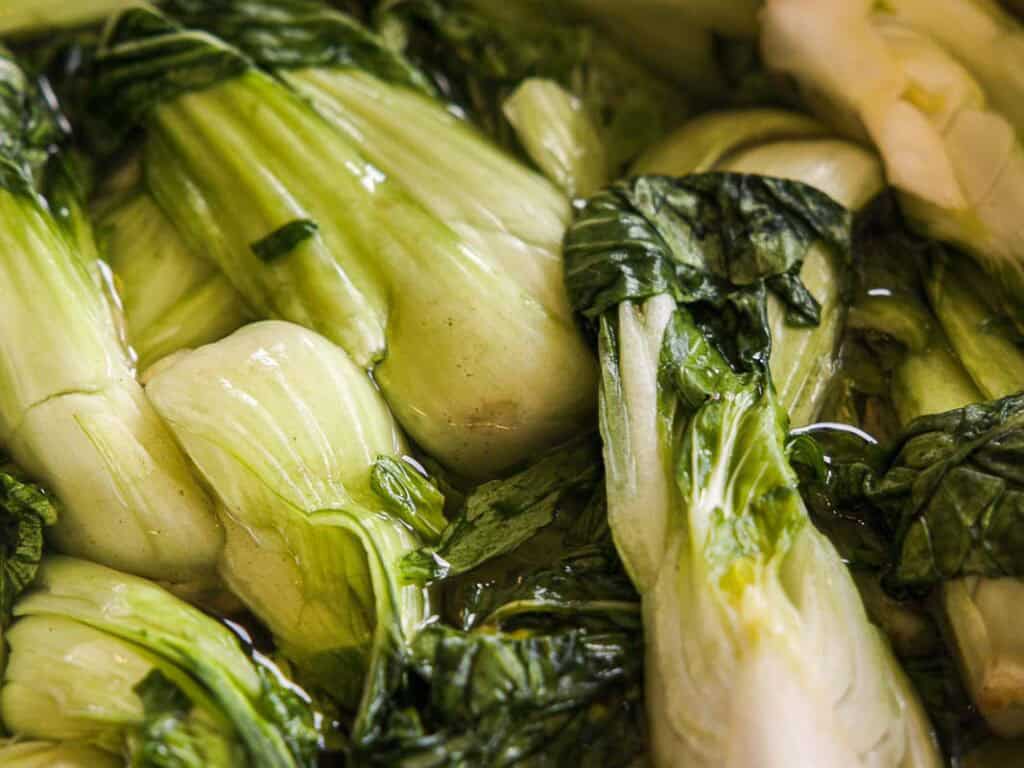
The biggest difference between cabbage kimchi and bok choy kimchi is that cabbage is a much sturdier green. Therefore, the amount of salt and the pickling time will typically be greater in regular kimchi than in bok choy kimchi. In addition, the sauce will feel and look more like a dressing than a paste for bok choy kimchi. From an ingredient perspective, this means less gochugaru and more actual chili peppers. The sauce also incorporates some soju or Korean rice vodka (which I found fascinating).
The other difference between cabbage kimchi and bok choy kimchi is directly related to the size of the greens. Because bok choy is, generally, smaller than napa cabbage, it’s harder to get between layered leaves, which is why I prefer salting the bok choy with a brine as opposed to just salt (which is how many people traditionally prepare tong kimchi). This ensures that the salt is carried right into the tight cracks and crevices of the small bok choy leaves. Without this salt, the bok choy leaves are far more prone to mold and yeast growth than napa cabbage.
KEY INGREDIENTS AND NOTES ON SUBSTITUTIONs For This Baby bok choy Kimchi Recipe.
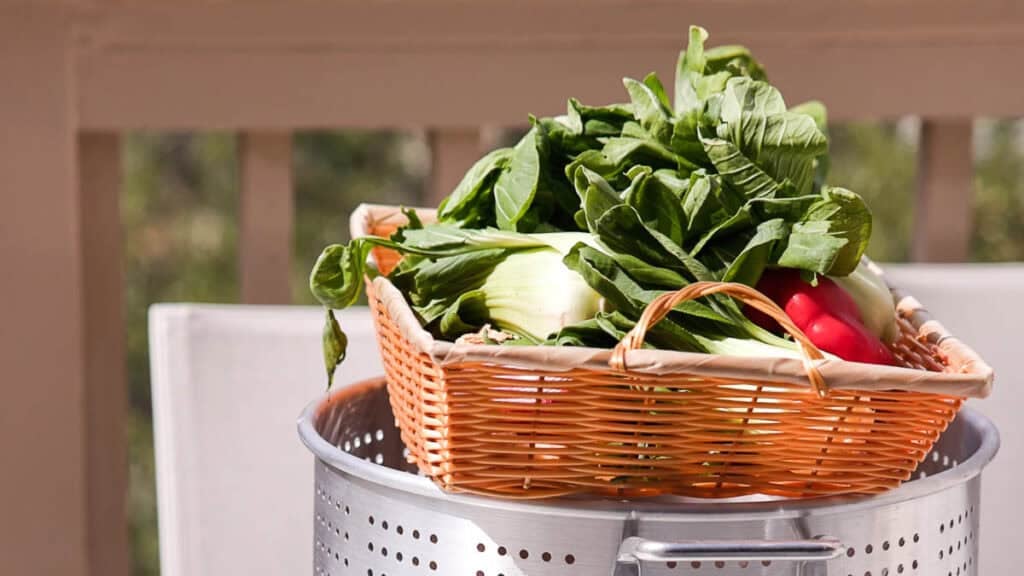
The following are the key ingredients as well as substitution recommendations for this baby bok choy recipe:
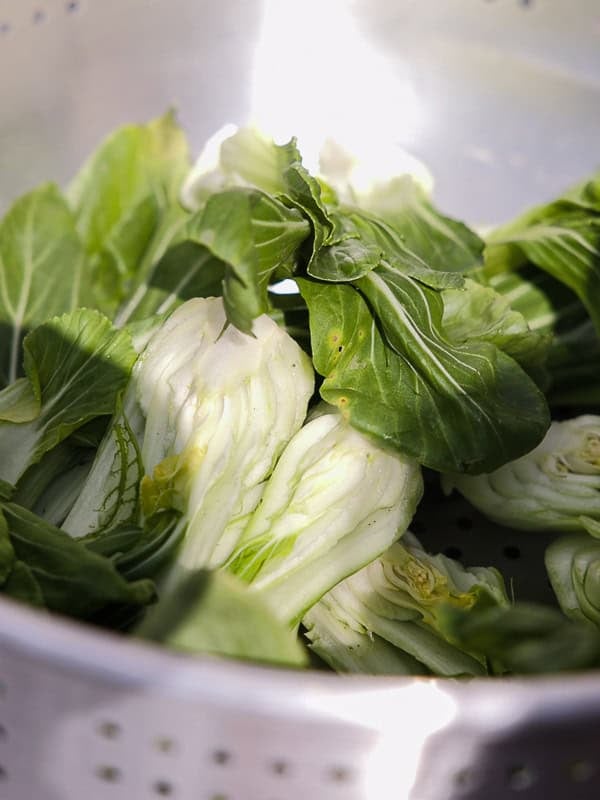
Baby Bok Choy.
Obviously, you cannot make baby bok choy kimchi without baby bok choy. In fact, the whole point of this recipe was to use up some baby bok choy! Can you use regular, “adult” bok choy? Absolutely. You may have to adjust your salting time, since the leaves at the base of the adult bok choy are thicker than in baby bok choy, but other than that, the recipe should be relatively the same.
Sea Salt.
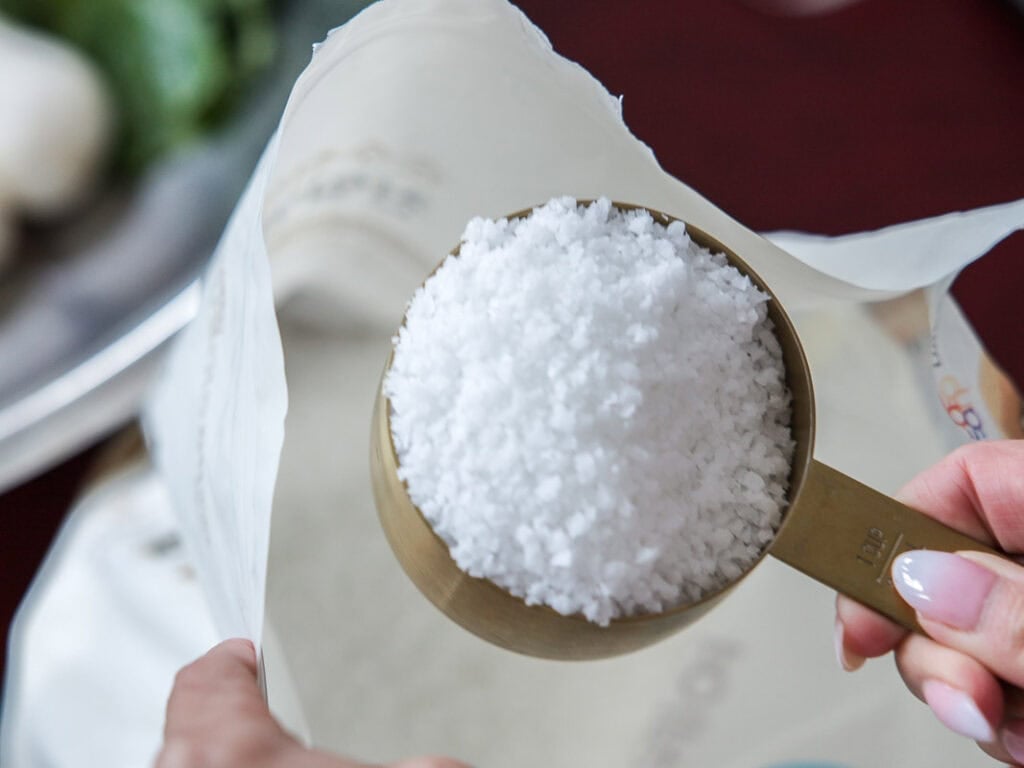
As we discussed in the baechu kimchi recipe, salt is the next most important ingredient in any kimchi (after the vegetable). First, do not use table salt to make any kimchi, including bok choy. Use a coarse sea salt (Korean kimchi salt is the best, if you can get your hands on it) or coarse Kosher salt.
Sweet White Rice Flour.
In order to make the rice paste for the kimchi sauce for this baby bok choy kimchi recipe, you’ll need a couple tablespoons of sweet white rice flour (aka, glutinous white rice flour). I find this to be the easiest way to make the rice paste. But if you can’t get your hands on sweet white rice flour, you can also substitute the rice paste with 1/4 cup of cooked white rice blended with 1/4 cup of water.
Onion.
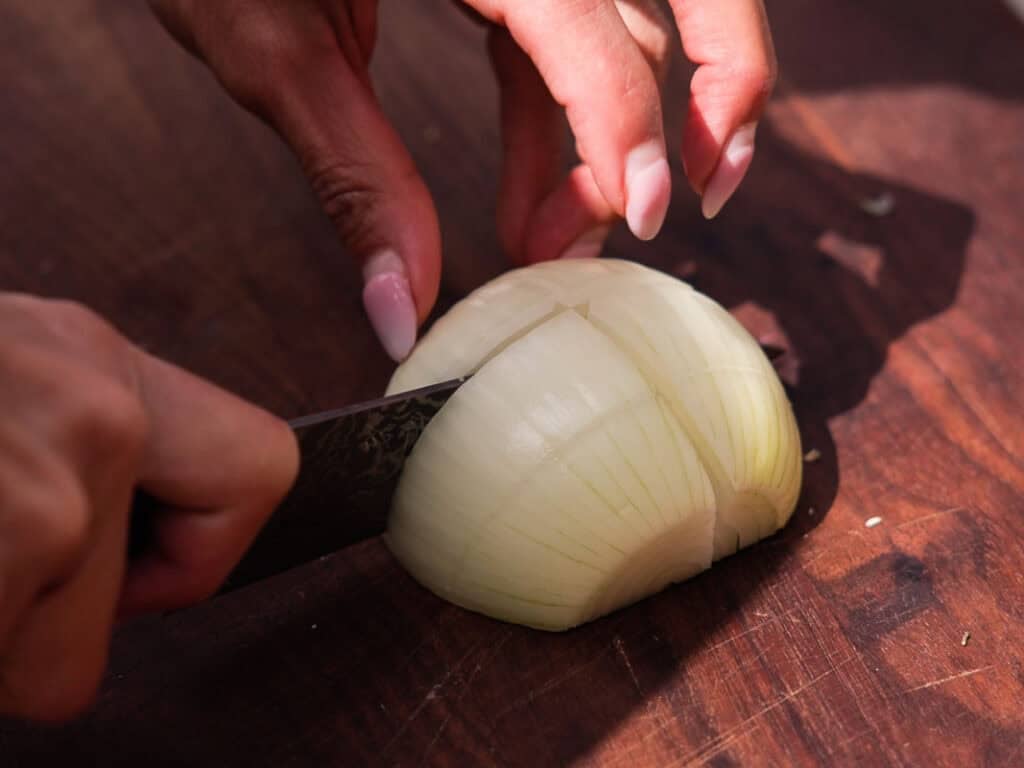
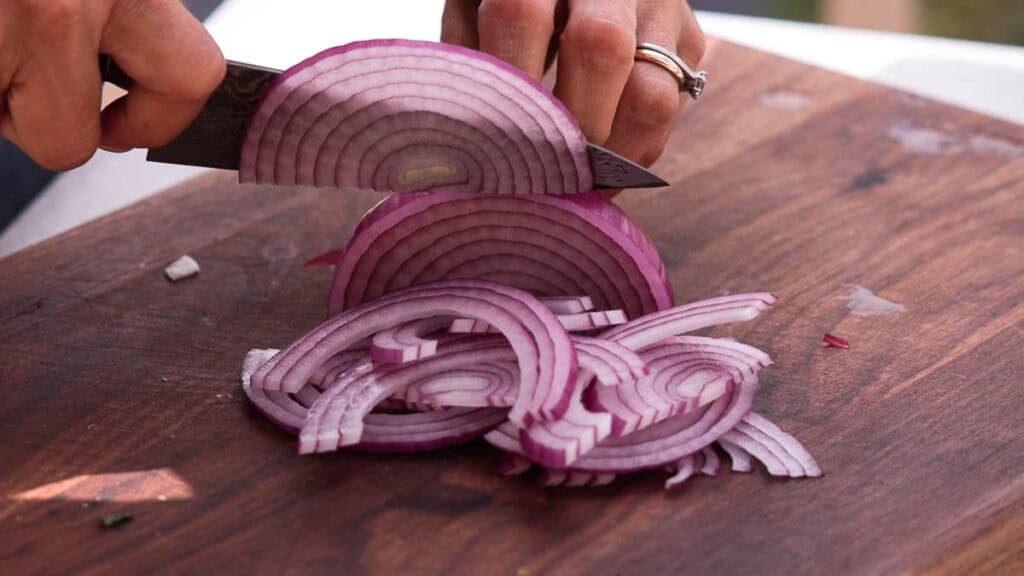
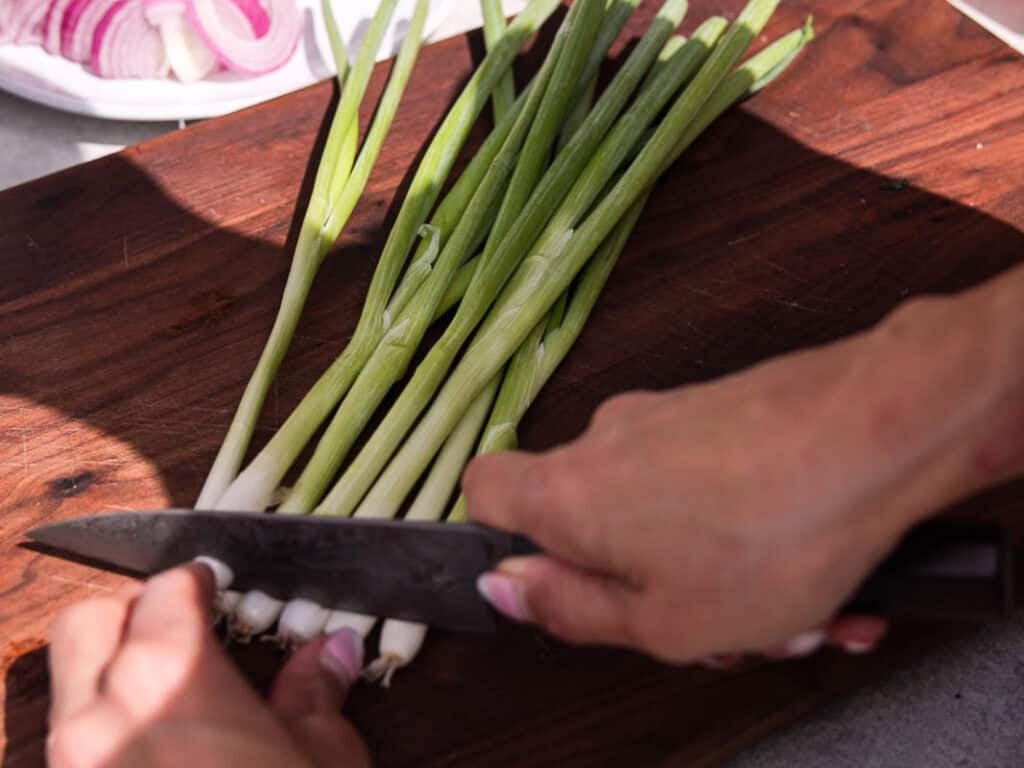
The kimchi sauce for this bok choy kimchi requires three different kinds of onion: a regular onion (i.e., the round one) and a green onion (the long, skinny one). I like to use yellow or white onions for the bok choy kimchi sauce, but red onions for the onions I add separately to the kimchi (you’ll see what I mean). But you can use whatever kind of onion you have on hand. As for the green onions, you’ll be using both the whites and the greens for this bok choy kimchi. If you don’t have green onions, you can substitute with garlic chives or Korean chives.
Apple and/or Korean Pear.
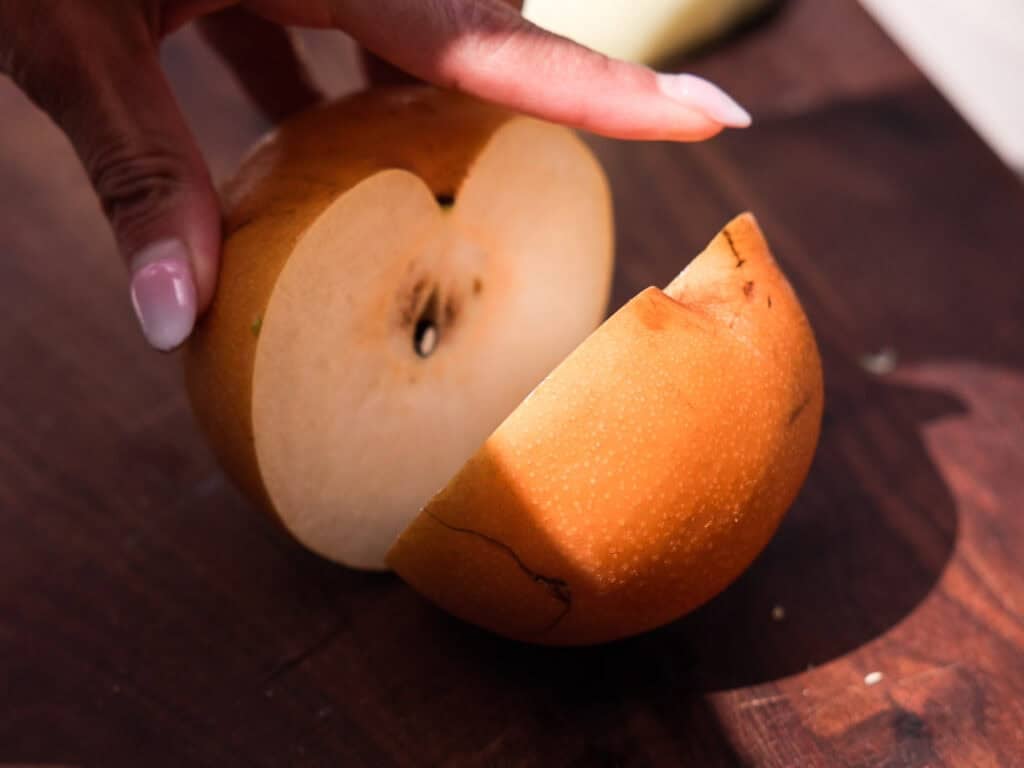
In order to add a little sweetness and to optimize the fermentation process, this bok choy kimchi recipe requires apple and/or Korean pear. For this bok choy kimchi recipe, I went with a Korean pear. But, if you want to use an apple, try and get a Fuji apple (which is pretty readily available in both the United States and Korea), though, honestly, any sweet apple will do (I would avoid granny smith for this one, as it’s too sour).
Garlic.
This is a kimchi recipe. Of course it’s going to have garlic. I don’t have a substitution recommendation for garlic–if you don’t have it or don’t like it, you can skip it (though this will absolutely affect the flavor of your bok choy kimchi).
Ginger.
As you may already know, I’m not a big ginger fan, but kimchi just doesn’t taste the same without it, including this bok choy kimchi. Same thing as with garlic: if you don’t like it or have it, just skip it. And, I have no problem with the store bought stuff.
Plum Syrup.
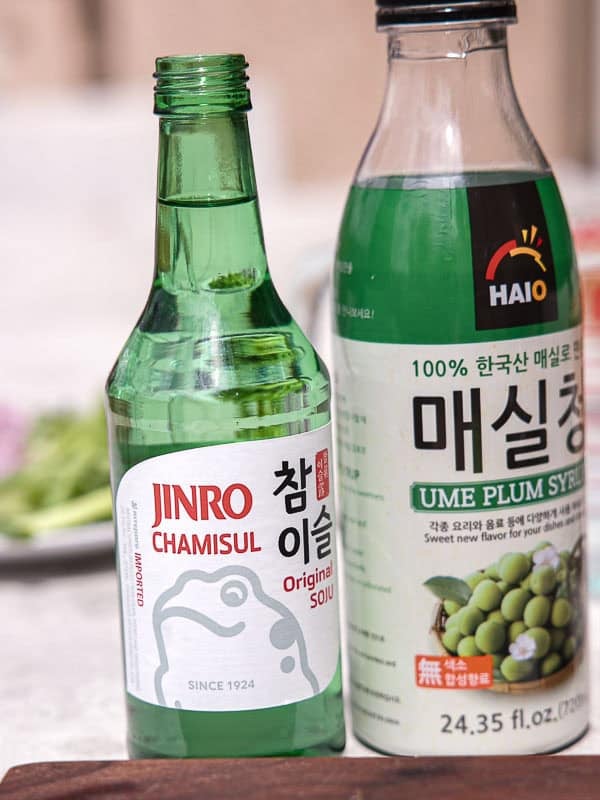
I prefer sweetening my bok choy kimchi sauce with plum syrup, which, I know, isn’t easy to get here in the United States. But, as is the case with mak kimchi, chonggak kimchi, and virtually every other traditional kimchi, plum syrup is the sweetener of choice for most Korean cooks. That said, if you simply cannot find plum syrup where you are, you can substitute with brown rice syrup, agave syrup, corn syrup, straight up sugar, or even maple syrup (though, fair warning–when I proposed this as a sub in a recent video, some ajumma called me “crazy”–which is practically a swear word in Korean).
Gochugaru.
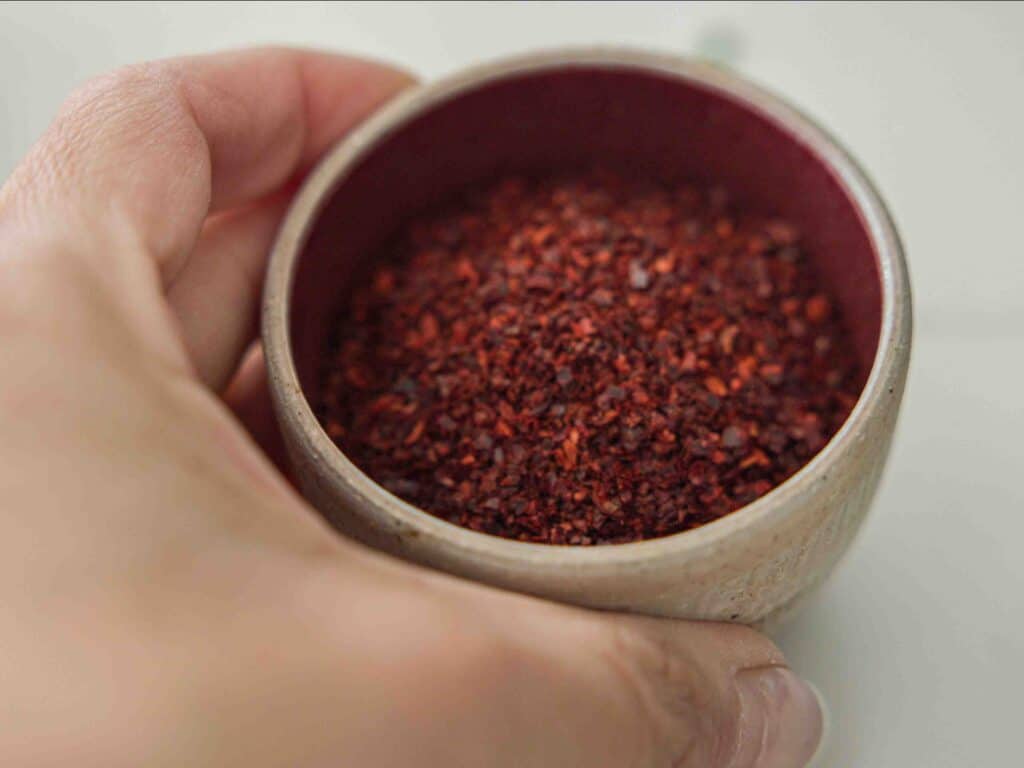
I know I mentioned less gochugaru for this bok choy kimchi recipe, but there is some gochugaru in it! Gochugaru is Korean pepper powder or Korean chili flakes. As with all my kimchi recipes, I recommend you go with a coarse gochugaru. Sometimes, the packaging of the gochugaru will also indicate how spicy it is. But if you’re grabbing what you can from the non-Korean grocery store, you’ll probably end up with a not-overly-spicy gochugaru.
As I say any time I’m making Korean food, I do not recommend substituting gochugaru with paprika or cayenne or some other kind of chili flake for this bok choy kimchi. Gochugaru is sweet and smoky and a little fruity, while also being coarse in texture. I don’t know any other chili flake that precisely matches those features. Plus, while I am not a complete Korean ajumma, even I need to draw the line somewhere!
Fishy Sauce.
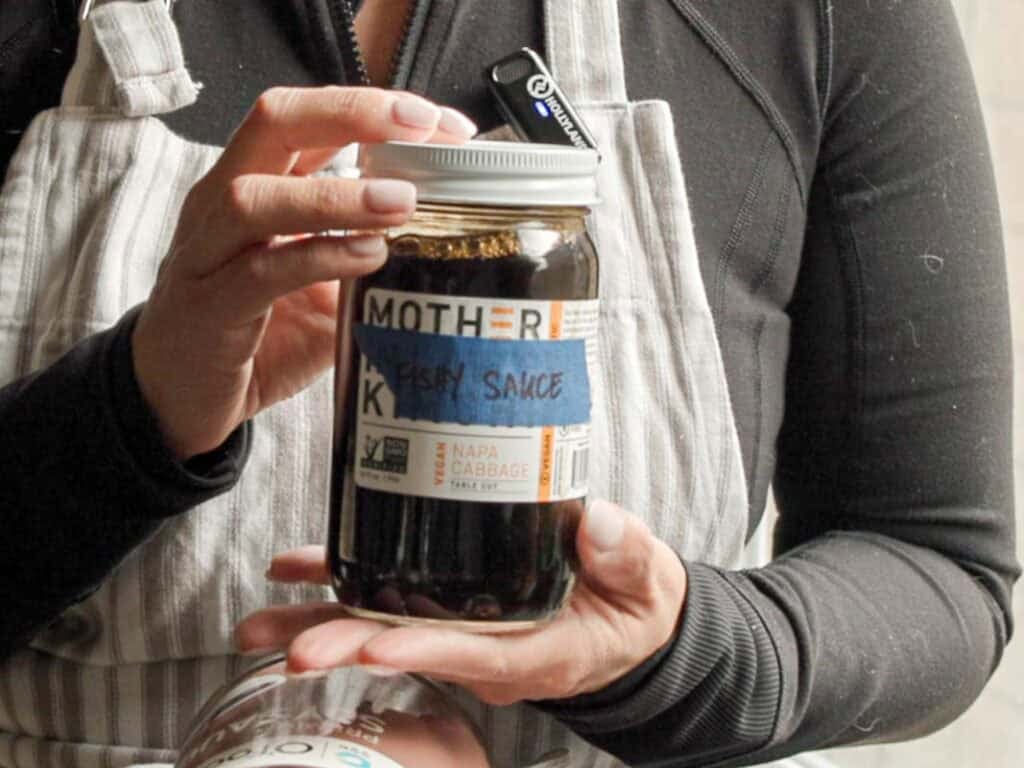
Ok, so the thing that makes most kimchi, including this bok choy kimchi, not vegetarian or vegan, is the fish sauce or anchovy sauce. Luckily, one of the most popular recipes out of my cookbooks is my “Fishy Sauce,” an entirely vegan sauce that tastes so much like Korean fish sauce, it had my omma’s eyes absolutely POPPING! You can also find it right here, on my blog, for free! It’s like the easiest recipe ever, too!
Otherwise, yes, you can purchase vegan fish sauce, but the options I’ve seen are not Korean style fish sauce. They are southeast asian style fish sauces, which are quite a bit sweeter than the Korean kind. In lieu of that, I would rather you use a strong soy sauce (like soup soy sauce or a gluten-free soy sauce to keep this recipe gluten-free) or even yondu (which is a Korean style broth enhancer).
Red Chili, Dried Chilis, and Red Bell Pepper.
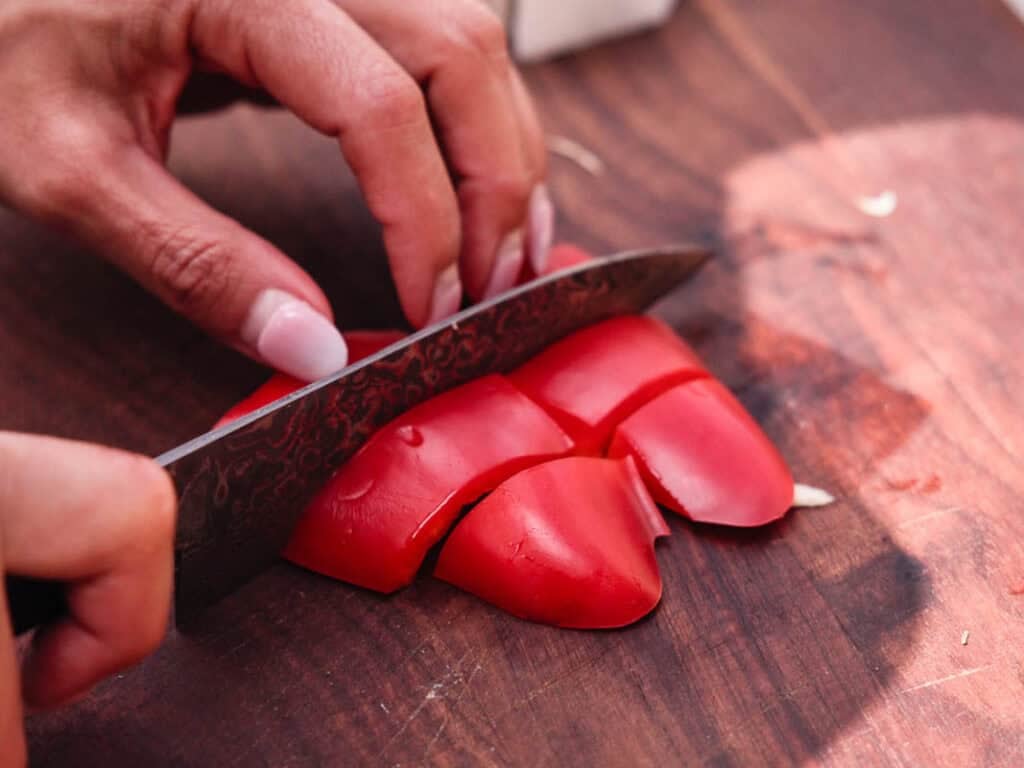
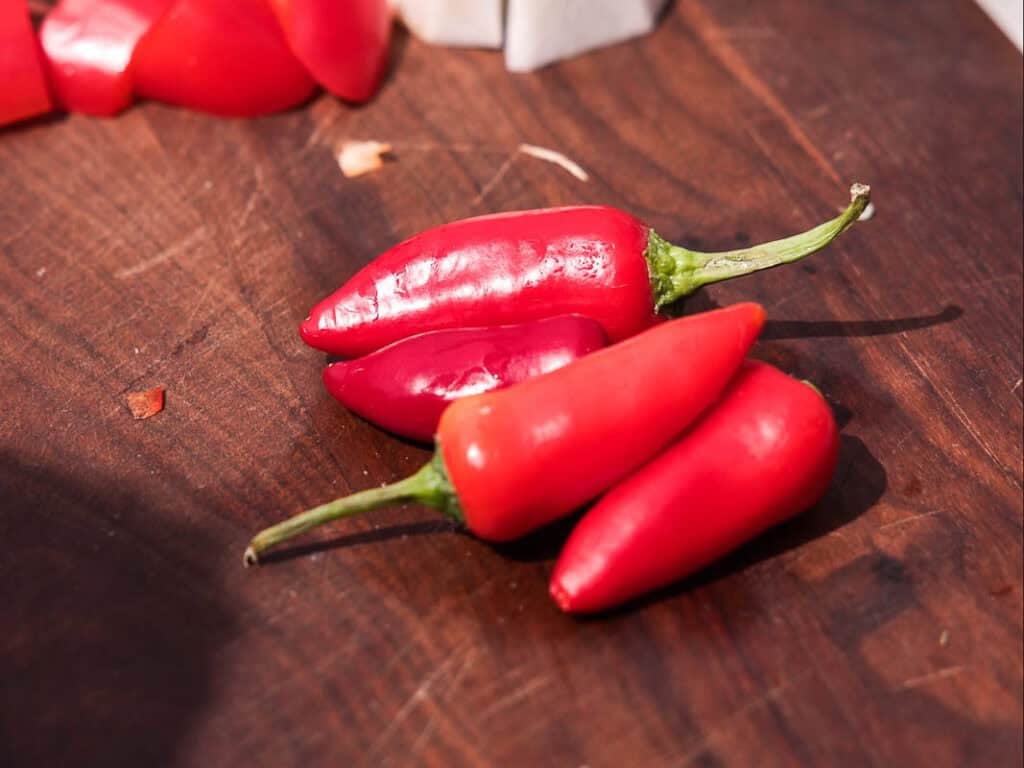
As I alluded to above, one major difference between baechu kimchi recipes and bok choy kimchi recipes is the inclusion of actual chilis. In lieu of using 3 cups of gochugaru, most recipes call for blending multiple different kinds of chilis themselves to achieve a lighter flavor that still packs a bunch of heat. Most recipes call for Korean red chili peppers or “hong gochu.” Unfortunately, none of the grocery stores near me–including my go-to Korean grocery store–had any hong gochu in stock. If you can find them, you should use them. If you can’t, you can do what I did, which is to replace them with red jalapeños and red bell peppers.
Hong gochu is the red chili pepper that forms the base of gochugaru. They are spicy but also a little sweet. This is why I incorporated both jalapenos (for the heat) and red bell peppers (for the sweetness). Like I said, if you can find Korean red chilis where you are, you can use them in place of both the jalapenos and the red bell peppers in this bok choy kimchi recipe.
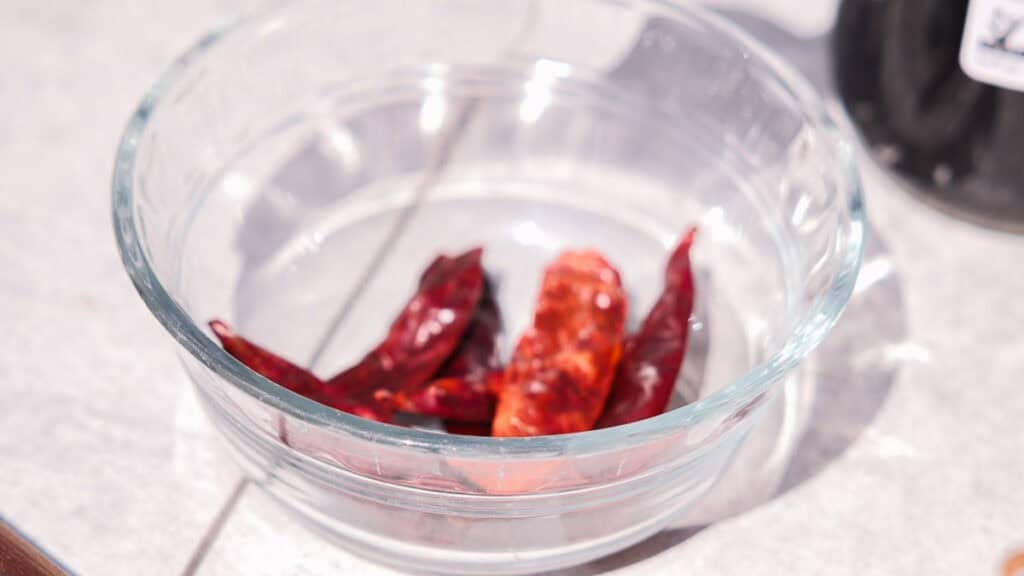
In addition to the fresh chilis, virtually every single bok choy kimchi recipe I conferred with also uses dried red chilis. This is to provide the smokiness that you also get in gochugaru. Again, I could not find any dried hong gochu where I am, so I used dried szechuan peppers instead. I wish I could find dried Korean chilis, but alas, I have to go with what I got! And so do you!
Soju.
Soju is a Korean vodka made out of rice. I was surprised to discover that soju is typically included in the sauce for bok choy kimchi, but not only does it provide a refreshing flavor to the bok choy kimchi, it also promotes a gentle fermentation. If you can’t find soju where you are, your best bet would be to substitute with vodka. If you prefer to keep this recipe “spirit free,” just skip this ingredient or add a splash of water in order to keep the sauce from becoming too pasty.
Korean Radish.
In my regular cabbage kimchi, I add cut up Korean radish for extra crunch and texture. In this bok choy kimchi recipe, we’re going to blend the radish together with the rest of the sauce. This, again, will keep the sauce light, frothy, but full of flavor. I know, I know–Korean radish isn’t always easy to find. So, if you cannot find any near you, yes, you can use daikon or even regular red radishes for this!
Toasted Sesame Seeds.
I found this to be the most “controversial” ingredient for this recipe. My general rule is that the addition of fat will render a kimchi more of a “muchim” or a “seasoned veggie” or “dressed veggie.” But several recipes I consulted for bok choy “kimchi” incorporated toasted sesame seeds and I’ll admit, it adds a lovely bit of flavor to the kimchi. But, I don’t use a lot and, if you want, you can totally skip it.
Sugar.
In addition to salt, the bring for this bok choy kimchi will also contain a small amount of sugar. Why sugar? It helps to feed the bacteria that promotes fermentation.
equipment you’ll need for This Bok Choy Kimchi recipe.
I don’t usually have a special call-out for equipment, but for kimchi, it’s always a good idea to go over the things you’ll need:
- Large bowls for salting.
- Blender for the sauce.
- Mason jars or other airtight containers for fermentation.
Step-by-Step Instructions to Making Baby Bok Choy Kimchi.
Step 1: Cut and Clean Your Baby Bok Choy.
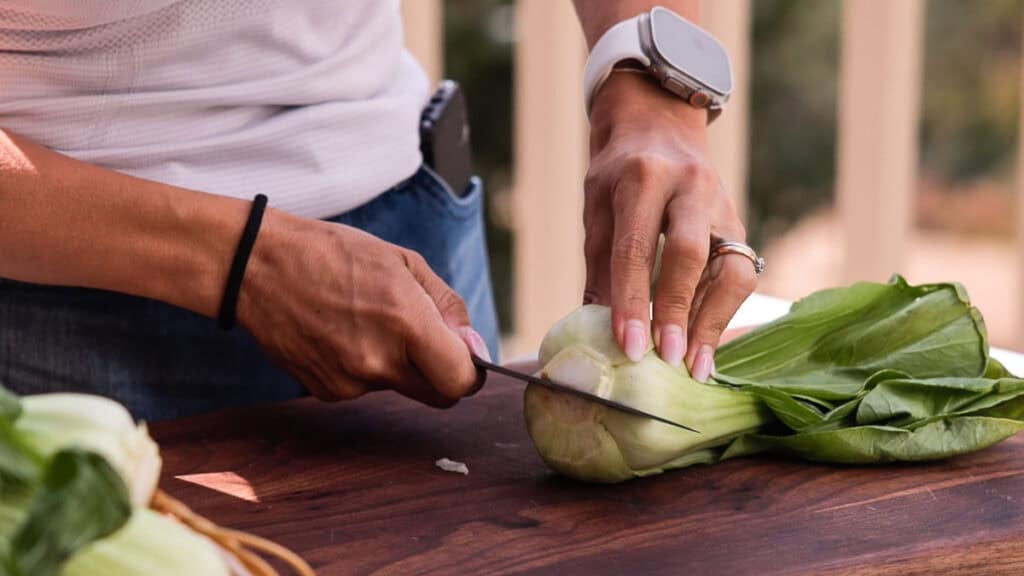
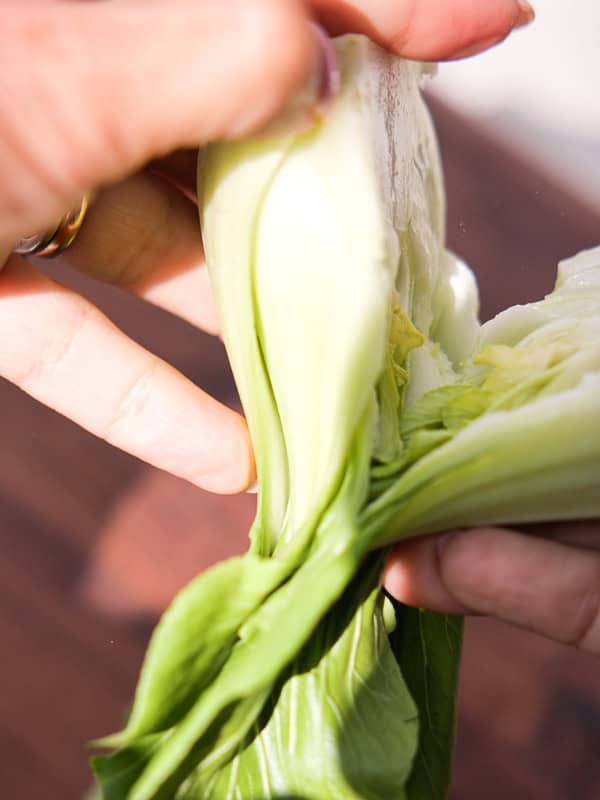
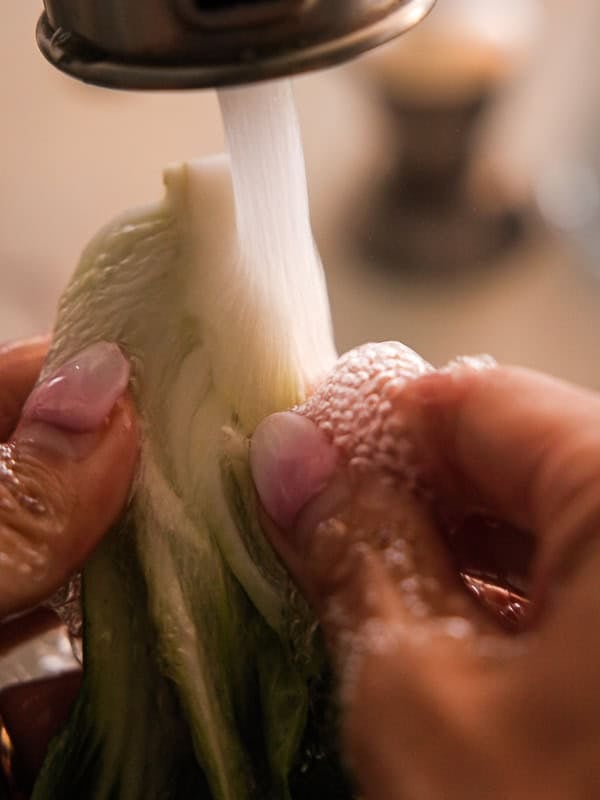
First, make a small slit into the base of your baby bok choy (or adult bok choy) that is about 1 to 2 inches deep. Then, split them in half using your hands. For larger bok choy (even the baby ones), repeat to make quarters. Place them in a large bowl. Then, rinse them thoroughly. Dirt can get into those very tight crevices, so take your time with this step and really wash them. Dry them off with a kitchen towel and place them back in the large bowl.
Step 2: Soak Your Dried Chilies.
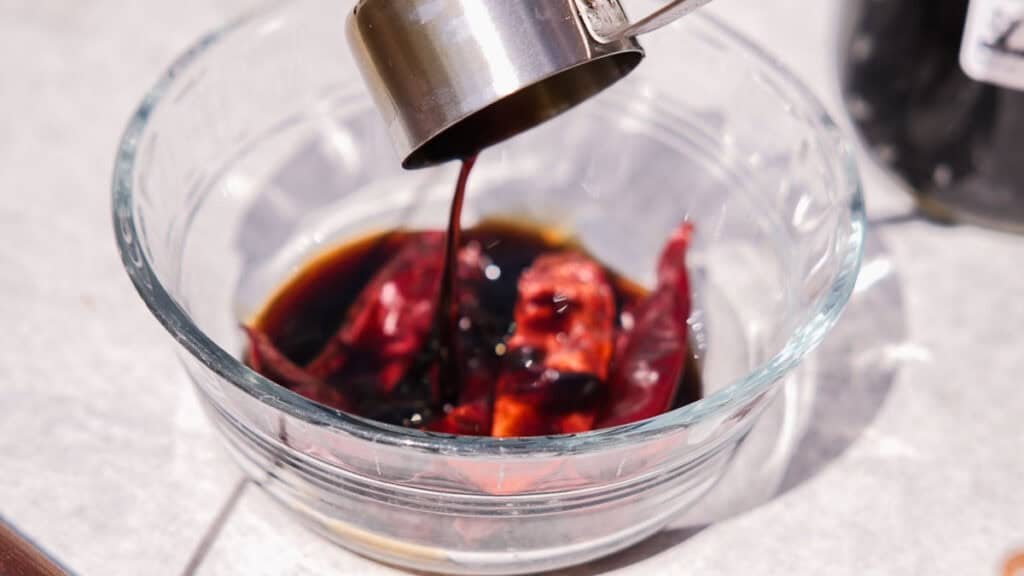
Add your dried chilies to a small bowl, together with the Fishy Sauce. This will rehydrate them for later.
Step 3: Salt Your Bok Choy.
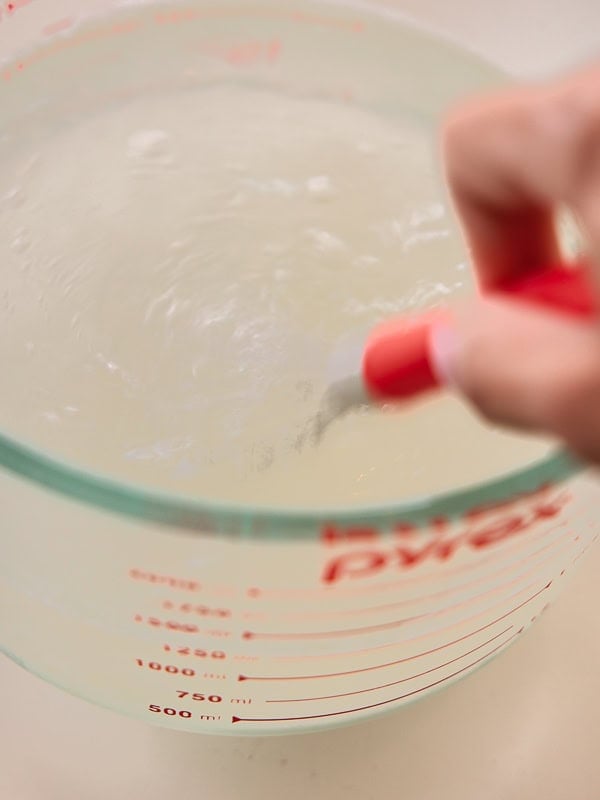
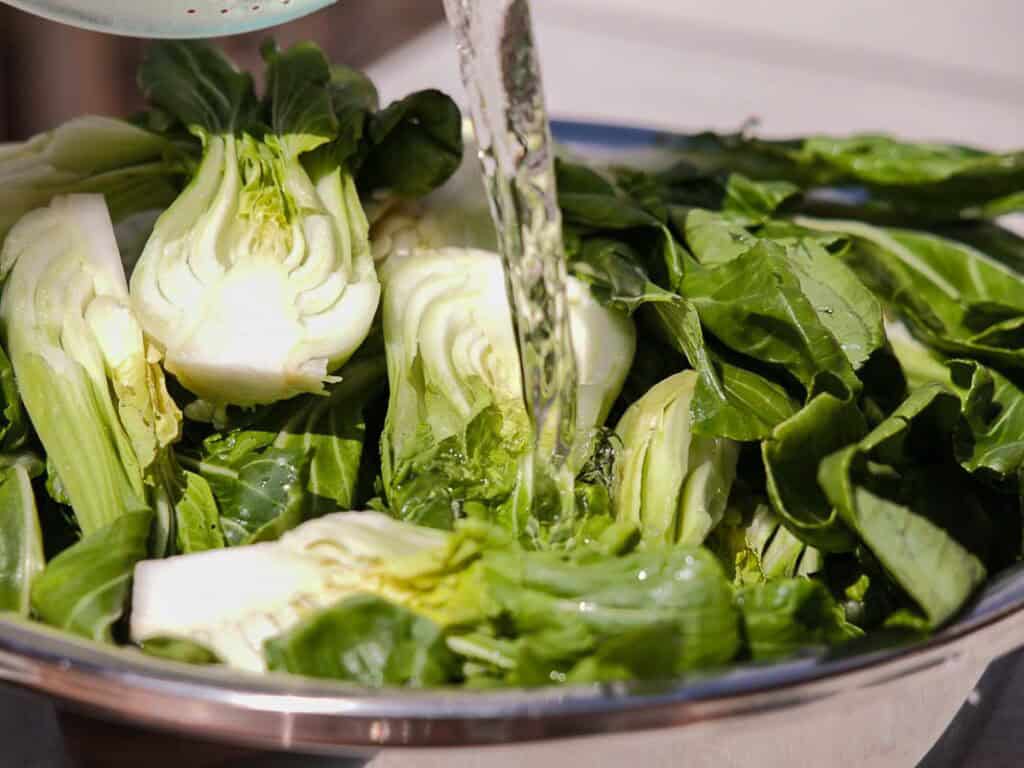
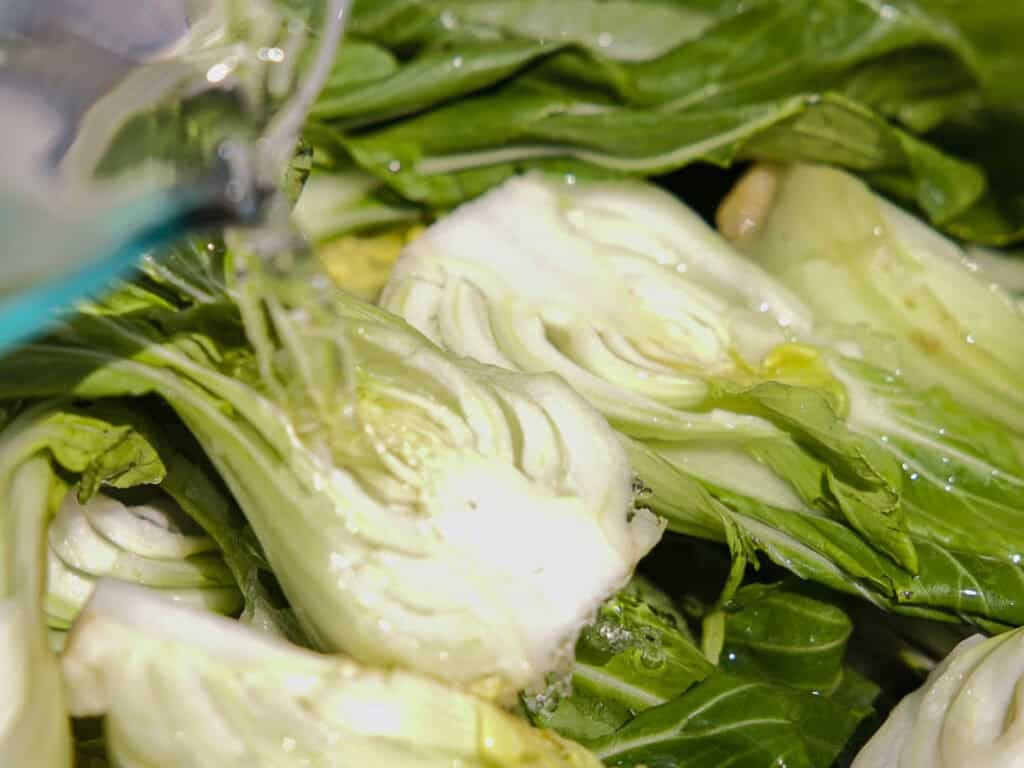
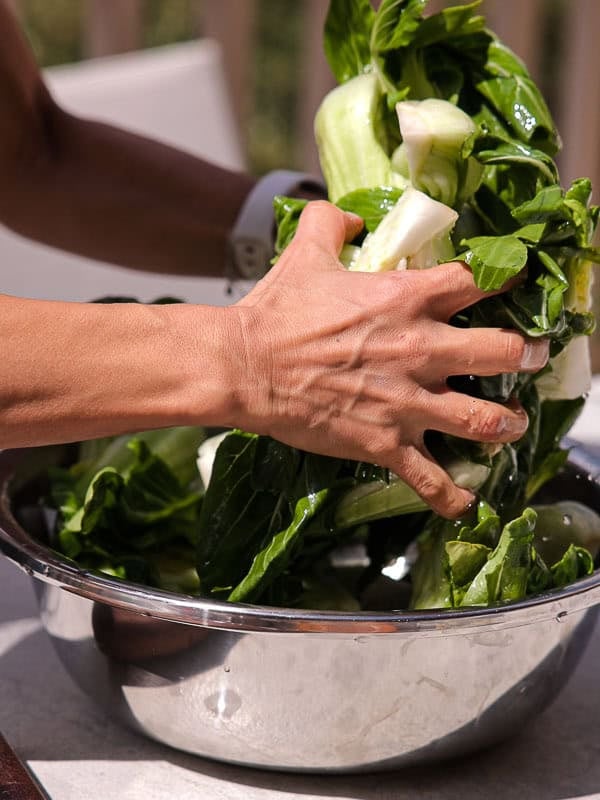
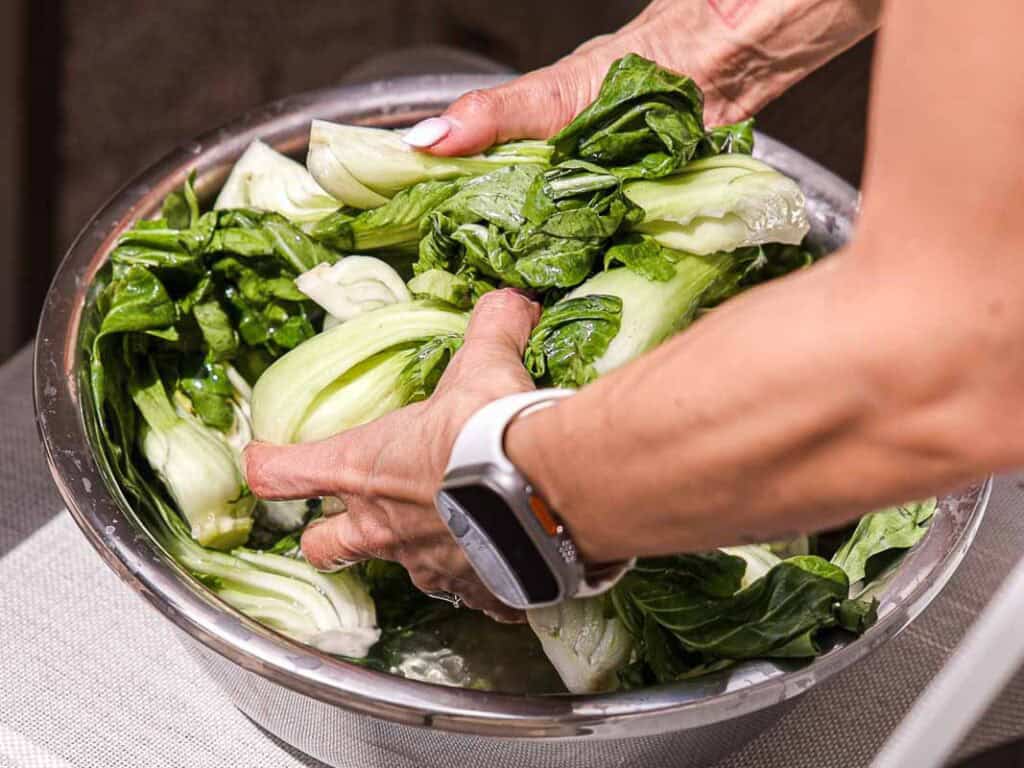
Stir together the salt and sugar with 6 cups of cold, preferably filtered water, until the salt and sugar are dissolved (just keep mixing until it dissolves–I learned this in science class!). Pour the brine over your bok choy. Flip them over several times to make sure they are all coated with the brine. Set the bok choy aside for 30 minutes. After 30 minutes, give the greens a few flips again, so they get a little “refresh” of brine.
Step 4: Make Your Rice Paste.
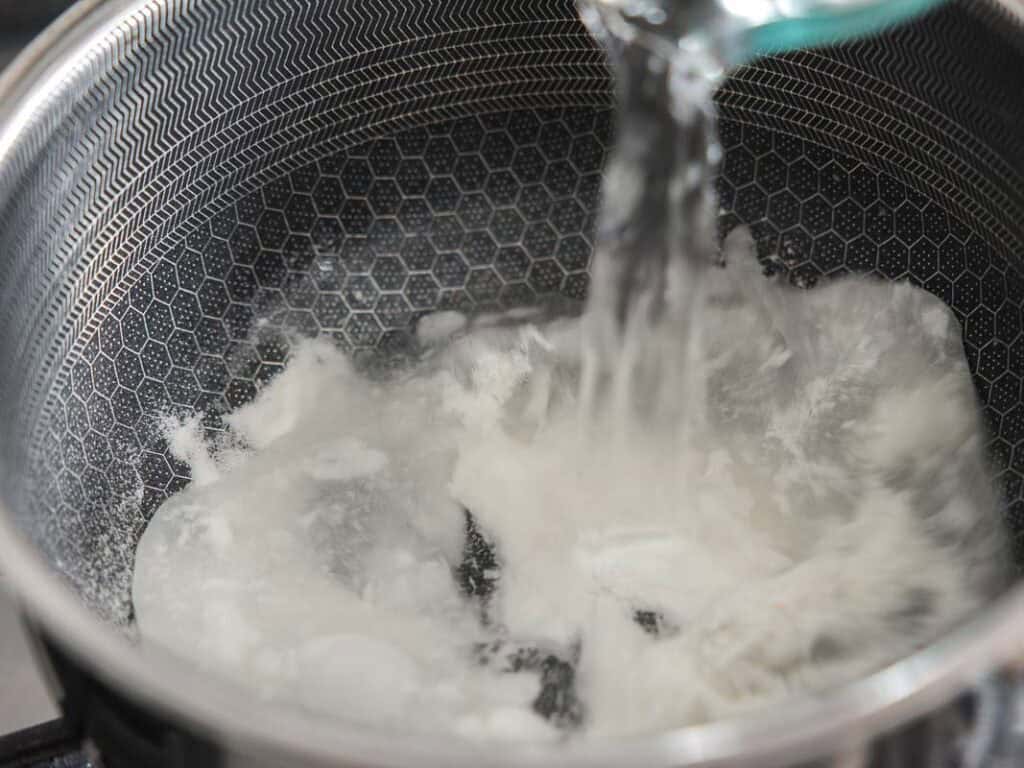
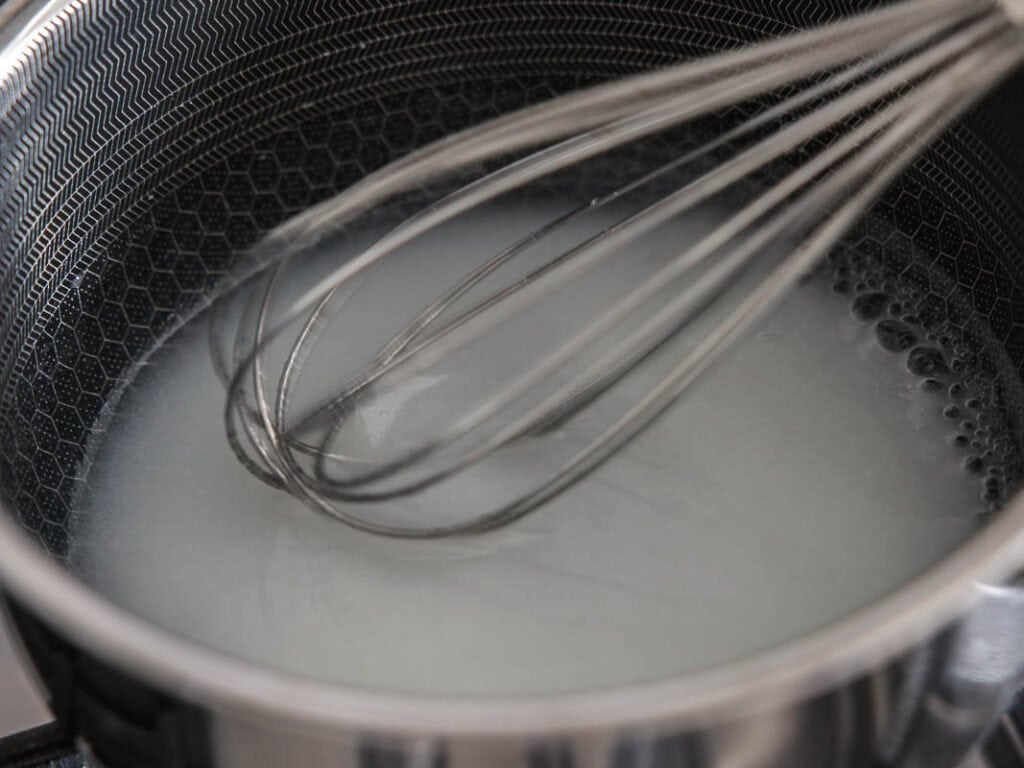
While your bok choy is soaking in the brine, make your rice paste by whisking together the sweet white rice flour together with 2 tbsp of sweet white rice flour with 3/4 cup of water over medium-low heat. Continue stirring with a whisk or rubber spatula until it turns into a thick paste. Set aside and let it cool.
Step 5. Prepare the “sludge.”
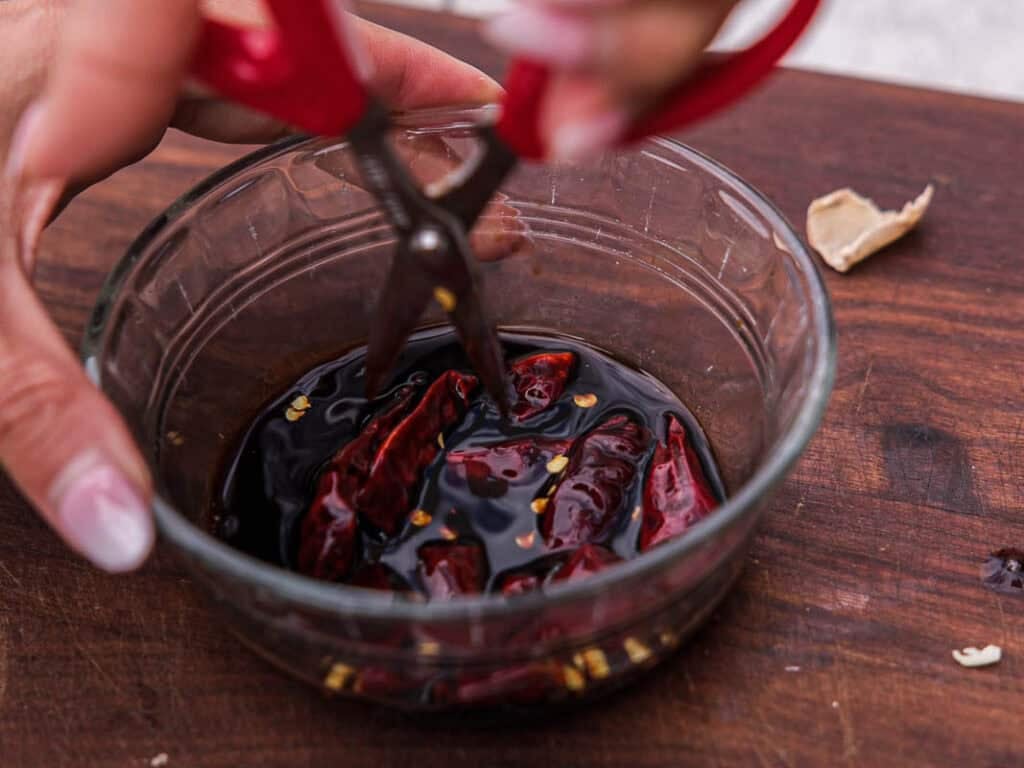
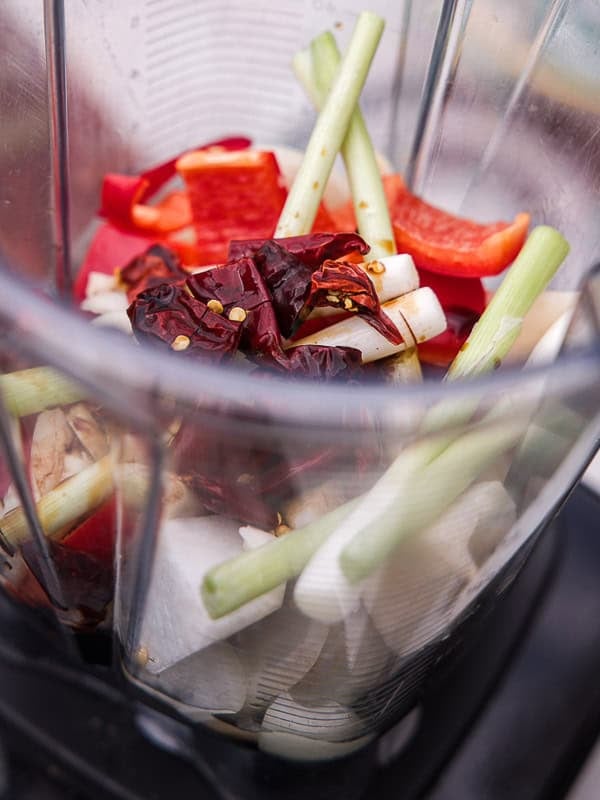
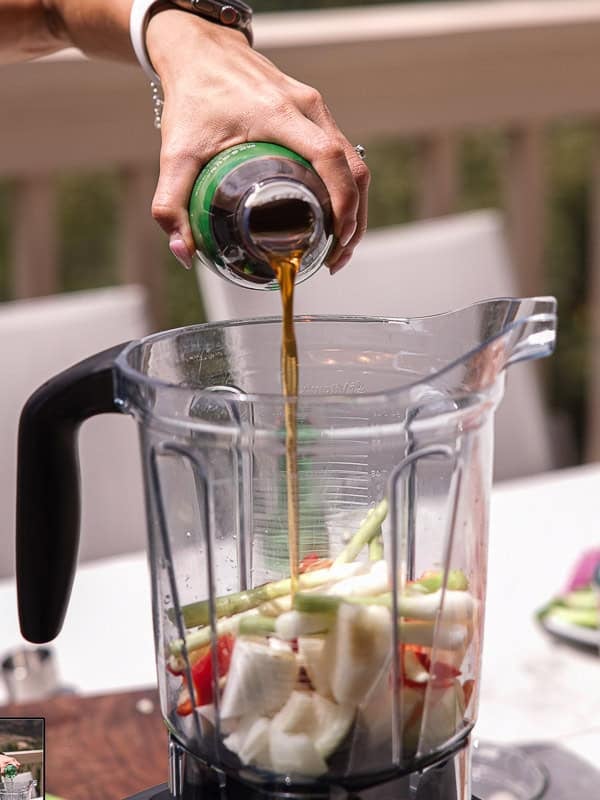
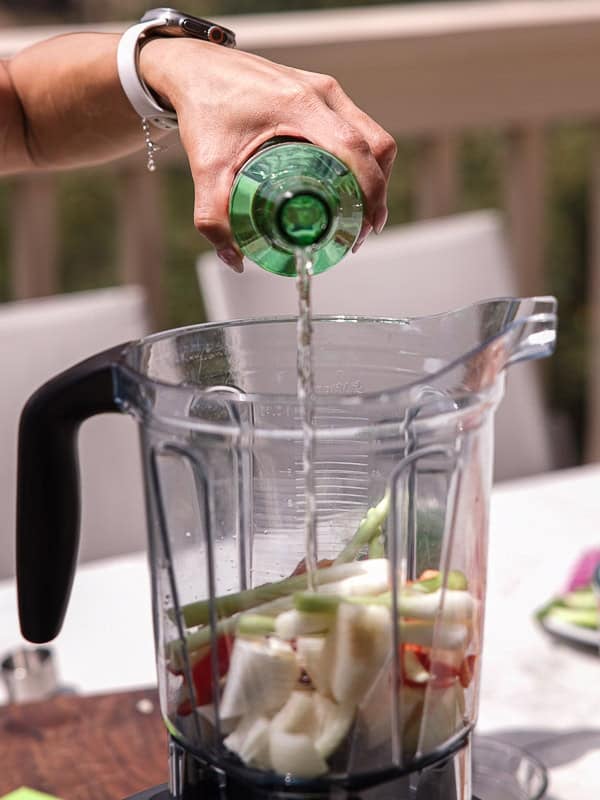
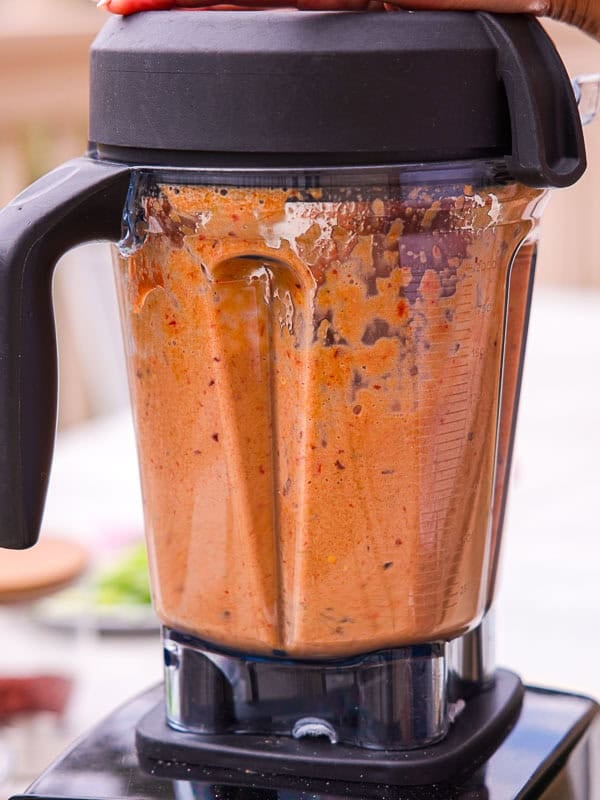
Prepare the blended mixture or what I call the “sludge.” First, using kitchen shears, cut up the rehydrated peppers into smaller pieces. Place the rehydrated peppers, together with the Fishy Sauce, the chopped (not julienned) onion, scallion whites, garlic, pear, radish, ginger, bell pepper, jalapeno, soju, and plum syrup into the blender and blend until smooth. Set aside or place in the refrigerator if your bok choy still has a long way to go.
Step 6. Rinse & Dry Your Bok Choy.
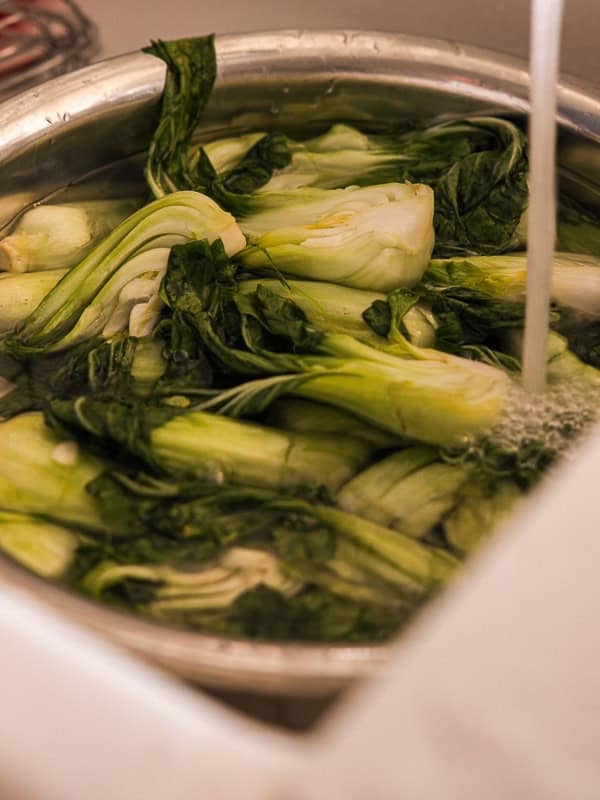
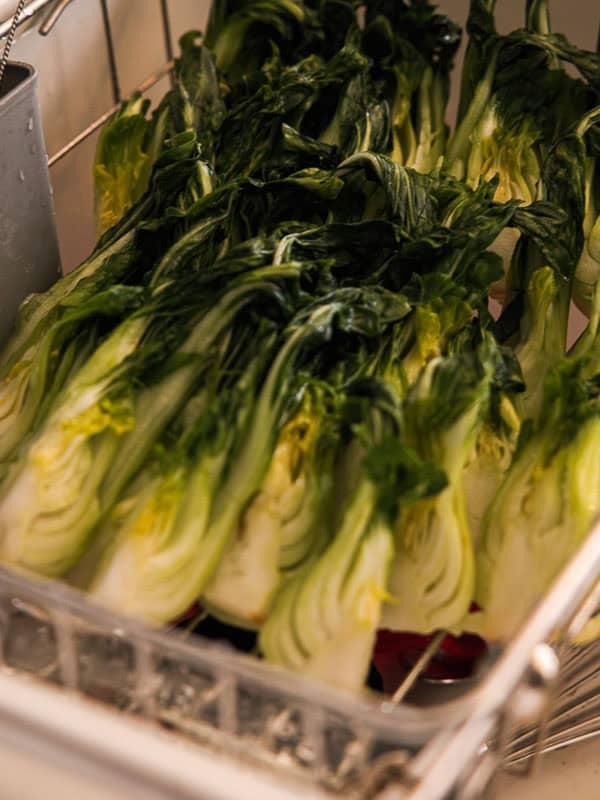
After one hour, the green parts of your bok choy will be quite wilt-y. The base of your bok choy will still be pretty hard, but because they aren’t as hard or as thick as napa cabbage leaves, this is ok. If you’re using adult bok choy, I’d let it sit for an additional 20 minutes. Once you’ve determined they are ready, bring them over to your sink and rinse each bok choy thoroughly. The general rule of thumb is to rinse each piece twice. Afterwards, dry them off thoroughly with a kitchen towel or let them air dry for another 20 minutes; otherwise, they will be too wet and will dilute the kimchi sauce.
Step 7. Make Your Kimchi Sauce.
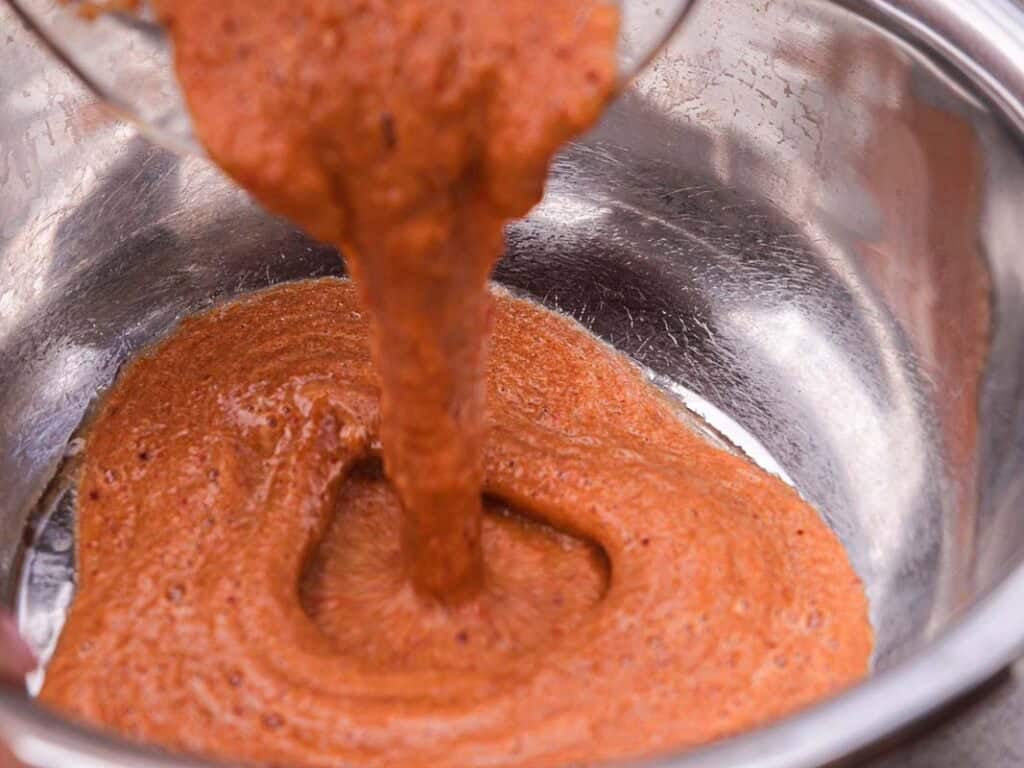
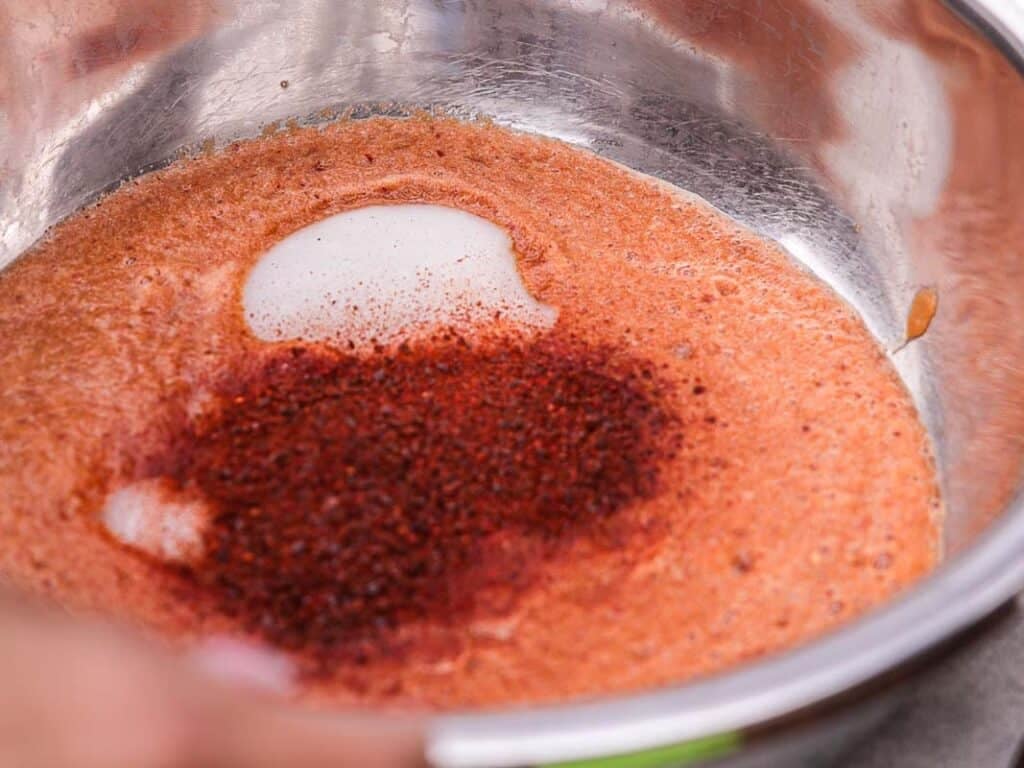
Prepare the kimchi sauce by adding your sludge, rice paste, gochugaru, red onions, and scallion greens into a large bowl. Mix the contents using a large wooden spoon or spatula until all components are evenly incorporated.
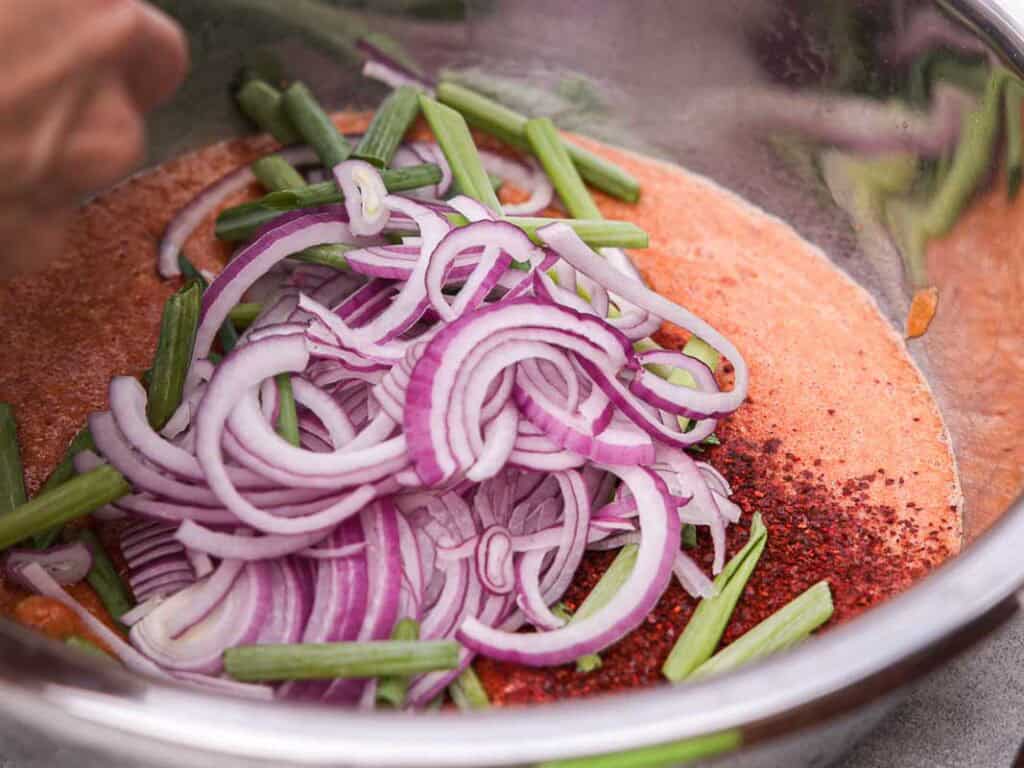
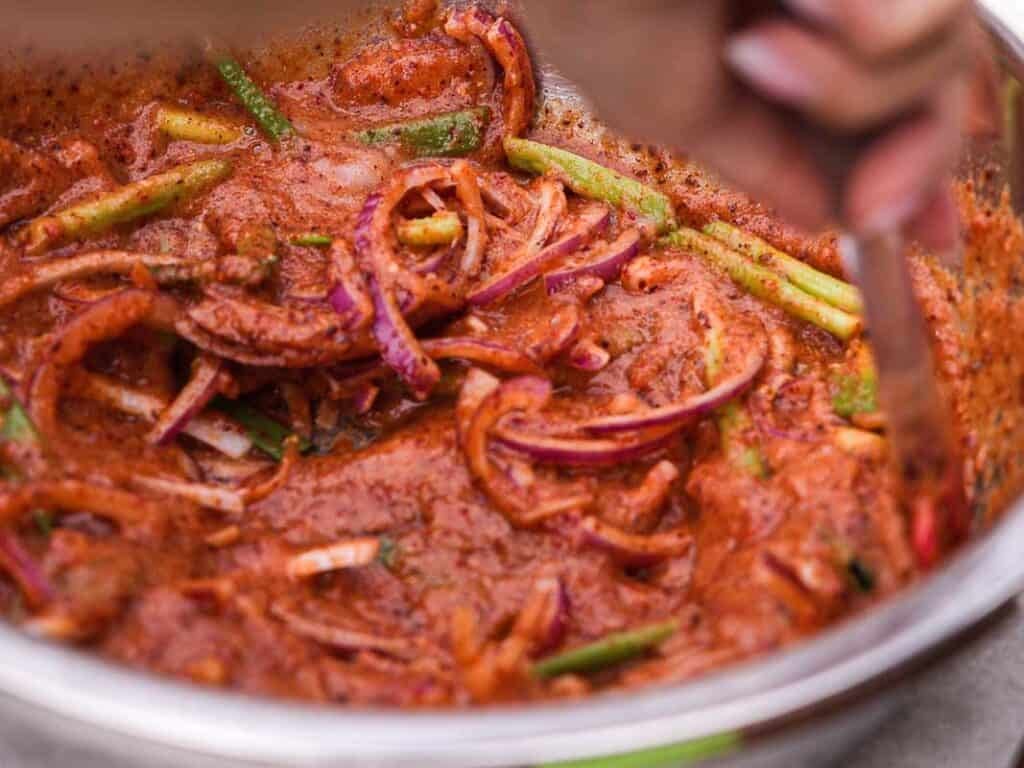
Step 8. Sauce the Bok Choy.
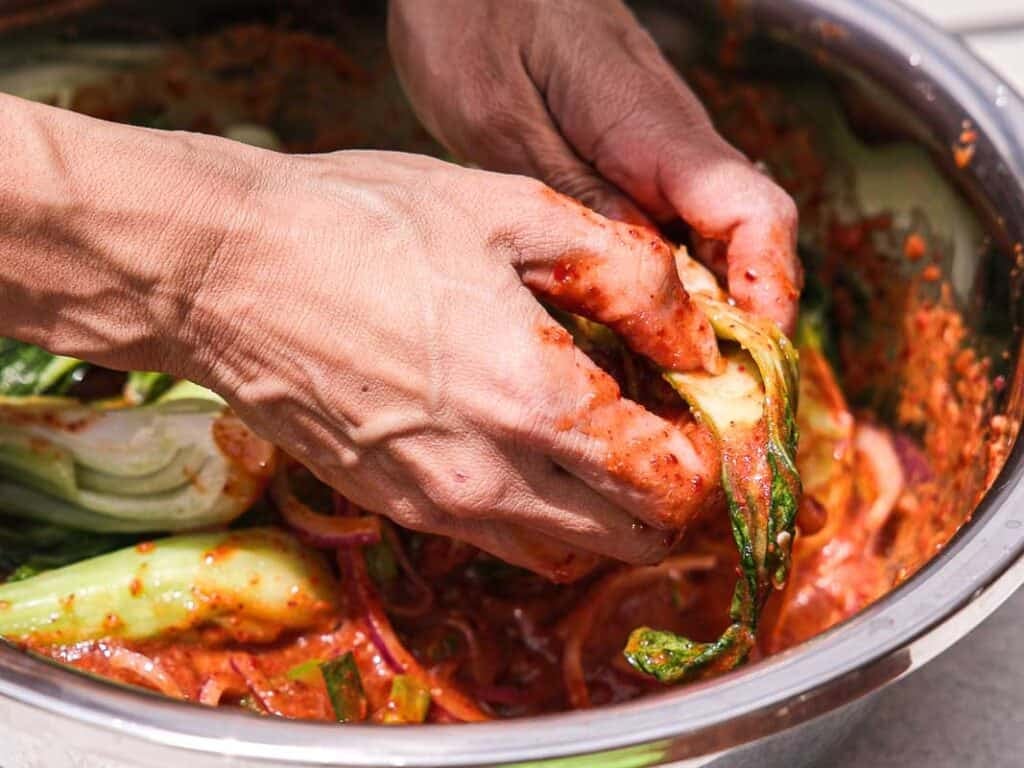
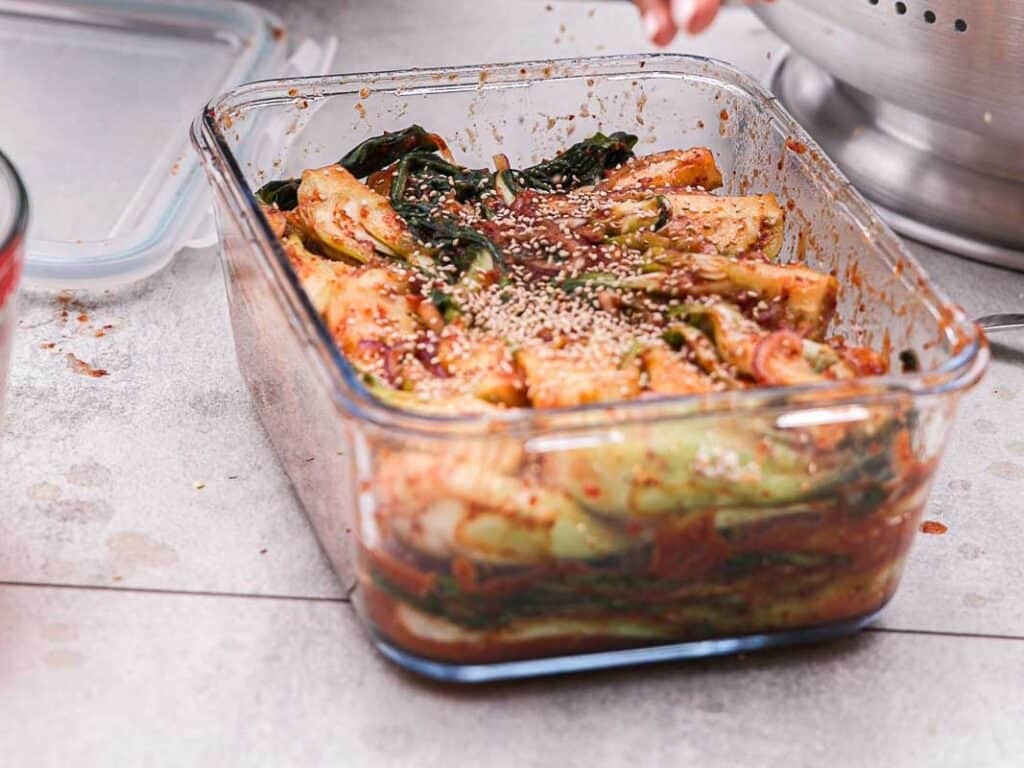
Add about half the bok choy into the bowl containing the sauce. Using your hands, sauce the leaves of the bok choy, making sure the sauce gets as far into the crevices of the bok choy base as possible. Again, this is necessary not only to promote the fermentation of the thicker parts of the leaves, but to prevent molding or yeast growth. Place the sauced bok choy into your air-tight container (one that is not too big, as too much space on top may also cause mold growth). Sprinkle with sesame seeds. Repeat with remaining bok choy.
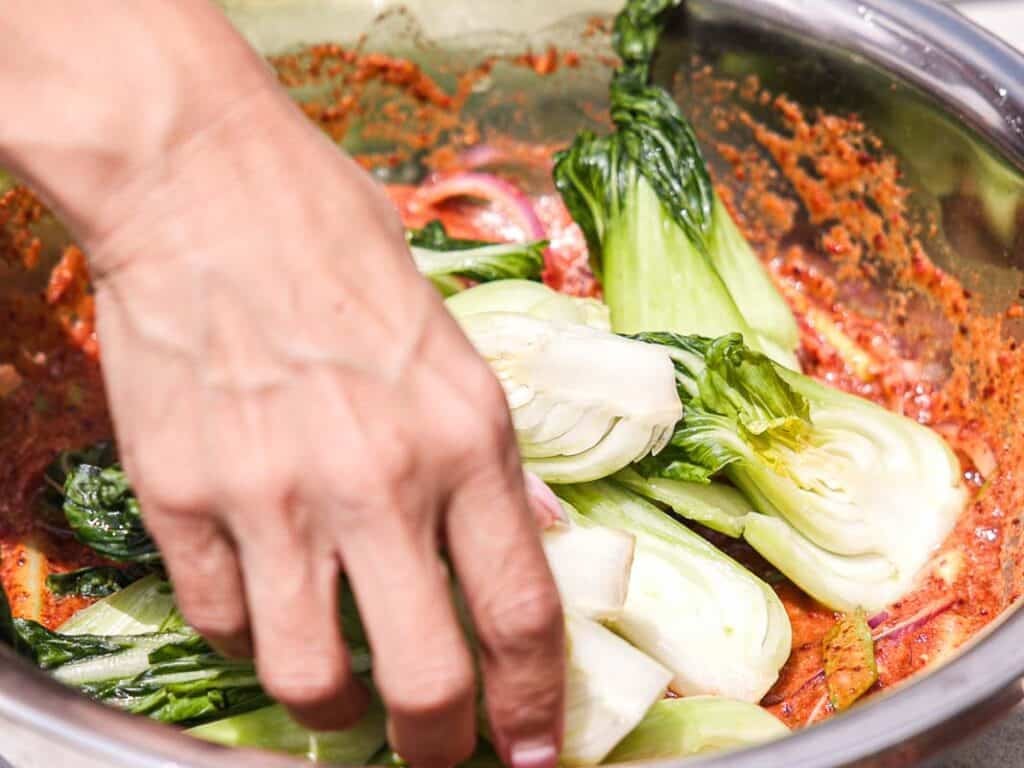
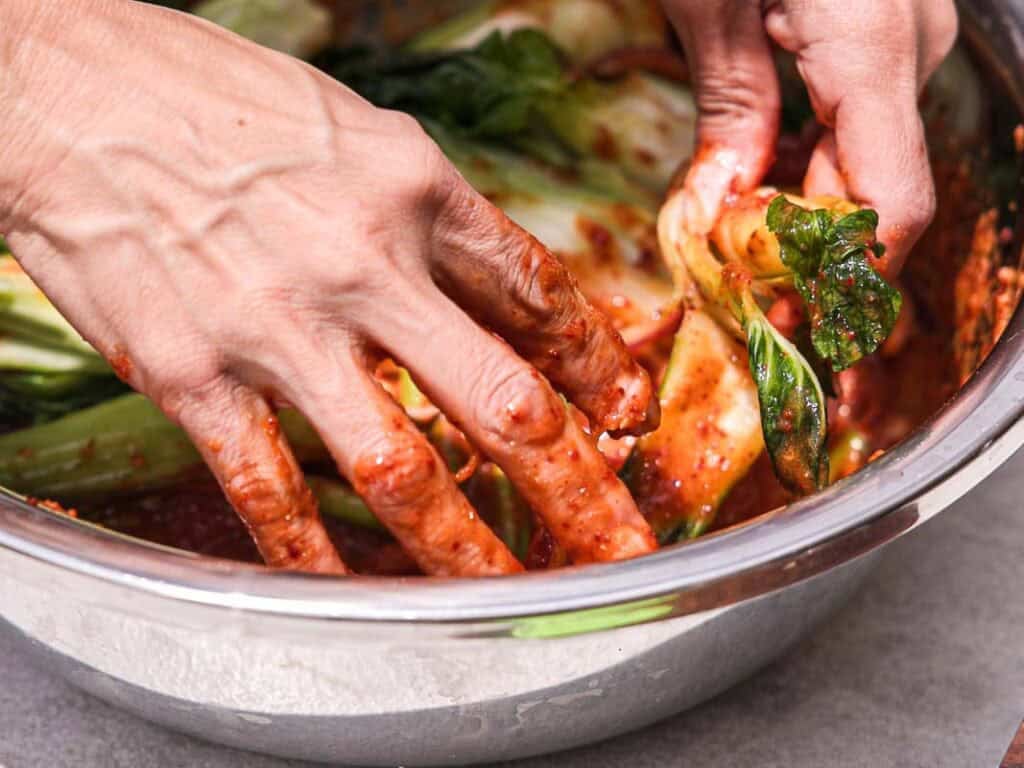
Step 9. Store Your Bok Choy Kimchi.
Storing your bok choy kimchi is part of the recipe (and not just a separate question for leftovers), since how and where you store it will impact how long it takes to ferment. Place your bok choy in a 64 ounce mason jar or other equivalent container. Press down on the radishes to make sure you squeeze out any air pockets. The final layer of bok choy should be smothered in kimchi sauce and sprinkled with a tablespoon or two of salt (this will guard against the growth of yeast).
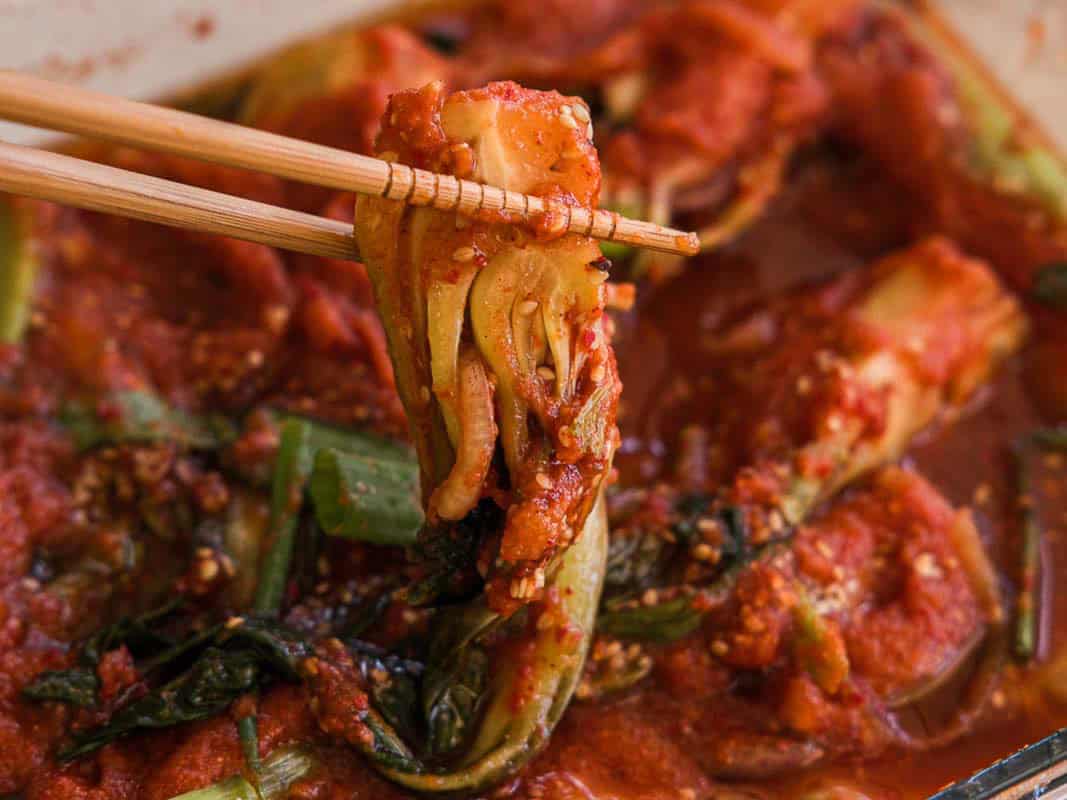
Seal your container and leave it out at room temperature for one days. Then, place in the refrigerator. Your bok choy kimchi should be ready to enjoy after 2 to 3 days!
Frequently asked questions.
How do I keep this bok choy kimchi recipe gluten-free?
You can keep this bok choy kimchi recipe gluten-free by using gluten-free soy sauce and gluten-free vegetarian oyster sauce when you make the fishy sauce. Otherwise, the rest of the recipe is already gluten-free.
How long is bok choy kimchi good for?
Your ponytail kimchi will last for several weeks if stored in the refrigerator. Over time, your bok choy will get too soft to enjoy, though, so try and eat it all up within those first few weeks!
What is the difference between “bok choy kimchi” and “baechu kimchi”?
Bok choy kimchi is kimchi made out of bok choy, while “baechu kimchi” is kimchi made using Napa cabbage. Bok choy kimchi is lighter and requires far less fermentation time (some people enjoy it without any fermentation).
Can I use adult bok choy for this baby bok choy kimchi recipe?
Yes. You can use adult bok choy for this baby bok choy kimchi recipe. Simply use the same volume of greens (in weight) and increase the time in which the bok choy sits in the brine by about 20 minutes. Otherwise, the rest of the recipe should remain the same.
Want More Kimchi Recipes?
Sign up for my weekly emails to get a bunch of kimchi recipes straight in your inbox!
Recipe Card.
Baby Bok Choy Kimchi
Equipment
- 2 large bowls
- 1 blender
- 1 64 oz mason jar or airtight container
Ingredients
- 12 baby bok choy heads (1.3 kg)
- 2/3 cup course sea salt
- 4 tbsp granulated sugar
- 6 dried red chilis
- 1/3 cup fishy sauce
- 2 tbsp sweet white rice flour
- 1/2 cup onion (rough chopped)
- 1/2 cup Korean pear (or sweet apple or mix of both, rough chopped)
- 1/2 cup Korean radish (rough chopped)
- 6 red chili peppers (I used red jalapenos, but you can use serrano or, if you can get some, Korean "hong" gochu–trimmed and seeded)
- 1/2 cup red bell pepper (rough chopped)
- 6 scallion whites (trimmed and rough chopped)
- 1/4 cup garlic cloves (peeled and trimmed)
- 1 knob ginger
- 1/3 cup soju
- 4 tbsp plum syrup (or brown rice syrup, agave, etc.–check out substitutions section in blog post)
- 3 tbsp gochugaru
- 2/3 cup red onion (julienned)
- 6 scallion greens (sliced in half, lengthwise, so they're extra skinny)
- 2 tbsp toasted sesame seeds
Instructions
- First, make a small slit into the base of your baby bok choy (or adult bok choy) that is about 1 to 2 inches deep. Then, split them in half using your hands. For larger bok choy (even the baby ones), repeat to make quarters. Place them in a large bowl. Then, rinse them thoroughly. Dirt can get into those very tight crevices, so take your time with this step and really wash them. Dry them off with a kitchen towel and place them back in the large bowl.
- Add your dried chilies to a small bowl, together with the Fishy Sauce. This will rehydrate them for later.
- Stir together the salt and sugar with 6 cups of cold, preferably filtered water, until the salt and sugar are dissolved (just keep mixing until it dissolves–I learned this in science class!). Pour the brine over your bok choy. Flip them over several times to make sure they are all coated with the brine. Set the bok choy aside for 30 minutes. After 30 minutes, give the greens a few flips again, so they get a little "refresh" of brine.
- While your bok choy is soaking in the brine, make your rice paste by whisking together the sweet white rice flour together with 3/4 cup of water over medium-low heat. Continue stirring with a whisk or rubber spatula until it turns into a thick paste. Set aside and let it cool.
- Prepare the blended mixture or what I call the "sludge." First, using kitchen shears, cut up the rehydrated peppers into smaller pieces. Place the rehydrated peppers, together with the Fishy Sauce, the chopped (not julienned) onion, scallion whites, garlic, pear, radish, ginger, bell pepper, jalapeno, soju, and plum syrup into the blender and blend until smooth. Set aside or place in the refrigerator if your bok choy still has a long way to go.
- After one hour, the green parts of your bok choy will be quite wilt-y. The base of your bok choy will still be pretty hard, but because they aren't as hard or as thick as napa cabbage leaves, this is ok. If you're using adult bok choy, I'd let it sit for an additional 20 minutes. Once you've determined they are ready, bring them over to your sink and rinse each bok choy thoroughly. The general rule of thumb is to rinse each piece twice. Afterwards, dry them off thoroughly with a kitchen towel or let them air dry for another 20 minutes; otherwise, they will be too wet and will dilute the kimchi sauce.
- Prepare the kimchi sauce by adding your sludge, rice paste, gochugaru, julienned onions, and scallion greens into a large bowl. Mix the contents using a large wooden spoon or spatula until all components are evenly incorporated.
- Add about half the bok choy into the bowl containing the sauce. Using your hands, sauce the leaves of the bok choy, making sure the sauce gets as far into the crevices of the bok choy base as possible. Again, this is necessary not only to promote the fermentation of the thicker parts of the leaves, but to prevent molding or yeast growth. Place the sauced bok choy into your air-tight container (one that is not too big, as too much space on top may also cause mold growth). Sprinkle with sesame seeds. Repeat with remaining bok choy.
- Storing your bok choy kimchi is part of the recipe (and not just a separate question for leftovers), since how and where you store it will impact how long it takes to ferment. Place your bok choy in a 64 ounce mason jar or other equivalent container. Press down on the radishes to make sure you squeeze out any air pockets. The final layer of bok choy should be smothered in kimchi sauce and sprinkled with a tablespoon or two of salt (this will guard against the growth of yeast).
- Seal your container and leave it out at room temperature for one days. Then, place in the refrigerator. Your bok choy kimchi should be ready to enjoy after 2 to 3 days!


I would love to try a kimchi recipe, but they are all so huge! There is only my husband and I. Could you please do a small quantity one?