
Managing Type 2 diabetes is challenging enough on a normal day. But when life gets busy—when you are commuting, working long hours, parenting, traveling, running errands, or barely making it through your schedule—managing blood sugar can feel even harder. Sometimes there is no time to cook. Sometimes meals happen in the car. Sometimes the only option is a gas station or drive-thru.
And for many people with Type 2 diabetes, that reality can create guilt. There is often pressure to eat “perfectly” all the time. But real life does not always leave room for perfectly portioned homemade meals and ideal schedules. The good news is that diabetes management does not require perfection. It requires realistic strategies that help stabilize blood sugar—even during busy, stressful days.
According to the Centers for Disease Control and Prevention, managing Type 2 diabetes involves balancing food choices, activity, medications, and blood sugar awareness over time—not aiming for flawless eating every day. That means flexibility matters. And having practical tools can make eating on the go feel far less overwhelming.
One of the most common mistakes people make when busy is skipping meals. It seems harmless at first. You get caught up at work, run errands all day, and tell yourself you will eat later. But going too long without eating can backfire—especially for people managing blood sugar. Skipping meals can lead to:
RELATED: My 100-Day Diabetes Reset: What Changed — And What Didn’t
Busy days become easier when you stop relying on “finding food later.” Because later often turns into:
Keeping quick snacks nearby gives you more control. Good portable options include:
According to Bezzy T2D, keeping balanced snacks on hand can help prevent blood sugar crashes and reduce impulsive food choices later. Convenience matters. And sometimes a prepared snack is the difference between staying balanced and feeling awful by the end of the day.
Many people with diabetes feel shame about eating fast food. But sometimes fast food is simply what is available. The goal is not to never eat it. The goal is to learn how to make choices that more consistently support your blood sugar. Simple swaps can help:
According to the American Diabetes Association, balanced meals that include protein, fiber, and portion awareness can help reduce sharp blood sugar spikes. Fast food is not automatically “bad.” And one meal does not define your health. Removing guilt from food decisions is important because shame often leads to all-or-nothing thinking around eating.
When eating out or grabbing food quickly, portion balance matters more than perfection. A simple approach is focusing on:
Instead of obsessing over every carb, think about whether the meal feels balanced overall. For example:
The CDC’s diabetes meal guidance emphasizes balanced meals rather than extreme restriction because sustainable habits are more realistic in the long term. Consistency matters more than perfection.
RELATED: I Have Diabetes, Can I Still Eat…
Many people assume convenience stores are not conducive to diabetes-friendly eating. But options have improved significantly. You can often find:
The key is to look for combinations that help you stay full and support steadier blood sugar levels. For example:
These may not be gourmet meals. But realistic eating matters more than idealized eating that does not fit your actual lifestyle.
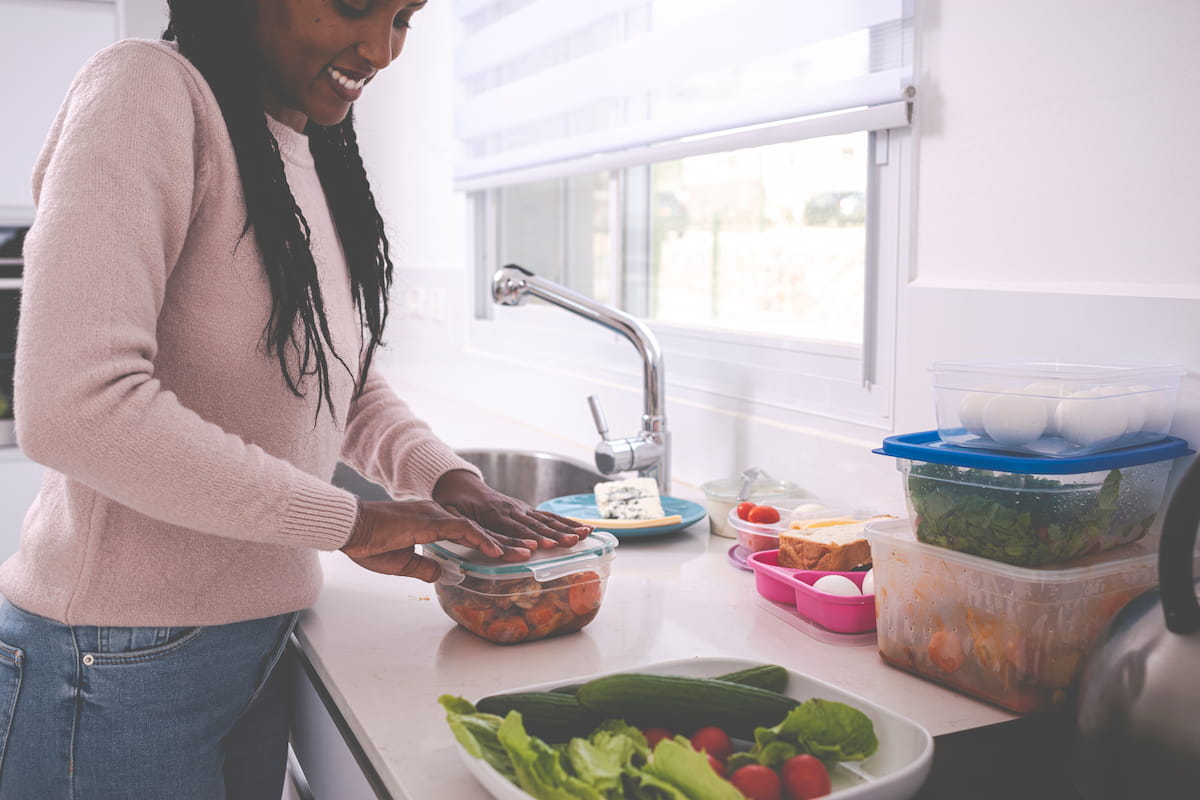
One reason people stop meal prepping is that social media often makes it look overwhelming. Rows of matching containers. Hours of cooking. Perfectly measured meals. Realistically, most busy people need shortcuts. Simple meal prep can look like:
You do not need elaborate preparation to make life easier. Even preparing two or three meals ahead of time can reduce stress significantly during busy weeks. And reducing decision fatigue is one of the biggest benefits of planning ahead.
One of the easiest ways blood sugar spikes happen on busy days is through drinks. Coffee shop beverages, energy drinks, sweet teas, juices, and sodas can contain significant amounts of added sugar without leaving you feeling full. According to the CDC, sugary beverages can cause rapid increases in blood sugar because they are quickly absorbed into the bloodstream. That does not mean you can never enjoy them. But awareness helps. Lower-sugar alternatives may include:
Hydration also matters because dehydration can affect blood sugar regulation, too.
Extreme hunger often leads to choices made out of desperation instead of intention. When blood sugar drops and hunger becomes intense, people are more likely to:
That is why eating before you become overly hungry matters. Small meals or snacks throughout the day may help some people maintain steadier energy and glucose levels. And importantly, planning ahead reduces panic eating later.
Not every meal needs to be homemade. Not every dinner needs to look impressive. Sometimes managing diabetes successfully means choosing foods that are convenient enough to actually keep you consistent. Easy foods are not “cheating.” They are tools. That may include:
Sustainability matters more than unrealistic standards.
Managing a chronic illness while managing life can feel emotionally exhausting. And stress absolutely affects eating habits. Many people eat differently when they are:
This may be the most important strategy of all. Many people with Type 2 diabetes become trapped in perfection thinking. One “bad” meal feels like failure. One missed routine feels like giving up. But diabetes management is not built on a single meal or a single day. It is built on patterns over time. Small, consistent habits matter:
Perfection is not required for improvement. And realistic routines are more sustainable than extreme ones.

By subscribing, you consent to receive emails from BlackDoctor.com. You may unsubscribe at any time. Privacy Policy & Terms of Service.